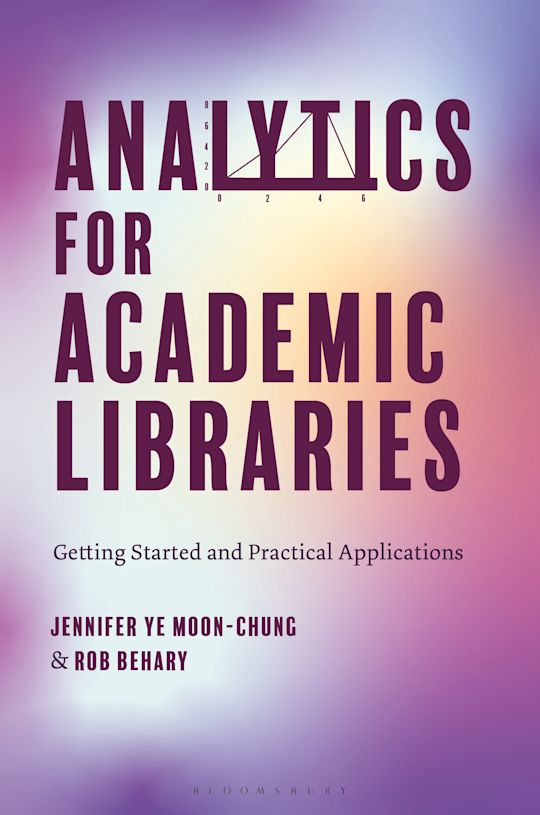
Analytics for Academic Libraries
Getting Started and Practical Applications

Analytics for Academic Libraries
Getting Started and Practical Applications
Buying pre-order items
Ebooks and Audiobook
You will receive an email with a download link for the ebook or audiobook on the publication date.
Payment
You will not be charged for pre-ordered books until they are available to be shipped. Pre-ordered ebooks will not be charged for until they are available for download.
Amending or cancelling your order
For orders that have not been shipped you can usually make changes to pre-orders up to 72 hours before the publishing date.
Payment for this pre-order will be taken when the item becomes available
Description
Drawing on the latest approaches to behavioral and predictive analytics, this guide offers academic librarians pathways to implementing successful analytics programs and to navigating the complex landscape of analytics technology and platforms.
Covering the expectations of the field and modern data-collecting tools and techniques, readers will learn how to leverage their findings to make data-informed decisions in their library planning. The book also highlights what is unique to librarianship in the discipline of analytics by focusing on the ethics of the library profession, including issues related to data privacy and service standards and issues related to collection management and outreach efforts.
This book is an indispensable guide to all areas of academic librarianship. Analytics provide a shared area where data points from other functional areas can be viewed and compared, driving creative collaboration, identification of library-wide trends, and development of future initiatives.
Accessibility Information
Additional accessibility information
- EPUB 3.0
- Conforms with the requirements of EPUB Accessibility Spec v1.1
- WCAG level AA
- WCAG v2.2 compliant
- accessibility@bloomsbury.com
Hazards
The publication contains no hazards
Support for non-visual reading
- No accessibility features offered by the reading system, device or reading software are disabled or otherwise unusable with the product
- Has alternative text descriptions for images
Visual adjustments
Appearance of the text and page layout can be modified according to the capabilities of the reading system (font family and size, spaces, as well as color of background and text)
Navigation
- Page list to go to pages from the print source version
- Elements such as headings, tables, etc for structured navigation
- All or substantially all textual matter is arranged in a single logical reading order
- Content is enhanced with ARIA roles to optimize organization and facilitate navigation
- Purposes of all links are made clear
Rich content
Language tagging provided
Table of Contents
a. Introduction
b. Scope
c. Definition of Terms (Library analytics, Dashboards)
2. Transformation of libraries and key metrics
a. Changes in Academic Libraries
b. Key Metrics
c. Case Studies
3. Building a Strong Foundation for Analytics
a. Building a Culture of Using Data to Make Decisions
b. Share Data across all Library Units
c. Select Storage
d. Case Studies
4. Planning your Analytics Project
a. Identifying Candidates
b. Data Collection Planning: Purpose, Utilization, Management, and Maintenance
c. Ethical and Legal Responsibilities
d. Case studies
5. Data Communication
a. Defining your Communication Goals
b. Internal Communication Goals
c. Mid-level Communication Goals
d. Promotional Communication Goals
e. Case studies
6. Choosing the Right Reporting Tools
a. Evaluating Reporting Software
b. Understand the Pros and Cons
c. Best Tools for Your Needs
d. Case Studies
7. Building Your Analytics Pipeline: From Data tools, and people
a. Gathering and Selecting Data
b. Cleaning and Preparing Data
c. Feeding Data into Your Pipeline
d. Designing and Building Dashboards
e. Maintaining and Improving Your Pipeline
f. Case Studies
8. Interpretation of Data
a. The Importance of Accurate Data Interpretation
b. Understanding Data Bias and Misuse (Tips to Avoid Data Bias and Misuse)
c. Behavioral Analytics
d. Predicative Analytics
e. Case Studies
9. Thinking about the future of library analytics and conclusion
a. Documentation
b. Data Quality and Integrity
c. Learning Community
d. Evaluation
e. Case Studies
10. Thinking about the future of Analytics
a. Data Collection
b. Machine Learning
c. Optimizing Data Models
d. Concluding Remarks
Appendix
a. Tools Used in Analytics by Academic Libraries
b. Resources for Benchmarking and Selecting Peer Libraries
Bibliography
Product details
| Published | 12 Nov 2026 |
|---|---|
| Format | Ebook (Epub & Mobi) |
| Edition | 1st |
| Pages | 176 |
| ISBN | 9798216185789 |
| Imprint | Bloomsbury Libraries Unlimited |
| Publisher | Bloomsbury Publishing |
Related Titles