- Home
- ACADEMIC
- Religious Studies
- Philosophy of Religion
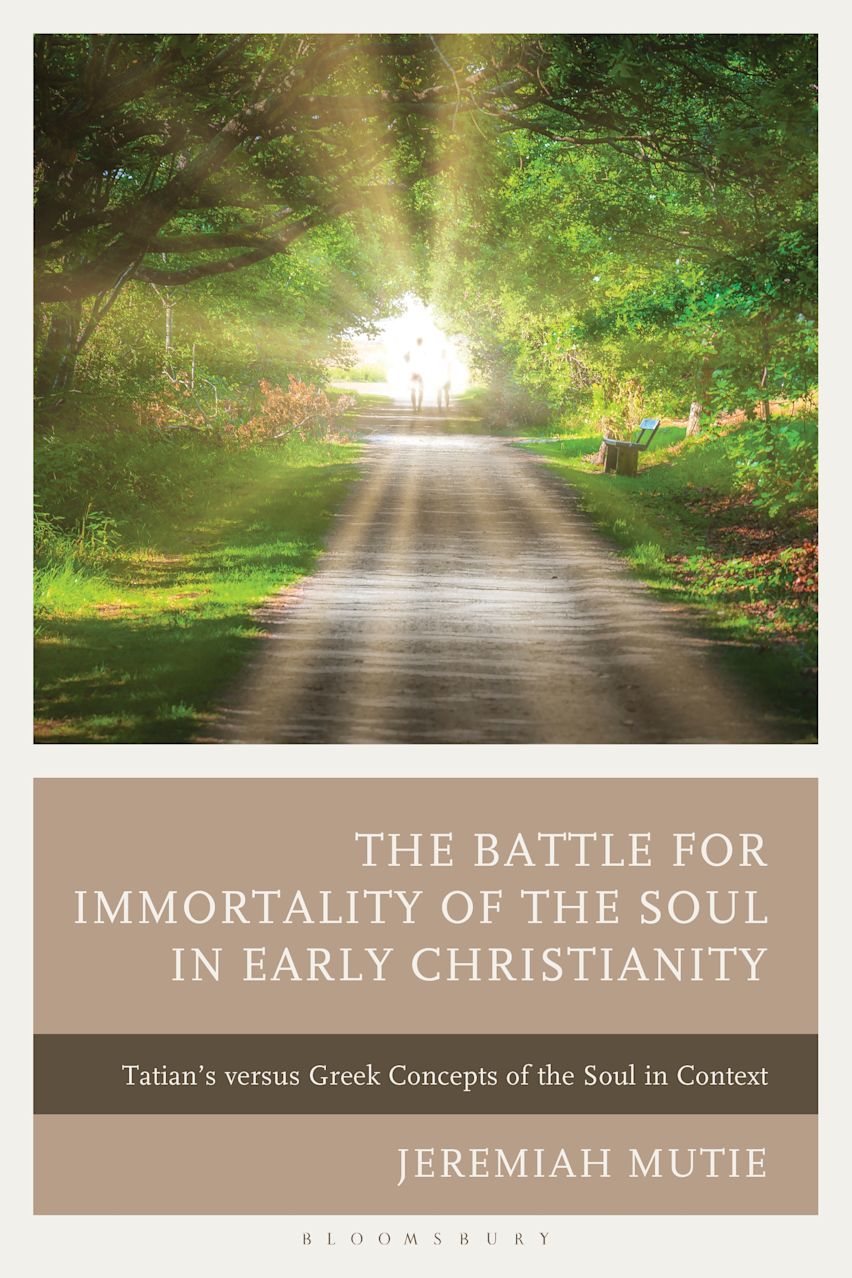
- The Battle for Immortality of the Soul in Early Christianity
The Battle for Immortality of the Soul in Early Christianity
Tatian's Versus Greek Concepts of the Soul in Context
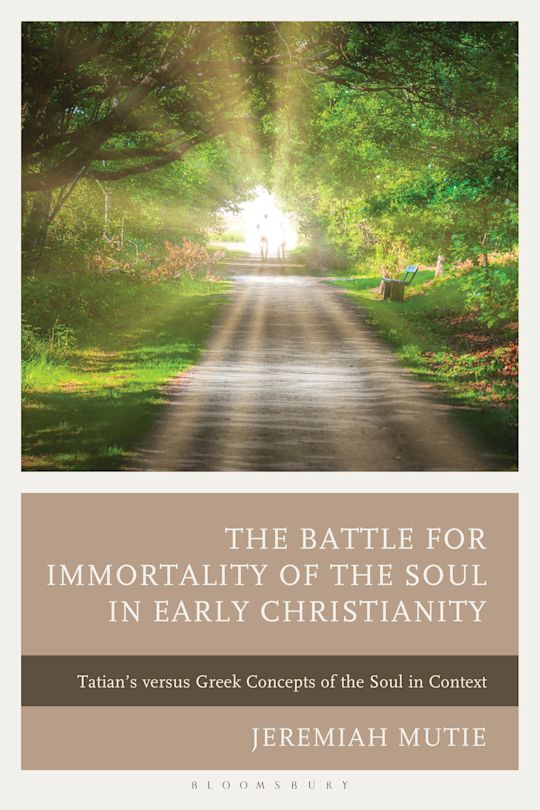
The Battle for Immortality of the Soul in Early Christianity
Tatian's Versus Greek Concepts of the Soul in Context

Payment for this pre-order will be taken when the item becomes available
This product is usually dispatched within 2-4 weeks following the publication date
- Delivery and returns info
-
Flat rate of $10.00 for shipping anywhere in Australia
You must sign in to add this item to your wishlist. Please sign in or create an account
Description
How has humanity in general and Judeo-Christianity in particular dealt with the question of the immortality of its soul in history?
In this book, Jeremiah Mutie digs deep into the pages of history to answer this central question. The book traces the pre-Tatian Greek philosophical concepts of the soul to argue that compared to the various Greek views on the soul (especially the Platonic and the Middle Platonic views), and with some caveats, Tatian's views come closest to the Old and New Testament fate of the human soul. This book participates in an ongoing discussion on the fate of the human soul and explores Tatian's battle with the Greeks about the immortality of the human soul.
Table of Contents
Chapter 1: Immortality of the Soul in Pre-Christian Philosophical Thought
Chapter 2: Soul in the New Testament and Early Christianity
Chapter 3: Tatian Versus the Greeks: The Battle for the Immortality of the Soul in Early Christianity
Chapter 4: Immortality of the Soul Beyond Tatian: Clement of Alexandria and the Allegorizing Tradition
Conclusion
Product details

| Published | 02 Apr 2026 |
|---|---|
| Format | Hardback |
| Edition | 1st |
| Extent | 224 |
| ISBN | 9781666967340 |
| Imprint | Bloomsbury Academic |
| Dimensions | 229 x 152 mm |
| Publisher | Bloomsbury Publishing |

About the contributors
Reviews
-
In The Battle for Immortality of the Soul in Early Christianity, Jeremiah Mutie delivers a deep and timely study that reaches back to the church's earliest debates that sheds light on one of today's most pressing theological questions: what does it mean to be human? Today, as Christians wrestle with Genesis and the compatibility of special creation with evolutionary accounts, Mutie's analysis of Tatian's rejection of Greek notions of the soul as naturally immortal offers a vital corrective. He shows that for Tatian-and for Scripture-immortality is a divine gift given by our Creator. This insight reframes modern discussions of personhood and the image of God that challenge both materialist evolution and transhumanist hopes. This book is a must-read for theologians, pastors, and students seeking to recover a biblical understanding of the soul rooted in creation, redemption, and resurrection.
Joseph R. Miller, Associate Professor of Christian Worldview, Grand Canyon University & Co-founder at the Center for Cultural Apologetics
-
Mutie argues that of all the Greek philosophers and the Christian apologists in the second century, Tatian's (120–180) view of the human soul, that it has conditional immortality rather than immortality by nature, has more scriptural support than others. In short, immortality is a gift of God and not an essential aspect of human nature. Mutie engages Tatian from a methodology of appropriate revisionist history, arguing that unlike the way some have read him, Tatian is not a heretic but is defending orthodox Christian views. He situates Tatian in the historical and theological context of his day and then evaluates how he has been misunderstood and misused. This is a careful and insightful treatment of an important Christian apologist.
Glenn R. Kreider, Editor in Chief, Bibliotheca Sacra, Professor of Theological Studies, Dallas Theological Seminary
-
In this admirably lucid study, Jeremiah Mutie revisits Tatian with a sympathy and precision long overdue. By setting the Assyrian apologist against the broad sweep of Orphic, Homeric, and Middle Platonic conceptions of the soul, he shows with quiet but compelling force that Tatian's insistence upon the soul's God-given, neither innate nor natural, immortality accords more closely with the biblical witness than with most Greek speculation. The result is a judicious reappraisal that restores Tatian to his rightful place within the diverse ferment of second-century Christian thought.
Markus Vinzent, King's College London, ret.; Max-Weber-Center, University of Erfurt