- Home
- ACADEMIC
- Law
- European Law
- EU Cities Facilitating the Commons
EU Cities Facilitating the Commons
Building Blocks of European Constitutional Law for Local Democracy
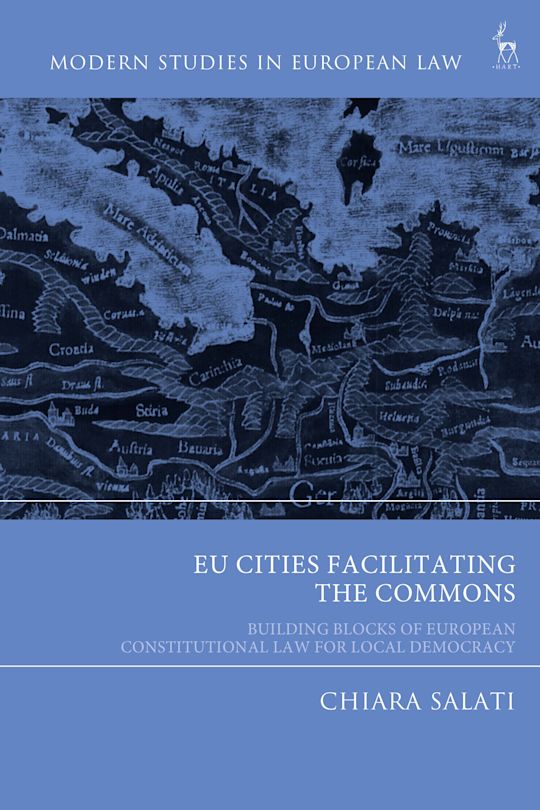
EU Cities Facilitating the Commons
Building Blocks of European Constitutional Law for Local Democracy

Payment for this pre-order will be taken when the item becomes available
You must sign in to add this item to your wishlist. Please sign in or create an account
Description
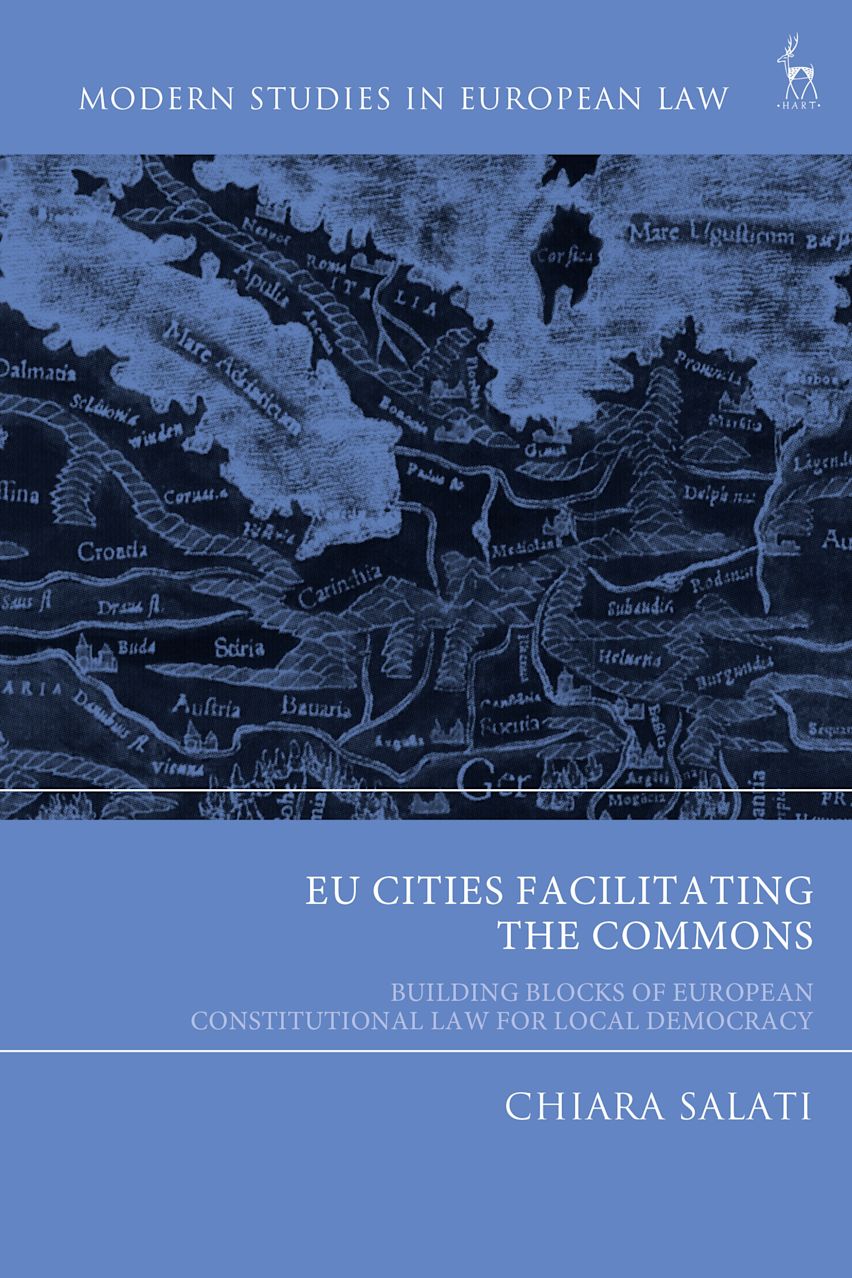
This book explores the role of cities in the EU in facilitating civic participation through the commons (CPC), through the prism of constitutional principles.
It fills a gap by providing a much-needed theoretical framework for commons-oriented initiatives. It focuses on democracy, participation, local governments and cities, by looking at the two legal orders of the European Union and the Council of Europe. At its core is the case study of Italy, where there is institutionalised collaboration between society and the State in over 320 cities. It shows that by leveraging the four key European constitutional principles of participation, local self-government, subsidiarity and solidarity, all EU cities can act as drivers of the commons. A fascinating and innovative exploration of civic participation through the commons that reinforces local democracy.
Table of Contents
Part I: Democracy and Participation in the EU
1. Setting the Scene: The Transformation of Democracy in the EU
2. The Principle of Participation
Part II: Democracy at the Local Level
3. The Principles of Subsidiarity and Local Self-Government
4. From Local Governments to Cities
Part III: Civic Participation Through the Commons (CPC) in the Case of Italian Cities
5. The Constitutional Roots of the Italian Case
6. The Organisational Model of Shared Administration of the Commons
Part IV: Facing the Commons Challenge in EU Cities
7. EU Cities as Laboratories for Civic Participation Through the Commons
8. Building Blocks of European Constitutional Law for the Commons Challenge
Conclusion
Product details
| Published | 16 Apr 2026 |
|---|---|
| Format | Ebook (PDF) |
| Edition | 1st |
| Pages | 224 |
| ISBN | 9781509989683 |
| Imprint | Hart Publishing |
| Series | Modern Studies in European Law |
| Publisher | Bloomsbury Publishing |
About the contributors
Reviews
-
In EU Cities Facilitating the Commons, Chiara Salati offers a rigorous and timely analysis of the role of cities in shaping the commons within the framework of European constitutional law. The book makes an important contribution to debates on local democracy by elucidating how EU legal principles can support innovative, participatory forms of urban governance and multi-level democracy across the EU.
Professor Josephine van Zeben, Professor of Transnational Law, European University Institute
-
Chiara Salati provides a groundbreaking theoretical framework that empowers EU cities to facilitate civic participation by leveraging foundational constitutional principles such as subsidiarity and solidarity. Drawing on the pioneering Italian model of shared administration, this work identifies cities as vital laboratories for democratic innovation capable of supporting autonomous citizen-led initiatives for the community's general interest.
Professor Jens Woelk, University of Trento, Italy
-
This important book makes the experience of Italian cities with initiatives to advance civic participation in governance accessible for a wider audience of EU lawyers and professionals, who can profitably use the insights collected here to advance their thinking about how to best realise democratic ideals and harness the significant potential that European cities possess in this regard.
Maartje De Visser, Professor of Law, Singapore Management University
-
Chiara Salati's EU Cities Facilitating the Commons is an innovative and original work that examines the Italian model of civic participation through the commons as a potential template for the broader European legal space. In doing so, Salati skillfully interweaves key themes such as democracy, participation, local government, subsidiarity, and the rising role of cities. The result is a timely and compelling study, particularly relevant in an era marked by rapid urbanisation and a growing crisis of democratic participation. While grounded in the European context, the book's insights resonate far beyond, offering valuable perspectives that could find global application.
Erika Arban, University of Melbourne, Australia