

Buying pre-order items
Ebooks and Audiobook
You will receive an email with a download link for the ebook or audiobook on the publication date.
Payment
You will not be charged for pre-ordered books until they are available to be shipped. Pre-ordered ebooks will not be charged for until they are available for download.
Amending or cancelling your order
For orders that have not been shipped you can usually make changes to pre-orders up to 72 hours before the publishing date.
Payment for this pre-order will be taken when the item becomes available
This product is usually dispatched within 2-4 weeks following the publication date
- Delivery and returns info
-
Flat rate of $10.00 for shipping anywhere in Australia
Description
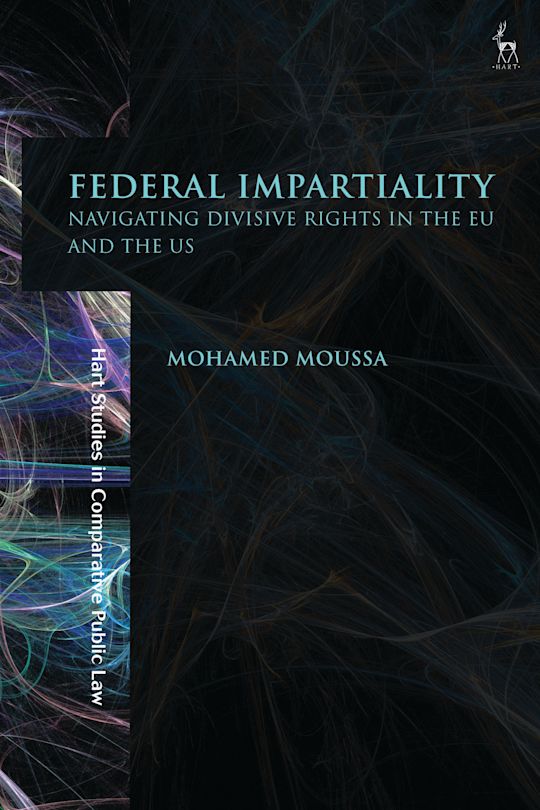
Disagreements on constitutional rights (such as racial and religious discrimination or abortion) are increasingly divisive. From the role of abortion in US presidential elections to debates about the competence creep of EU fundamental rights, the question arises: should the power to decide these matters rest with a central/federal union, or be left to individual states?
This book addresses this crucial federal boundary question from both theoretical and comparative perspectives. It explores how the proper allocation of decision-making power in federal systems can enhance impartiality and reduce polarisation.
The book both develops and critiques the influential constitutional theory of James Madison, architect of the US Constitution and modern federalism. By tracing Madison's intellectual debt to David Hume and to common law rules on bias, it identifies gaps in his account of impartiality. It also shows how a revised Madisonian framework remains relevant to contemporary struggles in both the US and the EU over managing discord through federal structures.
The book's comparative dimension explores three categories of rights, each reflecting particular forms of social disagreement: (i) minority rights, which often trigger group bias and spark division between majorities and minorities;(ii) ideologically divisive rights, such as abortion; and (iii) cases where group and ideological bias overlap, such as those pitting religious freedoms against ideologically contested measures, including bans on ritual slaughter or religious apparel in public employment.
By combining comparative and theoretical contributions, the book demonstrates both the perils and the promise of federalism in securing impartiality and navigating social faction.
Table of Contents
1. Federal Doctrines and Rights in the EU and US
2. The Theoretical Foundation: The Federal Promise of Impartiality
3. The Possible Impartiality: Minority Rights as a Faction of Interest
4. Non-Pecuniary Bias and the Omission of Factions of Principle
5. The Impossible Impartiality: Abortion as a Faction of Principle
6. Multi-Faceted Factions and the Flexibility of Boundaries: The Case of Religion
7. Conclusion
Product details
| Published | 28 May 2026 |
|---|---|
| Format | Hardback |
| Edition | 1st |
| Pages | 240 |
| ISBN | 9781509987283 |
| Imprint | Hart Publishing |
| Dimensions | 234 x 156 mm |
| Series | Hart Studies in Comparative Public Law |
| Publisher | Bloomsbury Publishing |

ONLINE RESOURCES
Bloomsbury Collections
This book is available on Bloomsbury Collections where your library has access.
Related Titles