A Multi-Disciplinary Approach to Studying Involuntary Celibacy
Understanding Incels


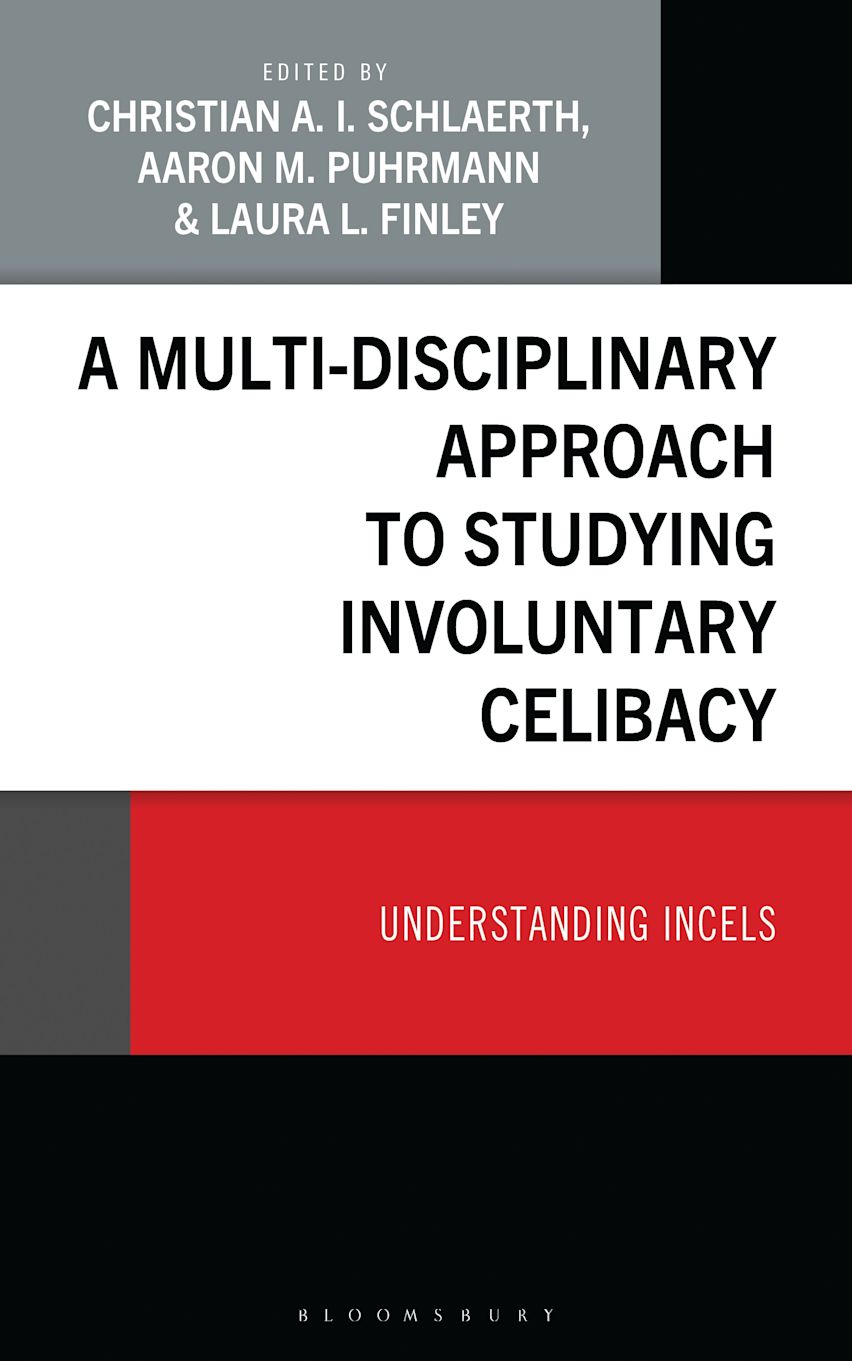
A Multi-Disciplinary Approach to Studying Involuntary Celibacy
Understanding Incels
Payment for this pre-order will be taken when the item becomes available
Description
While public attention has often centered on the most visible and violent expressions of incel ideology, this volume offers a deeper analysis, moving beyond reductive narratives to explore the complex social, psychological, and communicative dimensions of inceldom.
Drawing on expertise from sociology, psychology, communication studies, and conflict resolution, contributors explore the historical development of incel ideology, the formation of incel identity, gendered aspects inceldom, the relationship between involuntary celibacy and violence, and the emergence of femcels and queer incel communities. The volume concludes by exploring avenues for disengagement from incel ideology, while offering concrete proposals for future research into the evolving dynamics of online radicalization and gendered alienation.
Table of Contents
Foreword
Prologue by Ryan Clark
Introduction by Christian A. I. Schlaerth and Aaron M. Puhrmann
Chapter 1: History, Background, and the Ideology of Involuntary Celibates by Christian A. I. Schlaerth
Chapter 2: Boys in Crisis: The Development of Incel Mindsets in Youth by Madison Turunen
Chapter 3: Incels, Gender, and Mass Shootings by Laura Finley
Chapter 4: Taking the “Black Pill”: Anomie, Perceived Social Death, and the Incel Phenomenon Online by Aaron M. Puhrmann and Christian A. I. Schlaerth
Chapter 5: Unrequited Love Hurts: Rejection, Resentment, and Reconciliation in the Manosphere by Wim Laven
Chapter 6: Incels and Social Exchange Theory by Kassidy C. Elyea and Elaine A. Bossard
Chapter 7: An Empirical Assessment of Incel Radicalization and Political Extremism in the United States by Feodor Gostjev and Alex Ray
Chapter 8: Incels and Popular Culture by Laura Finley and Christian A. I. Schlaerth
Chapter 9: After the Echo Chamber: Exploring Radical Approaches to Understanding the Internet and Inceldom by Niall Campbell, Neil Vallely, and Lesley Procter
Chapter 10: Females Can Be Incels? Examining the Femcel Movement by Laura Finley
Chapter 11: Queering Incel Subculture by Madison Turunen
Chapter 12: (Un)Forgiveness in the Manosphere: Navigating Anger and Resentment in Incel Culture by Wim Laven
Conclusion by Laura Finley
Index
About the Editors
About the Contributors
Product details

| Published | 28 May 2026 |
|---|---|
| Format | Ebook (Epub & Mobi) |
| Edition | 1st |
| Pages | 248 |
| ISBN | 9781978767560 |
| Imprint | Bloomsbury Academic |
| Illustrations | 12 bw figures, 21 tables |
| Publisher | Bloomsbury Publishing |
Reviews
Related Titles