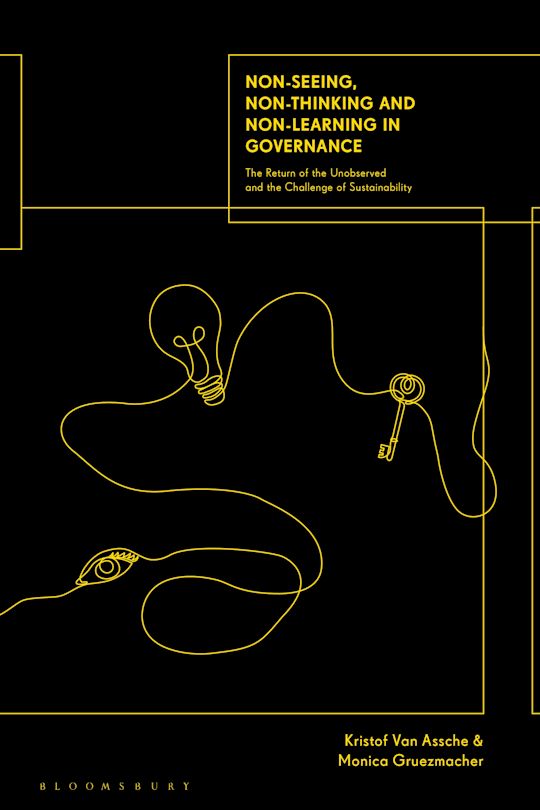

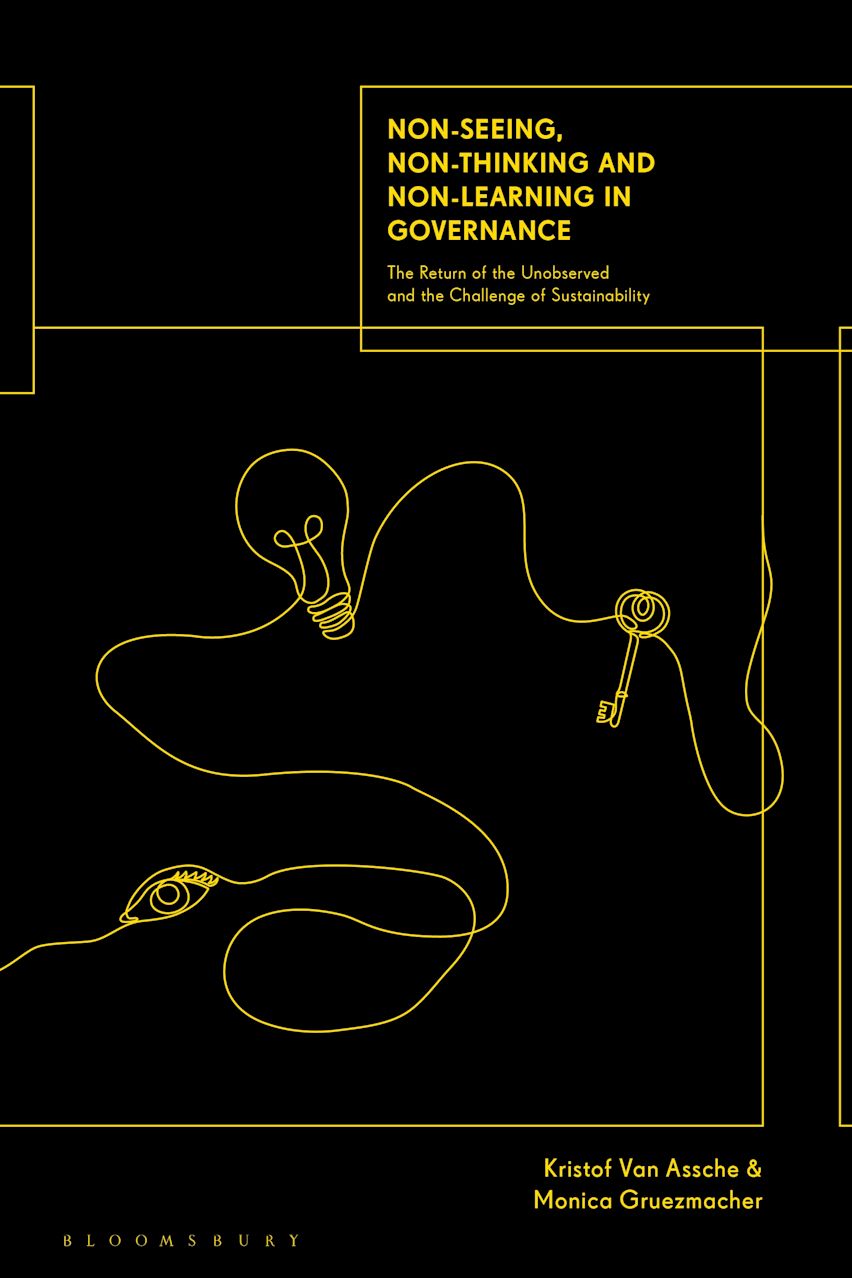
Non-seeing, Non-thinking and Non-learning in Governance
The Return of the Unobserved and the Challenge of Sustainability
Buying pre-order items
Ebooks and Audiobook
You will receive an email with a download link for the ebook or audiobook on the publication date.
Payment
You will not be charged for pre-ordered books until they are available to be shipped. Pre-ordered ebooks will not be charged for until they are available for download.
Amending or cancelling your order
For orders that have not been shipped you can usually make changes to pre-orders up to 72 hours before the publishing date.
Payment for this pre-order will be taken when the item becomes available
Description
A critical exploration of how non-learning functions in governance and its significance in understanding how policies can adapt to grand challenges such as sustainability.
As societies and governments are faced with mounting challenges, particularly in the form of environmental threats, new demands are being placed on government systems which must embrace new modes of learning and observation in order to transform policies. Here, Kristof Van Assche and Monica Gruezmacher seek to emphasize the importance of understanding 'epistemic negatives' - non-observing, non-thinking and non-learning - in governance.
Drawing on governance theory, critical management studies, policy studies and psychoanalysis, this study shines a light on the way unseen structures of knowledge influence the way we govern ourselves and our environment, and identifies how we can begin to overcome the dangers this poses to good governance. The book puts forward that not understanding the role of negative knowledge in governance is not truly understanding governance, and that these negatives must be fully observed in order to implement viable solutions to grand challenges that emphasize long-term strategy building, diverse observations and understandings of system-environment relations.
Table of Contents
Preface
1. Governance as a setting and a goal
2. Observing and thinking in governance
3. Learning in governance
4. Learning, dark learning and non-learning
5. Non-observation: reasons and mechanisms
6. Non-thinking: reasons and mechanisms
7. Non-learning: reasons and mechanisms
8. Reconsidering the relation between thinking and organizing
9. The return of the unobserved?
Epilogue: The power of negatives and the positive transformation of governance
Index
Product details

| Published | 17 Sep 2026 |
|---|---|
| Format | Ebook (Epub & Mobi) |
| Edition | 1st |
| Pages | 272 |
| ISBN | 9781350540569 |
| Imprint | Bloomsbury Academic |
| Publisher | Bloomsbury Publishing |
Reviews
Related Titles