
- Home
- ACADEMIC
- Politics & International Relations
- Political History
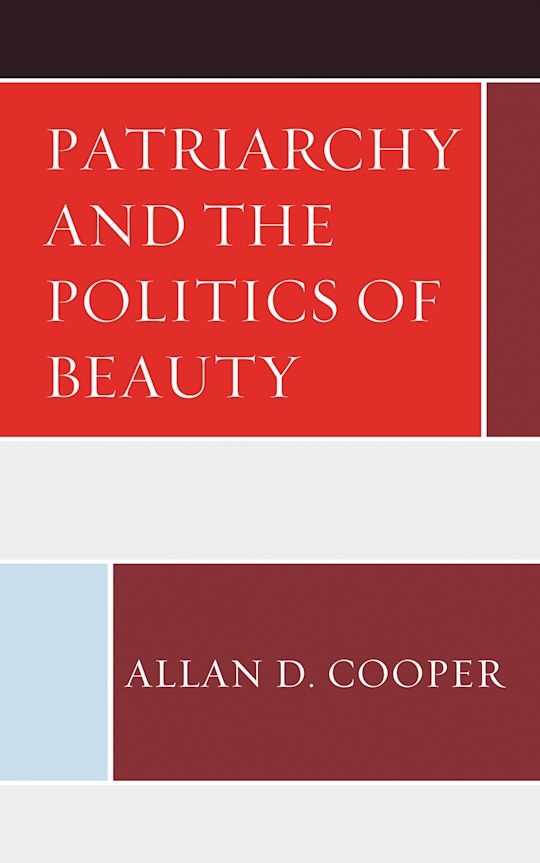
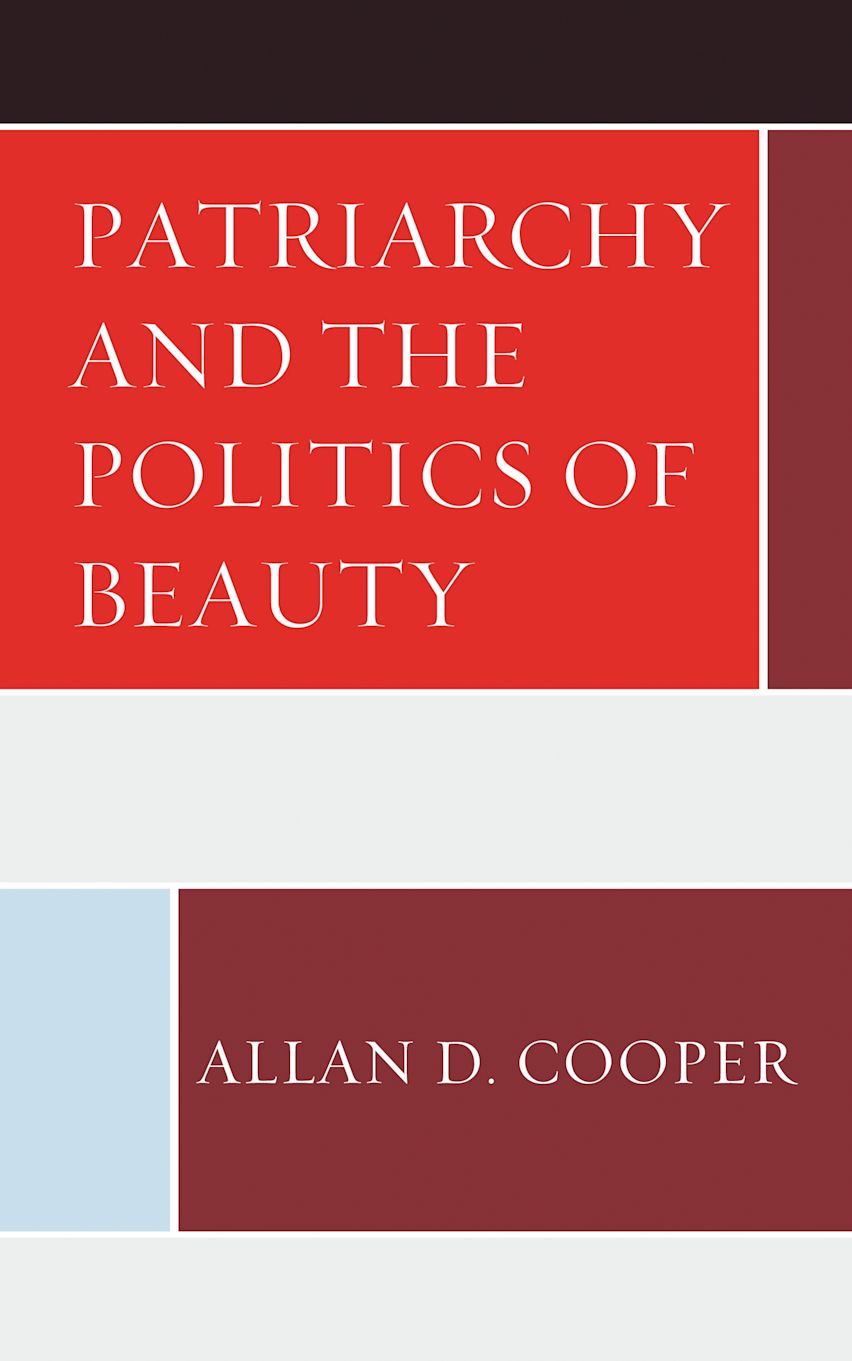
- Patriarchy and the Politics of Beauty
You must sign in to add this item to your wishlist. Please sign in or create an account
Description
Political philosophers from the beginning of history have articulated the significance of beauty. Allan D. Cooper argues that these writings are coded to justify patriarchal structures of power, and that each epoch of global history has reflected a paradigm of beauty that rationalizes protocols of gender performance. Patriarchy is a system of knowledge that trains men to become soldiers but is now being challenged by human rights advocates and women’s rights activists.
Table of Contents
Chapter Two: Beauty in Antiquity
Chapter Three: Medieval Beauty
Chapter Four: Modern Beauty
Chapter Five: A Feminist Critique of Beauty
Product details
| Published | 04 Oct 2019 |
|---|---|
| Format | Ebook (PDF) |
| Edition | 1st |
| Extent | 1 |
| ISBN | 9781978757257 |
| Imprint | Lexington Books |
| Publisher | Bloomsbury Publishing |
About the contributors
Reviews
-
Cooper (North Carolina Central Univ.) offers a thorough account of how the concept of beauty has been used by political theorists to establish control over subjects, especially, of course, women. The intersection of sexuality, race, age, and beauty has been widely discussed, as in Naomi Wolf's The Beauty Myth (CH, Jan'92, 29-3031), Susan Bordo's Unbearable Weight (1993), Maxine Leeds Craig's Ain't I a Beauty Queen? (CH, Jan'03, 40-3097), and Katerina Deliovsky's White Femininity (2010), among other works. This text complements its predecessors by analyzing how patriarchal structures were justified by philosophers around the world in each historical epoch. Cooper’s background in human rights and political identity informs her approach to understanding how ancient and modern theorists have conceptualized beauty in a way that benefits male power. Students already familiar with the canons of political theory and those studying human rights, feminism, and gender studies will find that this volume offers an insightful look into how beauty standards simultaneously transform over time but continuously serve the interests of those in power. Summing Up: Highly recommended. Upper-division undergraduates through faculty.
Choice Reviews
-
“In his insightful and expansive review of the relationship between state power, patriarchy, and protocols of female beauty, Allan D. Cooper demonstrates how at each epoch up to the present, defining and controlling female beauty is critical to the misogynous framework necessary to perpetuate the male-dominated state. The question he leaves the reader contemplating is not the expansive evidence of how women have been subjugated in the past, but how, given contemporary political thought on issues of gender, sexuality, and governance, the future might be radically different. “
Debora Halbert, University of Hawai'i at Manoa
-
“Reading the history of patriarchy as coeval with the history of consciousness, Allan Cooper presents us with a significant contribution to integral scholarship. This book not only presents a careful study of how the state has undergone a series of dramatic re-structurings—‘mutations’—in its concepts of beauty, but also compels us to consider how tomorrow might be radically different. When we read history through an integral light, as Cooper does here, we can trace the origins of patriarchy. In tracing its origins, however, we also discover its endings, and new futures become possible.”
Jeremy Johnson, President, Jean Gebser Society
-
“Dr. Allan Cooper thoroughly examines the role patriarchy plays in the development of theoretical and philosophical arguments posited about beauty. Patriarchy and the Politics of Beauty makes a compelling argument about the way in which constructs about beauty form by examining patriarchy and the oppressive nature of the politics of defining beauty.”
La Trice Washington, Otterbein University
ONLINE RESOURCES
Bloomsbury Collections
This book is available on Bloomsbury Collections where your library has access.