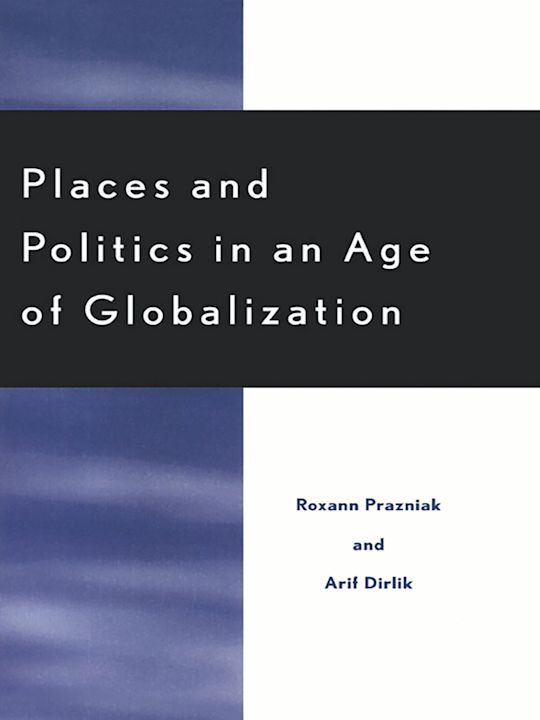

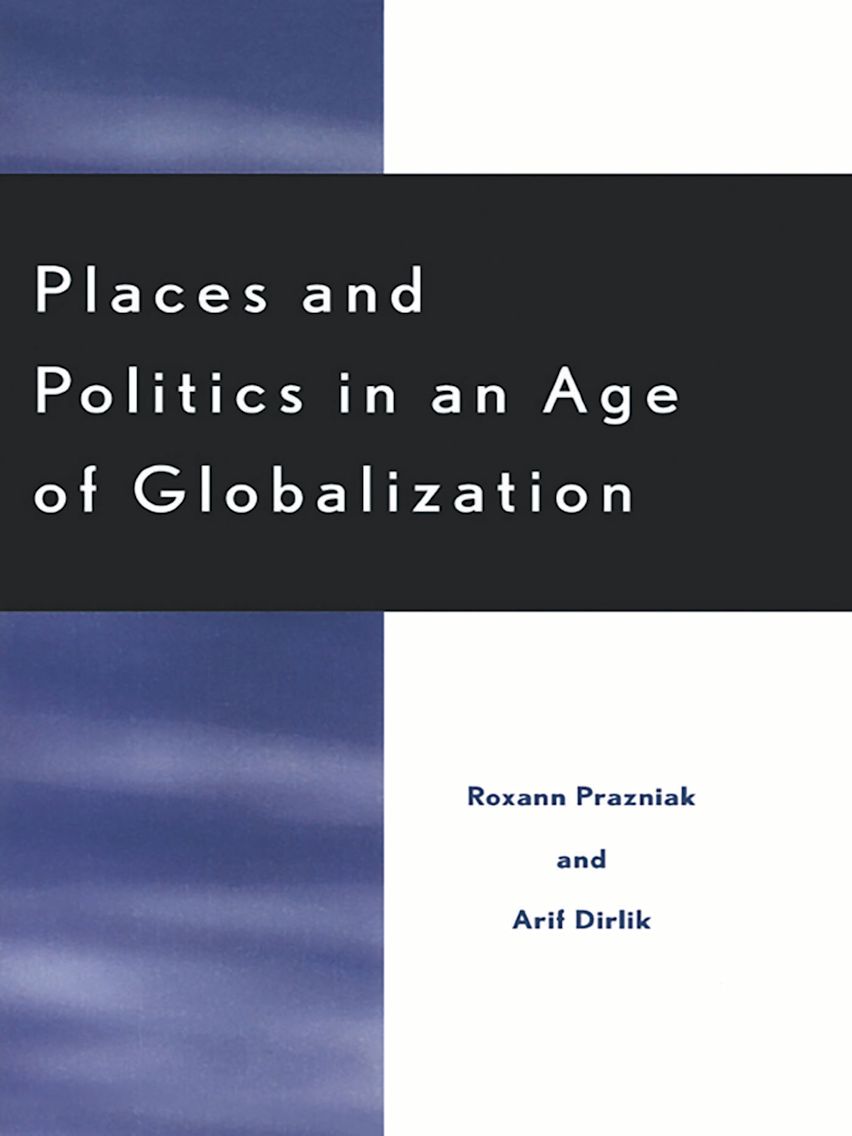
Places and Politics in an Age of Globalization
- Textbook
Description
This ambitious work provides a unique statement on the question of place-based activism and its relationship to powerful forces of international capital. Arguing that specific places around the world are sites for the defense and enhancement of daily life in the context of rapidly expanding global technologies and investment options, the contributors reach for a vision of social development that supports sustainable, humane cultures. Bringing together the local and the global, this work provides the first sustained linkage of ethnic groups in diaspora to macrocosmic processes of world capital that inevitably reach down to mediate even the most local experiences. The essays, ranging in their discussion of place from Los Angeles and New York to New Zealand and Indonesia, offer both reasoned argument and authoritiative information on how local experience interacts with larger processes of global capital and the diasporic phenomenon. The book will be an invaluable resource and launching point for scholars and students in ethnic and identity studies and will interest all readers exploring the production of place and identification.
Table of Contents
Part 2 Part I: Introduction: Theoretical Issues
Chapter 3 Transnational Sociocultural Formations
Chapter 4 Place-Based Imagination: Globalism and the Politics of Place
Chapter 5 Indigeneous Struggles and the Discreet Charm of the Bourgeoisie
Part 6 Part II: Transnationalism and Ethnic Identities: Labor, Capital, and the Problem of Community
Chapter 7 Asians on the Rim: Transnational Capital and Local Community in the Making of Asian America
Chapter 8 Chinese Illegals are American Labor
Chapter 9 Organizing Labor among Difference: The Impact of Race/Ethnicity, Citizenship, and Gender on Working Class Solidarity
Chapter 10 Natives and Nations: Identity Formation in Postcolonial Melanesia
Chapter 11 The Indigenization of Ethnicity: Capital and Community in Maori Tribalism
Part 12 Part III: Contra Developmentalism: The Political Ecology of Indigenism
Chapter 13 Place, Economy, and Culture in the Imagination of a Post-Development Era
Chapter 14 Globalization and Environmental Resistance Politics
Chapter 15 Political Organizing in the Land of the Great Spirit. Tunkashila: A Conversation with Joann Tall
Chapter 16 Beyond Unity: Transcommunal Roots of Coordination in the Iroquois Model of Cooperation and Diversity
Part 17 Part IV: Conclusion
Chapter 18 Rethinking Difference and Gender: Women and the Politics of Place
Product details
| Published | 07 Feb 2001 |
|---|---|
| Format | Ebook (Epub & Mobi) |
| Edition | 1st |
| Pages | 352 |
| ISBN | 9781461640929 |
| Imprint | Rowman & Littlefield |
| Publisher | Bloomsbury Publishing |
Reviews
Related Titles