(re)Citing Diaspora as Scriptural Cartographies
Sightings of the Black Atlantic and Story-Telling Difference Before Reading
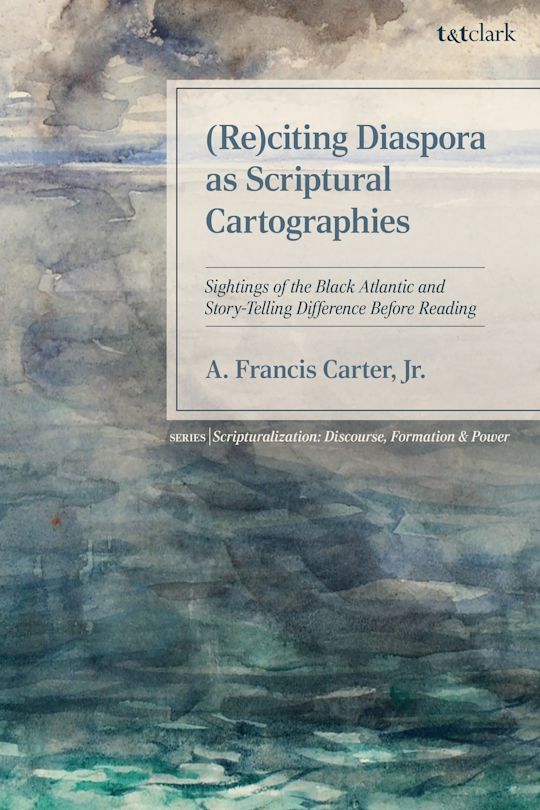

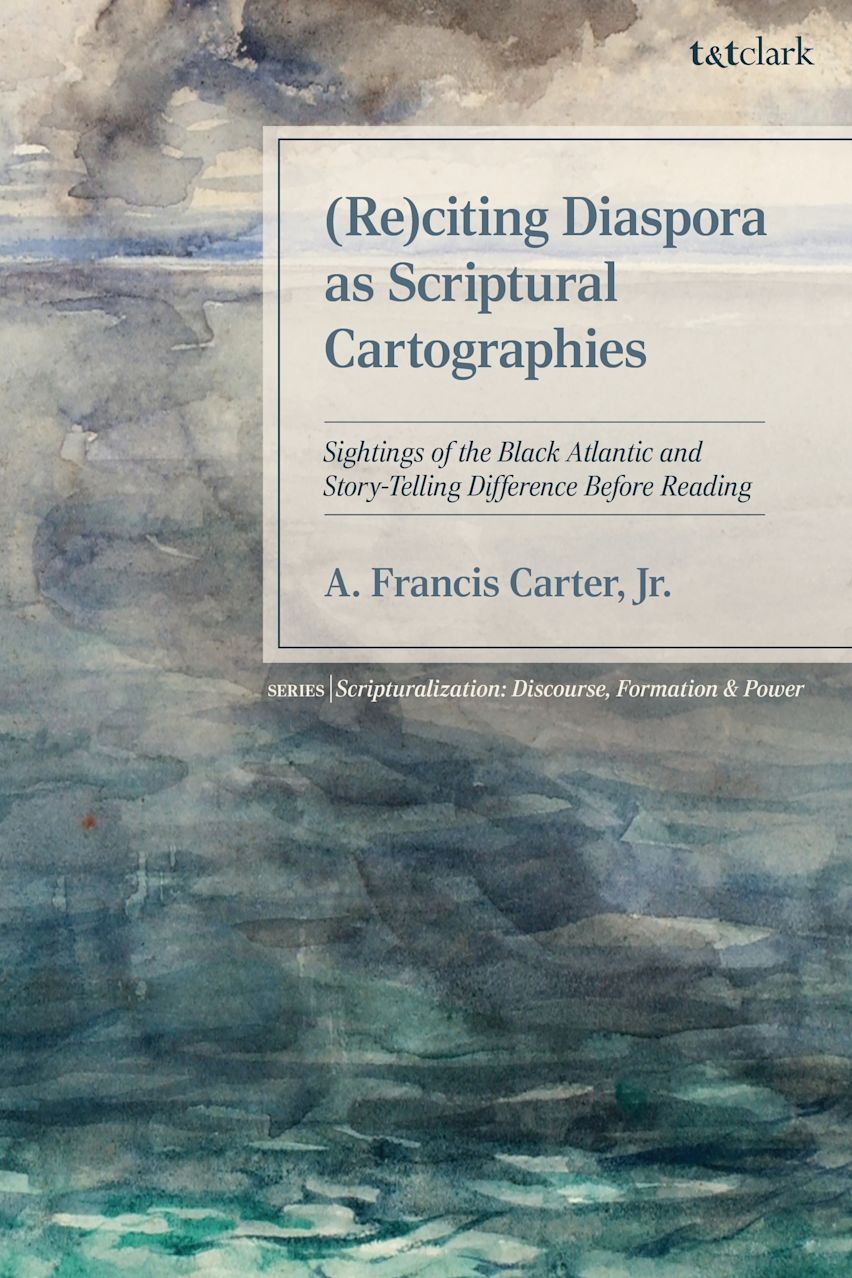
(re)Citing Diaspora as Scriptural Cartographies
Sightings of the Black Atlantic and Story-Telling Difference Before Reading
Buying pre-order items
Ebooks and Audiobook
You will receive an email with a download link for the ebook or audiobook on the publication date.
Payment
You will not be charged for pre-ordered books until they are available to be shipped. Pre-ordered ebooks will not be charged for until they are available for download.
Amending or cancelling your order
For orders that have not been shipped you can usually make changes to pre-orders up to 72 hours before the publishing date.
Payment for this pre-order will be taken when the item becomes available
- Delivery and returns info
-
Flat rate of $10.00 for shipping anywhere in Australia
Description
What happens when disciplines that study diaspora are inclined to perceive knowledge derived from Black life as anachronism?
How scholars write history and interpret early Christian texts is not neutral; they rehearse cartographies drawn by Enlightenment thinkers who treated linearity as the shape of human progress and the nation-state as its natural container. These inherited cartographies function as unquestioned scriptures that shape how interpreters reconstruct the past and read texts within those historical reconstructions. In this book, New Testament scholar A. Francis Carter Jr. centers diaspora as a prism to explore and intervene in hermeneutical theory. Through contextual readings, Carter exposes a disciplinary predisposition towards anti-Blackness incipient to Diaspora Studies. He then reorients the discourse and maps diaspora's etymological origins and biblical uses through a Black Atlantic cartographic framework - replacing sameness with differentness, linearity with polyvocality, and the erasure of Black life with its recognition as a site from which scripture, history, and diaspora become legible.
Table of Contents
Story-Telling as Interlude: Reclamations (The Chevalier de Saint-Georges)
Part I: Reading Orientations: Enlightened Pre-Texts and Modern Landscapes
1: Hegelian Color-Blindness as Pathology and Cartography: I Don't See Color
(Ever)
2: Pathogens: Root-Language and the Line as a Figure of Structure
3: A Scientific Perspective: Imagination, Rhizome, and (de)Rooting the Objective
Story-Telling as Interlude: Reclamations (Joseph, Anne's Son)
Part II: Pathological Spaces: Diaspora Approaches towards Discipline
4: A Landscape of Diaspora Studies: An Economy of Thought
5: Studying Diaspora before an (un)Disciplined Diaspora Studies: Economic(al)
Stories
6: Diaspora Studies and Story-Telling Roots, Ideally Not African
7: The Practical Grammars of Diaspora Studies: Definitions, Approaches, and Uses
Story-Telling as Interlude: Reclamations (James William Roman)
Part II: Diaspora (re)Sighted: (re)Citations of Black Atlantic Story-Telling
8: Recitations: A Practice of Reading in Black American Discursive Traditions
9: A Generative Story of Diaspora: Contextual Reading as Rhizomic Mapping
10: Heuristic Insights for Diaspora Studies: A Roman View with Preliminary
Framing
11: (re)Sighting Diaspora: (re)Viewing the Archive
Bibliography
Product details
| Published | 07 Jan 2027 |
|---|---|
| Format | Hardback |
| Edition | 1st |
| Pages | 320 |
| ISBN | 9781978716148 |
| Imprint | T&T Clark |
| Illustrations | 13 bw illus |
| Dimensions | 229 x 152 mm |
| Series | Scripturalization: Discourse, Formation, Power |
| Publisher | Bloomsbury Publishing |
Related Titles