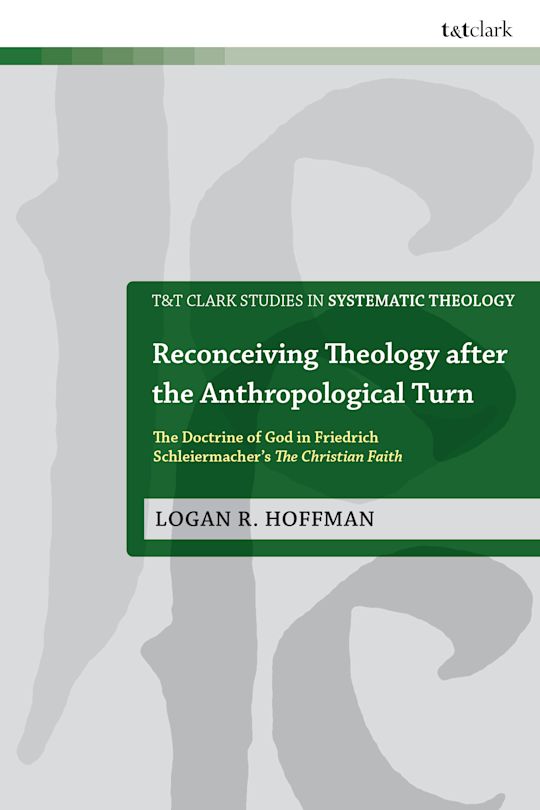

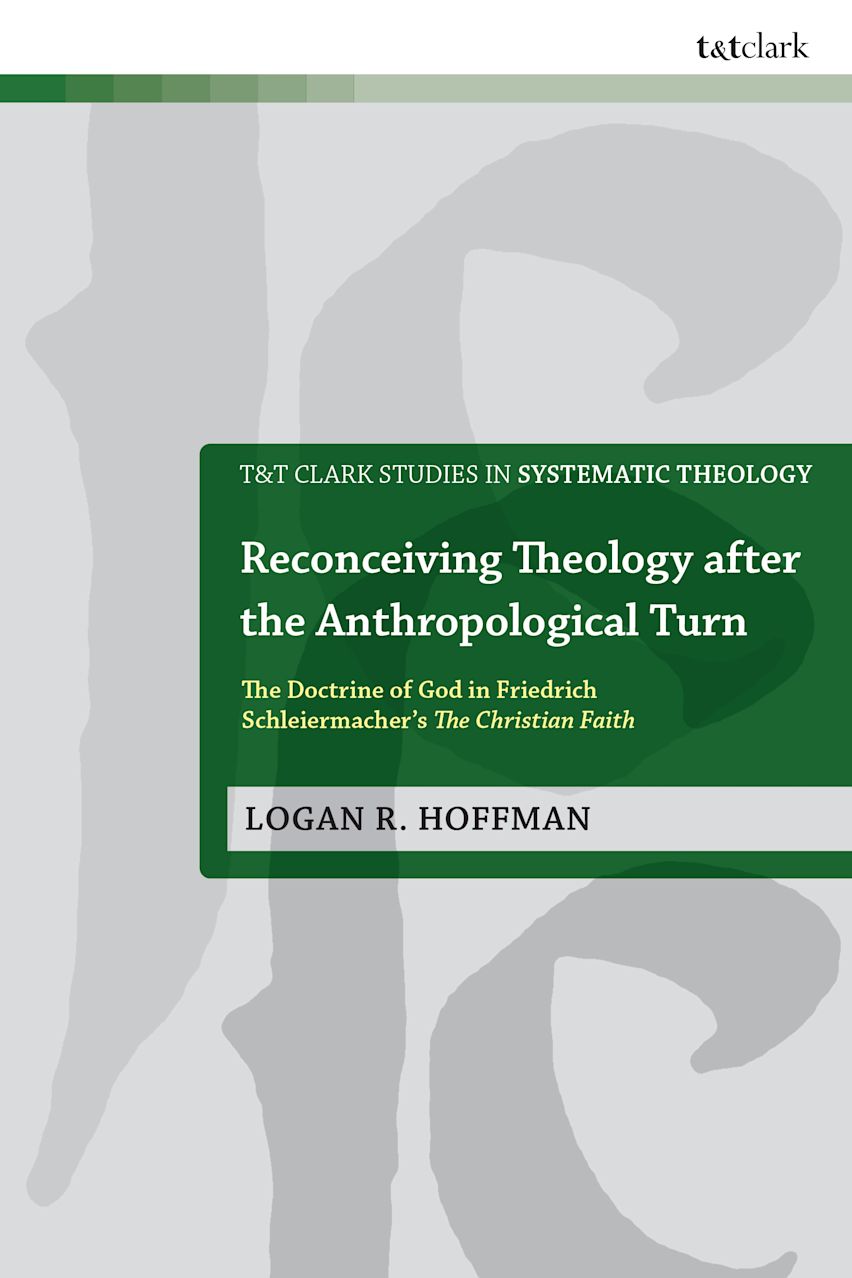
Reconceiving Theology after the Anthropological Turn
The Doctrine of God in Friedrich Schleiermacher’s The Christian Faith
Buying pre-order items
Ebooks and Audiobook
You will receive an email with a download link for the ebook or audiobook on the publication date.
Payment
You will not be charged for pre-ordered books until they are available to be shipped. Pre-ordered ebooks will not be charged for until they are available for download.
Amending or cancelling your order
For orders that have not been shipped you can usually make changes to pre-orders up to 72 hours before the publishing date.
Payment for this pre-order will be taken when the item becomes available
- Delivery and returns info
-
Flat rate of $10.00 for shipping anywhere in Australia
Description
Logan R. Hoffman deftly crafts a reconstruction and evaluation of the Doctrine of God in Friedrich Schleiermacher's primary theological work: The Christian Faith. This book identifies the new-found limitations to theological speech that were contemporary in Schleiermacher's day before offering a distinctive interpretation of Schleiermacher's solution for these limitations.
This work reconstructs what Schleiermacher had to say about the divine being, a subject seldom treated in book-length detail. By looking closely at the theological method employed (and offering a distinctive interpretation of Schleiermacher's method among Anglophone scholars), and then tracing that method through the major sections of The Christian Faith, the book brings clarity to what exactly Schleiermacher could justifiably say about God as given in the Feeling of Absolute Dependence.
Table of Contents
2. Schleiermacher's Method: Criticisms and Misunderstandings
3. Schleiermacher's Theological Method
4. The Doctrine of God in the First Part of the Material Dogmatics
5. The Doctrine of God as Given in the Consciousness of Sin and Grace
6. The Doctrine of the Trinity in the Glaubenslehre
Bibliography
Index
Bibliography
Index
Product details
| Published | 17 Sep 2026 |
|---|---|
| Format | Hardback |
| Edition | 1st |
| Pages | 168 |
| ISBN | 9780567728364 |
| Imprint | T&T Clark |
| Dimensions | 234 x 156 mm |
| Series | T&T Clark Studies in Systematic Theology |
| Publisher | Bloomsbury Publishing |
Reviews
Related Titles