- Home
- ACADEMIC
- Politics & International Relations
- European Politics
- Russian Hackers and the War in Ukraine
Russian Hackers and the War in Ukraine
Digital Threats and Real-World Consequences
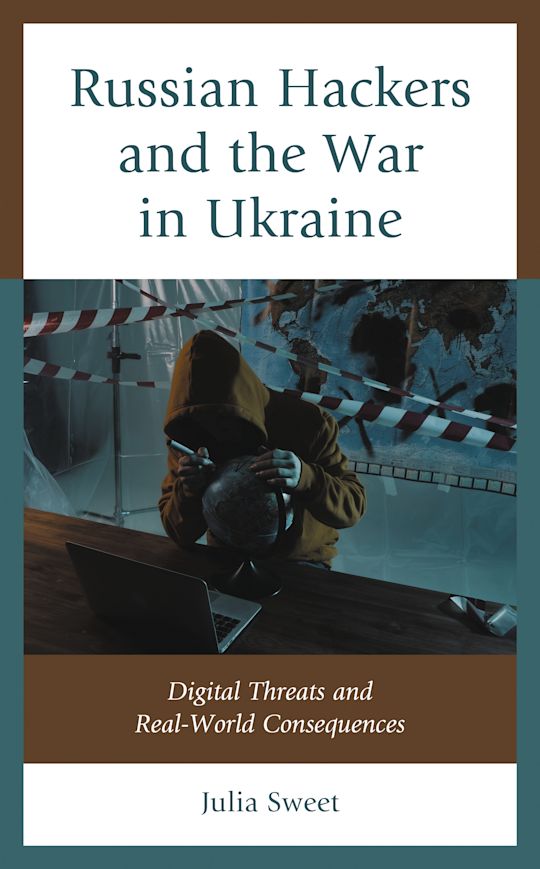
Russian Hackers and the War in Ukraine
Digital Threats and Real-World Consequences

You must sign in to add this item to your wishlist. Please sign in or create an account
Description
Since the beginning of the Russian aggression in Ukraine (February 2022), hackers have become more active on a global scale. The clashes between Russian and Ukrainian “cyber armies” are at its central front line. Russian Hackers and the War in Ukraine: Digital Threats and Real-World Consequences scrutinizes the unique situation where cyber criminals, who usually operate clandestinely, have surfaced and looked for public attention and approval. This book does not cover technical aspects of hacking. Instead, it scrutinizes the public activity of Russian hacker groups including building their brand, communicating with supporters, their financial situation, and other crucial aspects. This research draws mainly on open sources such as social media entries comprised of texts, videos, images, and chat comments which were collected through daily monitoring of the hacking groups’ activities.
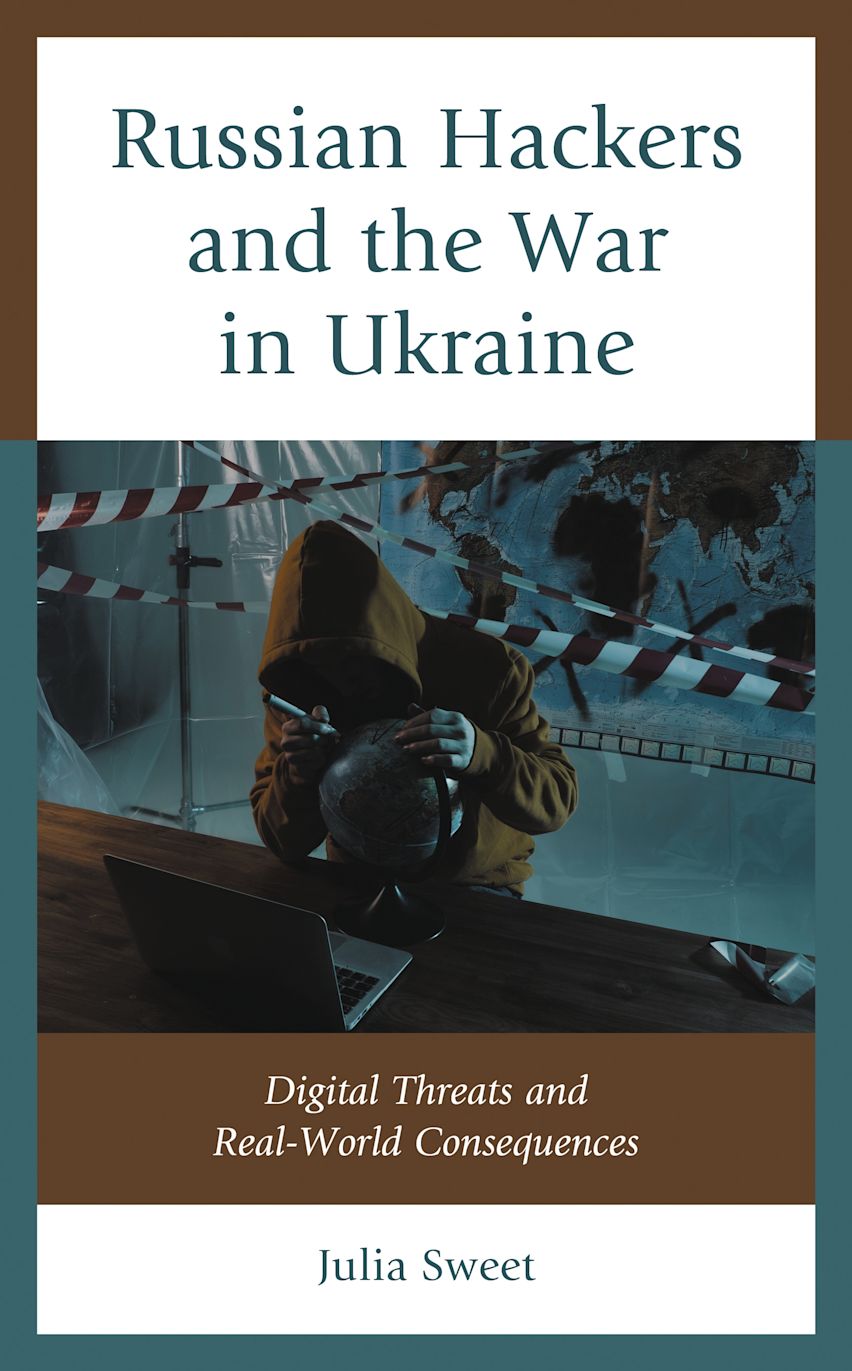
Table of Contents
Acknowledgments
Chapter 1. Hackers' Attacks on Russia
Chapter 2. Hacker Organizations: Active and Dangerous or Childish and Annoying
Chapter 3. Russian Hackers: Social Media Presence and Brand Building
Chapter 4. Hackers Gather Public Trust and Recognition
Chapter 5. Hackers' Attacks: Who Is a main target - Ukraine, Europe, or the United States?
Conclusion
Index
About the Author
Product details
| Published | 13 Nov 2023 |
|---|---|
| Format | Ebook (Epub & Mobi) |
| Edition | 1st |
| Extent | 248 |
| ISBN | 9781666935912 |
| Imprint | Lexington Books |
| Publisher | Bloomsbury Publishing |
About the contributors
Reviews
-
In this detailed, provocative analysis, Sweet, an analyst for the Terrorism Research and Analysis Consortium (TRAC), examines the activity of Russian hacker groups during the first year of the 2022 Russian war in Ukraine. In cyberwar, hackers and hacktivists attack computers or networks to cause damage or to extort payment—fighting "without spilling ... blood" (p. ix). Cyberwarfare tactics include distributed denial-of-service and botnet attacks, website defacement, and computer system intrusions. Hackers operate anonymously to avoid detection and prosecution and to maintain an aura of uncertainty about their true size and influence. Based on data collected from 10 hacker organizations espousing a pro-Russian political agenda, this book draws on thousands of social media entries and information from Russian media outlets. There are many troubling insights into cyberwarfare, examining the circulation of false claims, hacking by governments versus private actors, how hackers choose particular targets, their fraught relationships with governments, and how they raise and launder funds via cryptocurrency. Altogether, this is a valuable case study for understanding the nature and dynamics of hacking and hacktivism as an adjunct to the bloody war in Ukraine. Recommended. Advanced undergraduates through faculty.
Choice Reviews
-
Julia Sweet provides a timely, thorough, and detailed expert analysis of the cyber dimension to today’s geopolitical conflicts. Her research is innovative, deeply empirical, and incisive, bringing insights into how hackers and cyber criminals operate in political conflict situations, particularly the Russian-Ukrainian conflict. This is a must-read for anyone interested in cyber security and its implications on how we view and conceptualize conflict.
Gabriela Kuetting, Rutgers University
-
Russia’s attack on Ukraine has forced the world to confront old problems we thought had been settled—European stability, imperialist aggression, trench warfare but has also made us face new and potentially devastating challenges which come under the label of cyber-warfare. Julia Sweet’s book introduces us to the world of hacker organizations, particularly in Russia, which has been active for years on the international scene but is now coming into its own in terms of its disruptive intelligence, military, and public opinion capabilities. No one who wants to understand where warfare is going can afford to miss this thoroughly researched work, written by a scholar deeply familiar with the Russian scene.
Norman Samuels, Rutgers University
-
Julia Sweet’s latest book is not only informative but also important in recognizing the ideological shift hackers have made from remaining anonymous to seeking fame and building a fan following. A must-read for anyone looking to understand the theatre of cyberspace and the Russian-Ukraine War.
Veryan Khan, Terrorism Research and Analysis Consortium (TRAC)
ONLINE RESOURCES
Bloomsbury Collections
This book is available on Bloomsbury Collections where your library has access.