
- Home
- ACADEMIC
- Drama & Performance Studies
- Shakespeare Studies and Criticism
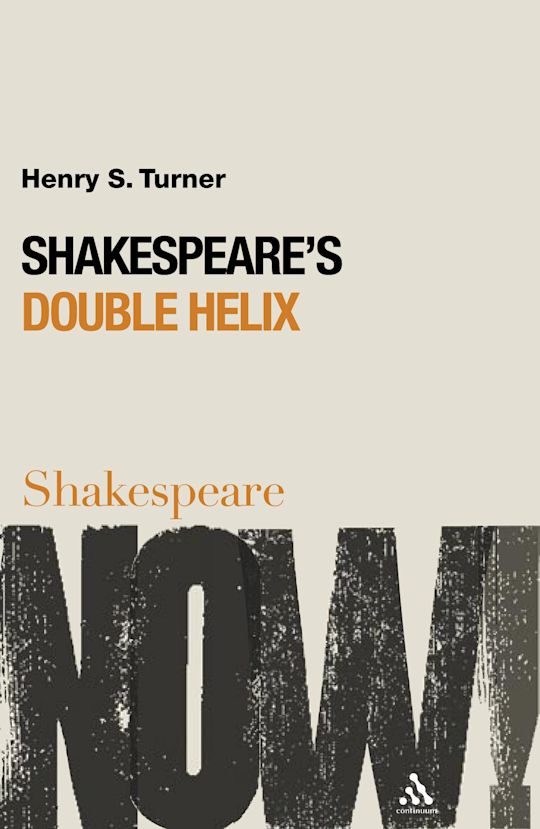
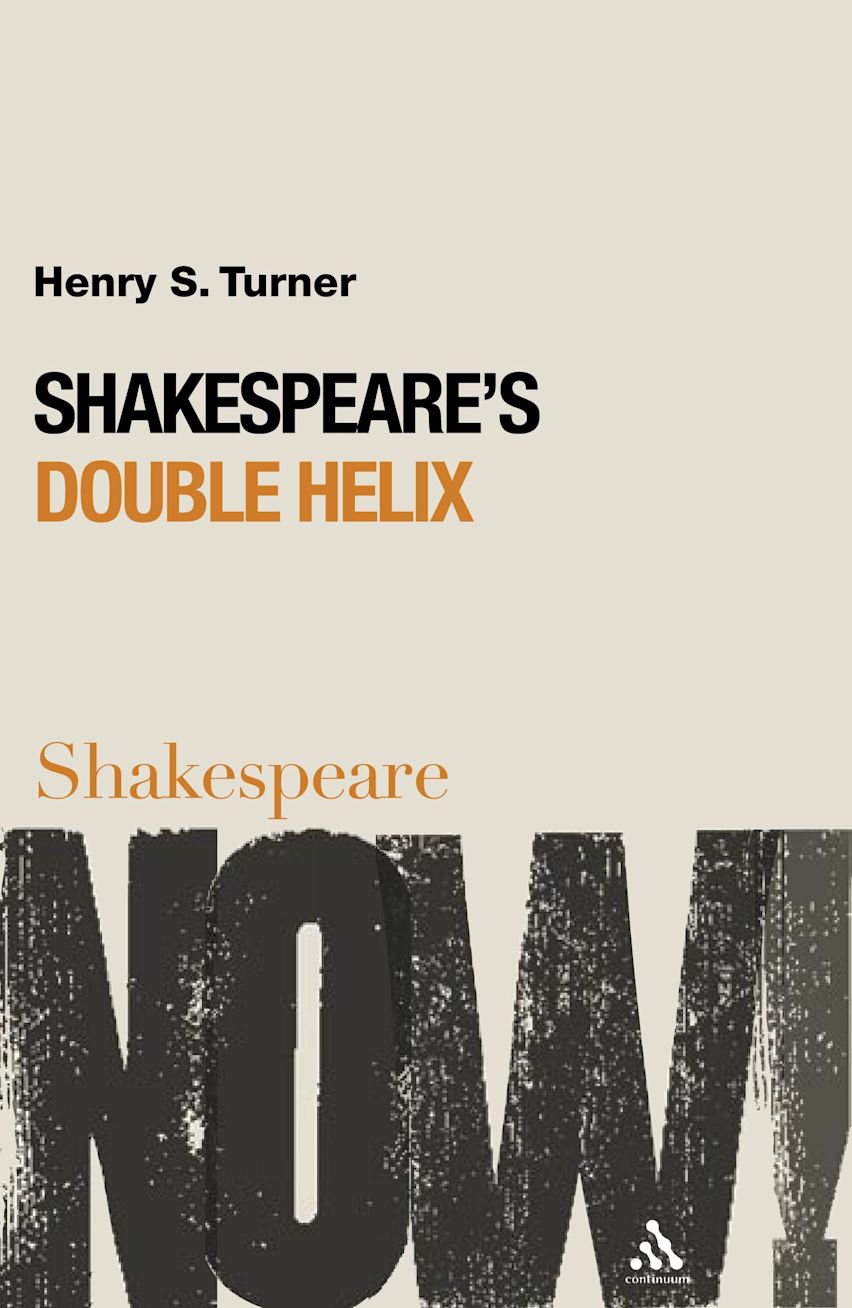
- Shakespeare's Double Helix
This product is usually dispatched within 2-4 weeks
- Delivery and returns info
-
Flat rate of $10.00 for shipping anywhere in Australia
You must sign in to add this item to your wishlist. Please sign in or create an account
Description
What does it mean to make life? This book focuses on one of the key questions for culture and science in both Shakespeare's time and our own. Shakespeare wrote A Midsummer Night's Dream during a period when the 'new science' had begun to unsettle the foundations of knowledge about the natural world. Through close analysis of the play and reflection on modern genetic engineering, Turner examines developments in early modern culture as it sought to come to terms with the new forces of magic, astrology, alchemy and mechanics - fields of knowledge that preoccupied the most adventurous intellects of Shakespeare's period and that promised limitless power over nature. Shakespeare's writing sheds light on current developments in science, ethics, law, and religion in contemporary culture. This book reveals the richness and peculiarity of early scientific thought in Shakespeare's time and shows how the questions he poses remain fundamental as the nature of 'life' has become one of the most pressing political, ethical, and philosophical problems for society today.
Table of Contents
Preface
When everything seems double
Two intertwining helices
That is the true beginning of our end
Then read the names of the actors
Index
Product details
| Published | 20 Dec 2007 |
|---|---|
| Format | Paperback |
| Edition | 1st |
| Extent | 144 |
| ISBN | 9780826491206 |
| Imprint | Continuum |
| Dimensions | 198 x 129 mm |
| Series | Shakespeare Now! |
| Publisher | Bloomsbury Publishing |
About the contributors
Reviews
-
Mention in Today's Books/ Bookweek
-
Reviewed by Peter J. Smith in Times Higher Education Supplement, 2008.
-
"the conjoined pieces of Turner's book provide a fresh double reading of A Midsummer Night's dream. The book's imbricated left face/right face presentation makes every page mirror, echo or pre-empt themes from the opposite essay. In this year of Darwin's birth, the Globe Theatre's 2009 takes A Midsummer Night's dream on a national tour. Shakespeare Now! seems thus doubtly apt." Flux Magazine, 1 July 2009
Tim Huntley
-
"...both an eye-catching attempt to assert Shakespearian contemporaneity and a genuine reflection of aspects of the volume's content...has a definite novelty value in the context of Shakespearian criticism, and it is raised above the merely gimmicky here by the highly apposite image that Turner finds for his title...a very readable, clear and informative quick overview of the development of modern genetic research...there is much interesting and stimulating comment in Turner's study, and the book itself ins undeniably memorable and thought-provoking." Oxford Journals Clippings: The Year's Work in English Studies, 2009
-
"The ambitious project of the Shakespeare NOW series is to bridge the gap between 'scholarly thinking and a public audience' and 'public audience and scholarly thinking'. Scholars are encouraged to write in a way accessible to a general readership and readers to rise to the challenge and not be afraid of new ideas and the adventure they offer. There are other bridges the series is ambitious to cross: 'formal, political or theoretical boundaries' - history and philosophy, theory, and performance." English Vol. 58, 2009
-
"In Turner's text past, present and the 'posthuman future' come together and Francis Bacon, Philip Sydney, and Bottom rub shoulders playfully with Richard Dawkins, Roland Barthes, and Puck." English Vol. 58, 2009
ONLINE RESOURCES
Bloomsbury Collections
This book is available on Bloomsbury Collections where your library has access.