Through the Gender Lens
A Century of Social and Political Development in Nigeria
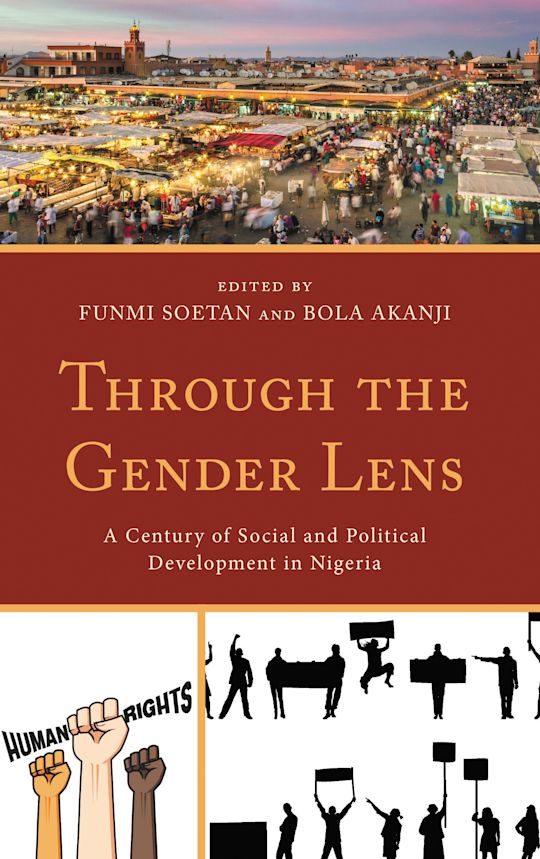

Through the Gender Lens
A Century of Social and Political Development in Nigeria
This product is usually dispatched within 2-4 weeks
- Delivery and returns info
-
Flat rate of $10.00 for shipping anywhere in Australia
Description
Sustainable development is now intricately linked not just to economic growth, but more importantly, to the quality of life of people in terms of their social status, political participation, cultural freedom, environmental justice and inclusive development. For previously colonized nations like Nigeria, these linkages are believed to have been influenced by the legacies of colonial rule, positively or otherwise. Through the Gender Lens: A Century of Social and Political Development in Nigeria looks at how colonialism has enabled or hindered the roles of the state in promoting inclusive development in general, and gender equality, in particular, in the process of nation building. In this edited volume, scholars analyze a host of policies, strategies and programs, as well as empirical evidence, to expose how types of governance — from direct colonial rule in the country from 1914, through her independence in 1960, a Republic in 1963, and to different post-independence governance periods — have influenced gender relations, and the impacts of these on Nigerian women. Diverse sectoral perspectives from education, health, culture, environment, and especially politics, are presented to explain the level of attainment (or otherwise) of gender equality and the implications for Nigeria’s road to sustainable development. The emphasis on the role of the state in development particularly indicts the social and political domains of governance. Hence, the main focus of inquiry in the volume. In its twelve chapters, the authors analyze available data and other information to draw relevant conclusions, identify lessons of experience, including from some cross-country comparisons, and make concrete recommendations for more gender-inclusive systems of governance in the next century of Nigeria’s nationhood.
Table of Contents
Bola Akanji and Funmi Soetan
Chapter Two: Gender and State Formation: A Comparative Study of Latin America and Africa
Bola Akanji, Tope Osanyintuyi, Michael Akanji and Christian Ubani
Chapter Three: Gender-Based Power Differentials and Sexual and Reproductive Health in Nigeria
Funmi Soetan and Bola Lukman Solanke
Chapter Four: Re-Thinking Gender Roles towards Promotion of Socio-Economic Advancement: Evolution of Entrepreneurship in Nigeria
Helen Aderemi
Chapter Five: Analysis of Gender-inclusiveness of Education Policies and Practices in Nigeria: Colonialism as Cause and Effect
Bola Akanji and Kolade Odekunle
Chapter Six: Environmental Change, Gender and Sustainable Development in Nigeria
Yinka Adesina and Theophilus Odekunle
Chapter Seven: Gender, Youth and Agricultural Development: Reflecting on the Centenarian Status of the Nigerian State
Dixon Torimiro
Chapter Eight: Gender, Citizenship and Democratic Governance in Nigeria
Funmi Para-Malam
Chapter Nine: Do we Understand the Value of Women in Political Leadership in Nigeria’s History?
Irene Pogoson
Chapter Ten: Gender, Culture and Development Debates in Nigeria.
Funmi Soetan, I.O. Olomola, Modupe Kolawole
Chapter Eleven: Women’s Activism for Gender Equality and Social Justice in Nigeria (1900-2015)
Kehinde Olayode
Chapter Twelve: Resisting Structural Violence: Continuity and Change in Women’s Street Protests in Nigeria
Isaac Olawale Albert
Product details
| Published | 12 Dec 2018 |
|---|---|
| Format | Hardback |
| Edition | 1st |
| Extent | 366 |
| ISBN | 9781498564724 |
| Imprint | Lexington Books |
| Illustrations | 13 tables; 15 graphs; 4 textboxes; |
| Dimensions | 236 x 153 mm |
| Series | Gender and Sexuality in Africa and the Diaspora |
| Publisher | Bloomsbury Publishing |
Reviews

ONLINE RESOURCES
Bloomsbury Collections
This book is available on Bloomsbury Collections where your library has access.
Related Titles