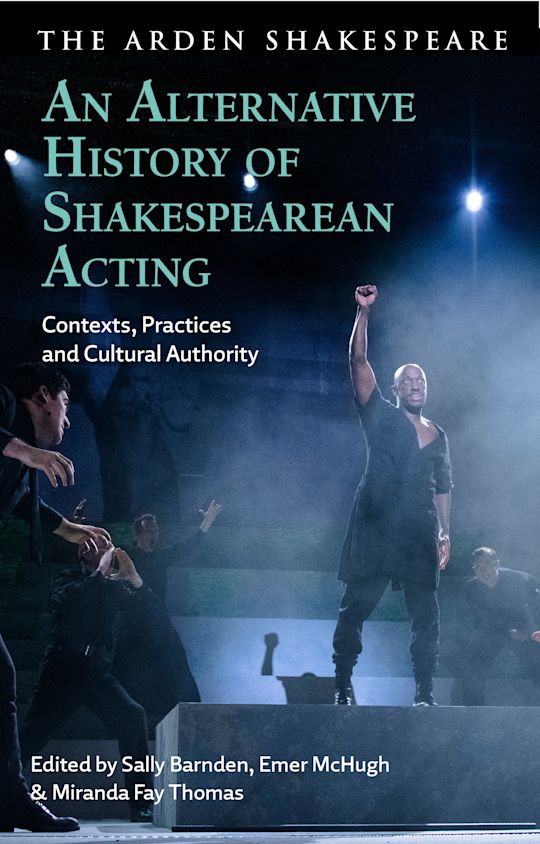
An Alternative History of Shakespearean Acting
Contexts, Practices and Cultural Authority

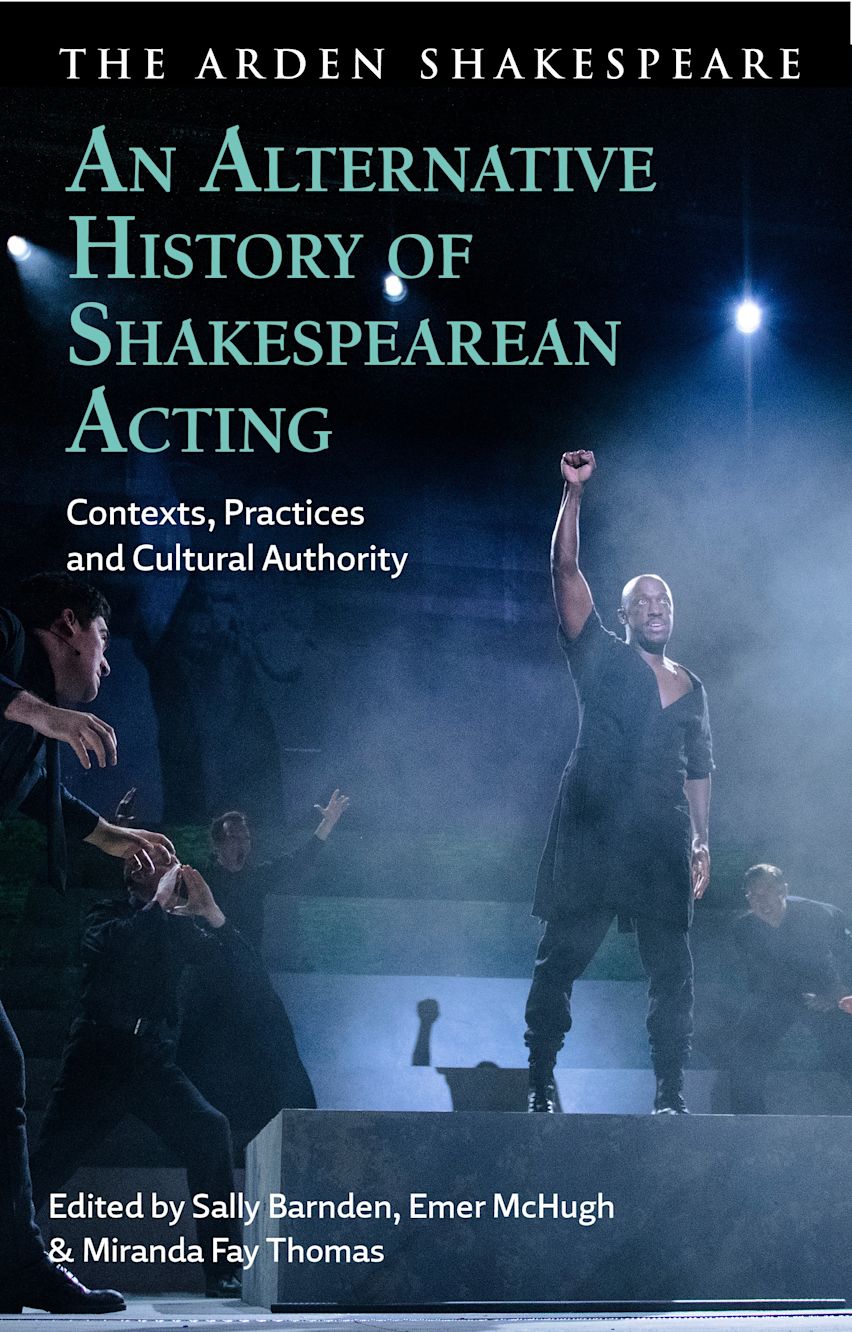
An Alternative History of Shakespearean Acting
Contexts, Practices and Cultural Authority
Buying pre-order items
Ebooks and Audiobook
You will receive an email with a download link for the ebook or audiobook on the publication date.
Payment
You will not be charged for pre-ordered books until they are available to be shipped. Pre-ordered ebooks will not be charged for until they are available for download.
Amending or cancelling your order
For orders that have not been shipped you can usually make changes to pre-orders up to 72 hours before the publishing date.
Payment for this pre-order will be taken when the item becomes available
Description
What are the qualities of a 'Shakespearean actor'? Who has access to this identity? And can 'Shakespearean' ever be a meaningful descriptor for acting identities without reinforcing conservative cultural assumptions?
An Alternative History of Shakespearean Acting provides a variety of perspectives from theatre history, disability studies, performance studies, critical race studies and global Shakespeares, among others, to address these core questions. The book confronts the overwhelmingly white, male, able-bodied and English-speaking emphases of many histories of Shakespearean acting, and asks how actors who do not fit into these identity categories might be recognised as 'Shakespearean'. It offers a provocative alternative to biographical approaches to Shakespearean acting, arguing that such approaches have tended to obscure the systemic association of Shakespearean performance with cultural imperialism. Addressing the idea of the Shakespearean actor in the context of its long-lasting entanglement with British colonial histories, the volume foregrounds colonized, marginalized and disabled performers and the challenge they might present to imperialist Shakespeares.
In four sections, the book offers different approaches to the study of Shakespearean acting, which expand the familiar list of famous names by considering dancers and amateurs as well as actors in traditionally neglected groups. The opening section explores the use of personal memory to fill lacunae in the archival record. This is followed by a set of chapters considering how intergenerational relationships might help to break down exclusionary practices. The third section addresses performers' uses of their voices and bodies to reinforce or challenge stereotypes. A final section proposes new, more inclusive frameworks for the history of Shakespearean acting which look towards a more capacious definition of 'Shakespearean actor' for the future.
Accessibility Information
Additional accessibility information
- EPUB 3.0
- Conforms with the requirements of EPUB Accessibility Spec v1.1
- WCAG level AA
- WCAG v2.2 compliant
- accessibility@bloomsbury.com
Hazards
The publication contains no hazards
Support for non-visual reading
- No accessibility features offered by the reading system, device or reading software are disabled or otherwise unusable with the product
- Has alternative text descriptions for images
Visual adjustments
Appearance of the text and page layout can be modified according to the capabilities of the reading system (font family and size, spaces, as well as color of background and text)
Navigation
- Page list to go to pages from the print source version
- Elements such as headings, tables, etc for structured navigation
- All or substantially all textual matter is arranged in a single logical reading order
- Content is enhanced with ARIA roles to optimize organization and facilitate navigation
- Purposes of all links are made clear
Rich content
Language tagging provided
Table of Contents
Introduction: Who is a Shakespearean Actor? – Sally Barnden (Swansea University, UK), Emer McHugh (Queen's University Belfast, UK) and Miranda Fay Thomas (Trinity College Dublin, Ireland)
Part I: Constructing the Figure of the Shakespearean Actor
1. A Local Habitation and Unnamed?: (Partially) Recovering the Local, Plural 'Shakespearean Actor' – Kim Gilchrist (Cardiff University, UK)
2. Black Shakespeareans in Colonial Zimbabwe – Eli Cumings (Columbia University, USA)
3. The Deaf Shakespearean Actor – Jill Bradbury (University of Maryland, USA)
Part II: Intergenerational Solidarity
4. The Shakespearean Actor as Cultural Ambassador: Edric Connor in Pericles (1958) – Jim Taylor, (Independent Scholar)
5. 'Mr Macready in little': Charlotte Cushman, William Charles Macready, and Shakespearean Mentorship – Alexandra E. LaGrand (Texas A&M University, USA)
6. Speaking Shakespeare: Naseeruddin Shah and the Case for Indian Shakespeares – Niyanta Sangal (University of Maryland, USA)
Part III: 'Shakespearean' Bodies
7. The Shakespearean Actress and the Last Fuckable Day – Valerie M. Fazel (Arizona State University, USA) and Louise Geddes (Adelphi University, USA)
8. The Actor's Imagination: Hindi Cinema, Shakespeare, and Intimacy in Vishal Bhardwaj's Haider – Anita Raychawdhuri (University of Houston-Downtown, USA)
9.Camp Stylization, Queer Politics and the Shakespearean Actor – Adele Lee (Emerson College, USA)
10. Disability and the Great Tragedian: Kemble, Kean and Richard III – Essaka Joshua (University of Notre Dame, USA)
Part IV: Alternative Narratives
11. Novelty Acts: A Scattered History of the First Cross-Dressed Hamlets – Madeleine Saidenberg (University of Oxford, UK)
12. 'Tell me what scares you': On Brave Space and Black and White Masculinities in Keith Hamilton Cobb's American Moor – Jamie Paris (University of Manitoba, Canada)
Index
Product details

| Published | Jan 21 2027 |
|---|---|
| Format | Ebook (Epub & Mobi) |
| Edition | 1st |
| Pages | 272 |
| ISBN | 9781350541979 |
| Imprint | The Arden Shakespeare |
| Illustrations | 13 bw illus |
| Publisher | Bloomsbury Publishing |
Related Titles