Archaeological Reasoning
A Guide to Understanding the Past
- Textbook
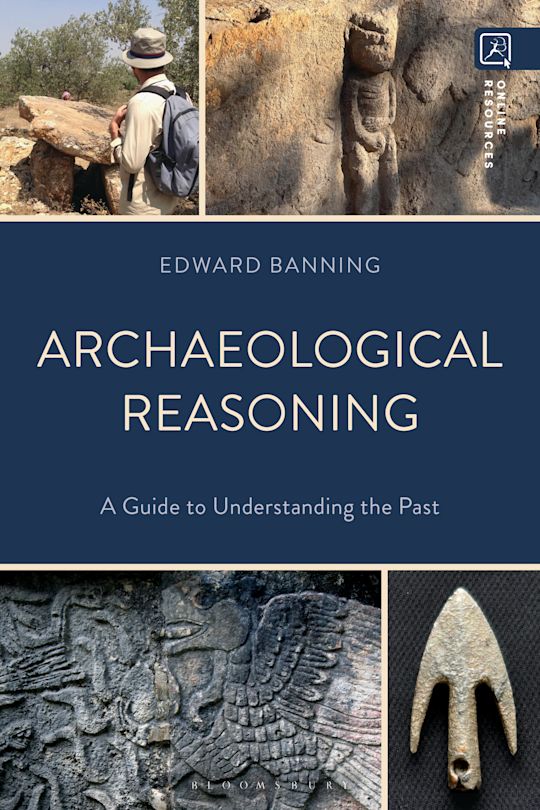

Archaeological Reasoning
A Guide to Understanding the Past
- Textbook
This product is usually dispatched within 1 week
- Delivery and returns info
-
Free CA delivery on orders $40 or over
Description
Bridging the gap between introductory and advanced archaeology courses, this book builds confidence in working with the tools of archaeological research and how to make plausible inferences about the past.
How do archaeologists learn what happened thousands of years ago when all they have to work with are clusters of broken artifacts or patterns of post holes? Are their explanations any better than theories about ancient civilizations that we see in social media or popular streaming services? This book answers those questions and more.
Archaeological Reasoning: A Guide to Understanding the Past explains the ways archaeologists draw conclusions from evidence, recognizing that those interpretations will change as new evidence comes into play. Readers will learn more about the research strategies and methods that archaeologists use to understand ancient technologies, economies, social and political systems, and, more specifically, to help them find, date, or classify sites, artifacts, or whole societies. The book also helps them learn to “think statistically” without necessarily doing any statistics, and reinforces skills in map-reading and effective ways to explore data with graphs.
The book is richly illustrated with more than 80 maps, images and diagrams to help students visualize sites and artifacts and understand key concepts.
Archaeological Reasoning includes 12 exercises, with fictitious case studies from around the world and different research traditions. These build students' confidence in how to interpret data, without any expectation of statistical background. Using realistic, messy, but relatively small data sets, these exercises allow readers to think critically about how to draw reasonable conclusions, to appreciate that there may be alternative explanations, and to learn how to make strong, evidence-based arguments to support their own interpretations.
Table of Contents
Chapter 1. Introduction: How Archaeologists Figure Things Out
Chapter 2. Lithic Technology and What We Learn from Stone Tools
Chapter 3. Pottery and Style: Function and Expression in a Plastic Medium
Chapter 4. Stratigraphy and Dating: Putting Past Events in Order
Chapter 5. Household Archaeology: The Local Scale of Social Archaeology
Chapter 6. Sites, Settlements, and Demography: What's in a Site?
Chapter 7. Landscape Archaeology and Regional Settlement Patterns
Chapter 8. Mobility and Sedentism: Dynamic Aspects of Settlement Systems
Chapter 9. Moving the Goods: The Archaeology of Trade and Exchange
Chapter 10. Wealth, Status, and Mortuary Archaeology
Chapter 11. Food and Foodways in Archaeology
Chapter 12. Who's Working, and How Hard? The Archaeology of Labor
Bibliography
Index
Product details

| Published | Feb 19 2026 |
|---|---|
| Format | Hardback |
| Edition | 1st |
| Pages | 368 |
| ISBN | 9798765157480 |
| Imprint | Bloomsbury Academic |
| Illustrations | 113 bw illus |
| Dimensions | 229 x 152 mm |
| Publisher | Bloomsbury Publishing |
Reviews

ONLINE RESOURCES
Bloomsbury Collections
This book is available on Bloomsbury Collections where your library has access.
Related Titles