The Concept of Ordered Liberty and the Common-Law Due-Process Tradition
Slaughterhouse Cases through Obergefell v. Hodges (1872–2015)
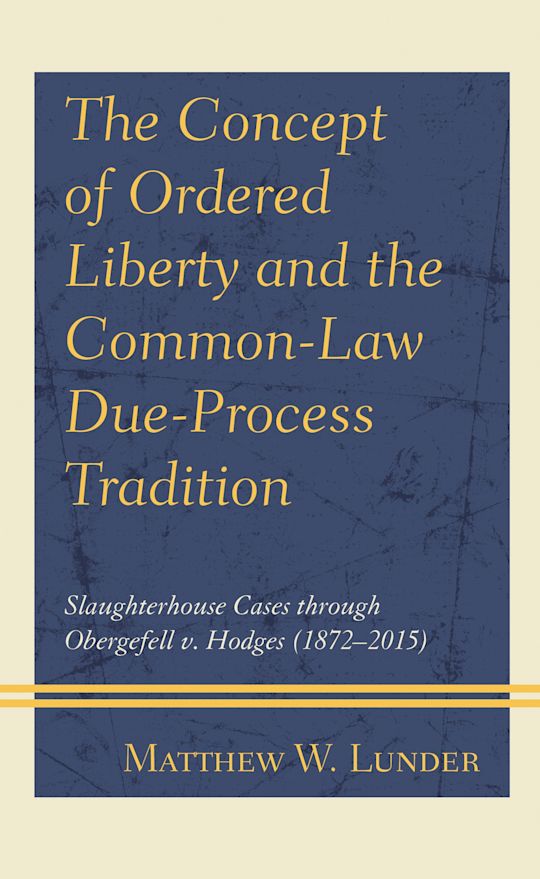

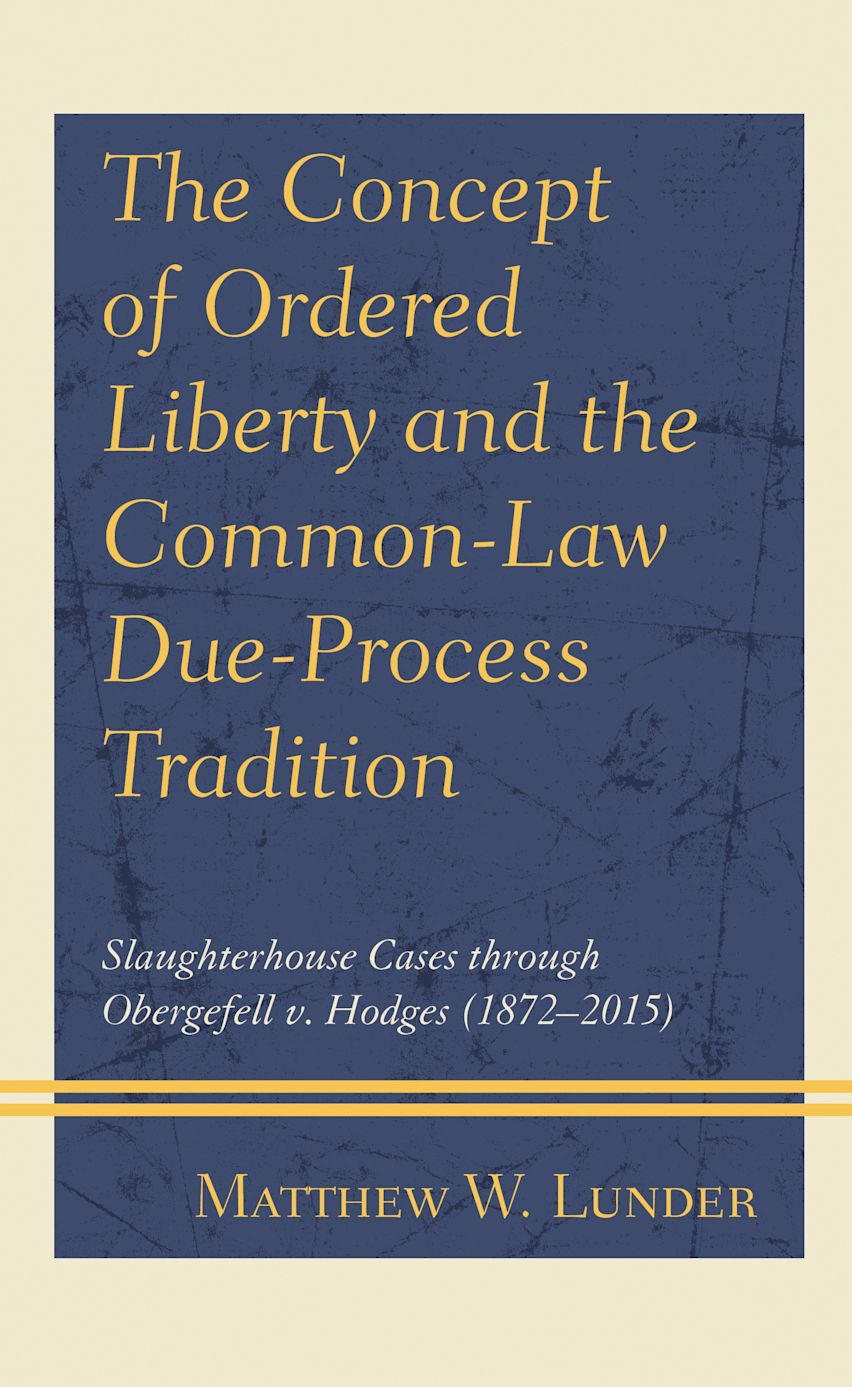
The Concept of Ordered Liberty and the Common-Law Due-Process Tradition
Slaughterhouse Cases through Obergefell v. Hodges (1872–2015)
Description
The Concept of Ordered Liberty is a story of due process from the common-law tradition. Told through Supreme Court cases against a backdrop of political theory, legal philosophy and history, it illuminates a mid-twentieth-century dialectic between theories—liberal and conservative—for resolving controversies about state interference with personal liberties. So pervasive was the partisanship flowing from a riven body politic that every institution comprising the fabric of American society, including the federal courts, was soaked in it. But the ideological contest is not the story’s primary concern. More pertinent to our dilemma today is what the clash of ideologies eclipsed: a venerable judicial practice deeply rooted in American history and tradition. The moral of the story is in this praxis at its center and its understanding of the limits of legislative and judicial power. The modern liberal and conservative approaches to fundamental rights fall short of the tradition, having strayed from the common-law concept of ordered liberty. Readers will find a suprapartisan perspective on the federal courts’ obligation to resolve disputes about our Nation’s most controversial issues, and a critical reflection on the modern Supreme Court’s role in its politics.
Table of Contents
Prologue
Part I: The Common-Law Tradition
1 A Bulwark Against Arbitrary Legislation
2 Liberty and Economic Ideology
3 Philosophy, Incorporation, and Natural Law
4 A Reasonable and Sensitive Judgment
5 A Zone of Substantive Rights
Part II: Fundamental Rights and Modern Conservatism
6 Procedural and Substantive Due Process
7 Deeply Rooted in History and Tradition
8 A Different Description of Fundamental Liberties
9 The Inquiry Thus Reduces
Part III: The Modern Justification for Arbitrariness Review
10 The Dimension of Personal Liberty
11 The Guideposts of History, Tradition, and Practice
12 The Tradition Is A Living Thing
Part IV: A More Transcendent Liberty
13 Certain Actions Are Prohibited
14 A Prudential Exercise Of The Judicial Power
15 What Freedom Must Become
Epilogue
Product details
| Published | Jan 12 2021 |
|---|---|
| Format | Ebook (PDF) |
| Edition | 1st |
| Pages | 284 |
| ISBN | 9781978773516 |
| Imprint | Lexington Books |
| Publisher | Bloomsbury Publishing |
Reviews

ONLINE RESOURCES
Bloomsbury Collections
This book is available on Bloomsbury Collections where your library has access.
Related Titles