
- Home
- ACADEMIC
- Literary Studies
- Gender and Sexuality in Literature
- Creating Your Own Space
You must sign in to add this item to your wishlist. Please sign in or create an account
Description
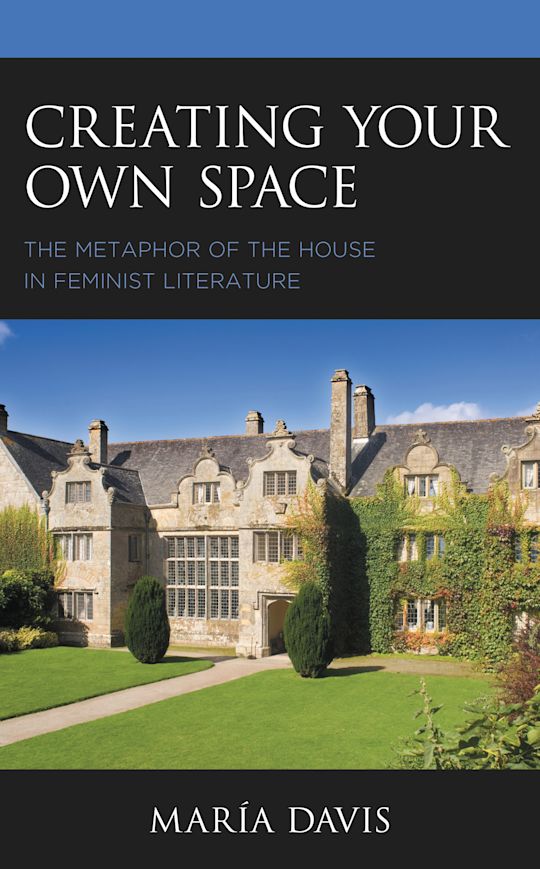
The relationship between women and houses has always been complex. Many influential writers have used the space of the house to portray women's conflicts with the society of their time. On the one hand, houses can represent a place of physical, psychological and moral restrictions, and on the other, they often serve as a metaphor for economic freedom and social acceptance. This usage is particularly pronounced in works written in the nineteenth and twentieth century, when restrictions on women's roles were changing: "anxieties about space sometimes seem to dominate the literature of both nineteenth-century women and their twentieth-century descendants." The Metaphor of the House in Feminist Literature uses a feminist literary criticism approach in order to examine the use of the house as metaphor in nineteenth and twentieth century literature.
Table of Contents
Chapter 2: The House and Female Mental Entrapment: The Yellow Wallpaper and Wide Sargasso Sea
Chapter 3: The House as a Metaphor for Social Performance: The House of Mirth and The Awakening
Chapter 4: The House as a Symbol of Female Physical Entrapment: A Doll House and La casa de Bernarda Alba
Chapter 5: The House as a Magical Space: The House of the Spirits and Like Water for Chocolate
Chapter 6: The House as a Metaphor of Social and Racial Integration: Brown Girl, Brownstones and A Raisin in the Sun
Product details
| Published | Mar 04 2021 |
|---|---|
| Format | Ebook (PDF) |
| Edition | 1st |
| Pages | 84 |
| ISBN | 9781978799608 |
| Imprint | Lexington Books |
| Series | Innovation and Activism in American Women's Writing |
| Publisher | Bloomsbury Publishing |
About the contributors
Reviews
-
A house, seldom a home for women —the more luxurious or impoverished, the more imprisoning, the more beautifully designed, the more objectifying, the more socially abiding, the more privately constraining— is the focus of this useful introduction to feminist and comparative studies covering a wide range of works by authors from an equally wide range of countries.
Candelas Gala, Charles E. Taylor Professor of Romance Languages and Literatures Emerita, Wake Forest University
-
Dr. Davis uses a feminist literary criticism approach to examine the use of the house as metaphor during the nineteenth and twentieth centuries. She clearly analyses the dichotomy imbedded in this metaphor. She explains how houses can represent a place of physical, psychological, and moral restrictions for women on one hand, and a metaphor for economic freedom and social acceptance on the other hand. Dr. Davis has demonstrated how the study of the space of the house in feminist literature is crucial to fully understanding these literary works. This book is a superb contribution to feminist comparative literature.
Jesus Pico Argel, Indiana University, Kokomo
-
María E. Davis has written a wonderful and interesting book about women in their houses. This is a very rich and important theme since throughout history and in all different cultures, one can see how women are the center of the house, but they also often feel trapped in their homes. When one thinks about this theme, one can find many great examples of literature written about women in the house. María E. Davis finds some very good, and important works from different cultures and genres to support her theme. I highly recommend her book.
Sarah D'empaire-Wilbert, University of North Carolina, Greensboro
ONLINE RESOURCES
Bloomsbury Collections
This book is available on Bloomsbury Collections where your library has access.