
- Home
- ACADEMIC
- History
- Second World War
- Dateline-Liberated Paris
- Delivery and returns info
-
Free CA delivery on orders $40 or over
You must sign in to add this item to your wishlist. Please sign in or create an account
Description
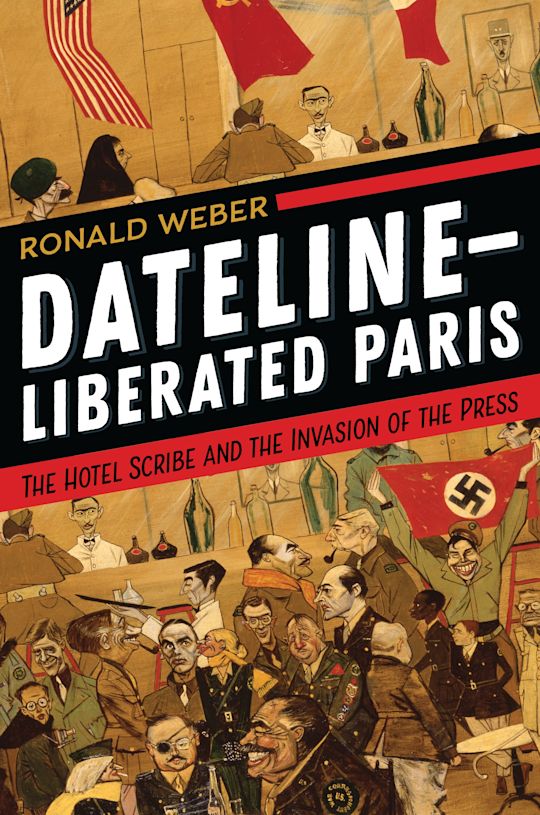
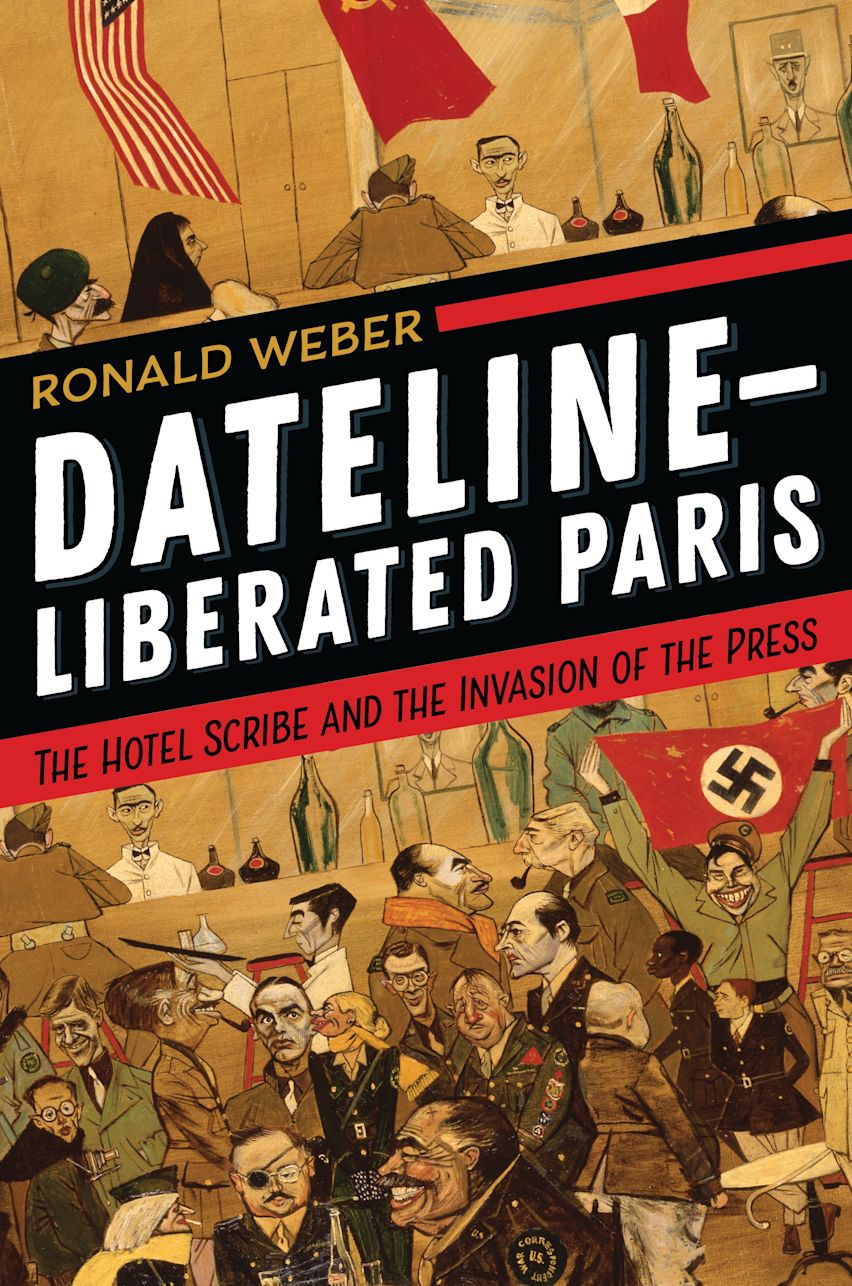
Vividly capturing the heady times in the waning months of World War II, Ronald Weber follows the exploits of Allied reporters as they flooded into liberated Paris after four dark years of Nazi occupation. He traces the remarkable adventures of the men and women who lived, worked, and played in the legendary Hôtel Scribe, set in a highly fashionable part of the largely undamaged city. Press jeeps and trailers packed the street outside, while inside the hotel was completely booked with hundreds of correspondents. The busiest spot was the dining area, where the clatter of typewriters combined with shouts of correspondents needing hot water to brew coffee from military powder. But the basement-level bar was the hotel’s top attraction, where famed war correspondents like Ernie Pyle, Walter Cronkite, A. J. Liebling, Ernest Hemingway, Martha Gellhorn, Janet Flanner, Lee Miller, Marguerite Higgins, Irwin Shaw, Edward Kennedy, Charles Collingwood, Robert Capa, and many others held court while in the company of military censors and top brass. Weber uncovers the struggles between correspondents and Allied officials over censorship and the release of information, the heated press chaos surrounding the war’s end, and the drama of the second German surrender orchestrated by the Russians in shattered Berlin. The elation of total victory was mixed with the abrupt emptiness of a task finished. While work on the Continent remained for journalists, it now dealt with the slog of the occupation of Germany rather than the blood and glory of war. Yet Weber shows there were many reasons to carry on after VE Day in this delightfully entertaining account of the hotel where correspondents were regularly briefed on the war and its aftermath, wrote their stories, had them transmitted to international media outlets, and rarely neglected the pleasures of a Paris reborn until December 1, 1945, when the Hôtel Scribe was officially vacated by the American military.
Table of Contents
Part I: Arriving
Chapter 1 The Canadian Connection
Chapter 2 Jeeping to Paris
Chapter 3 Mon Général
Chapter 4 PROs Move In
Part II: Staying
Chapter 5 Liberation Revels
Chapter 6 Good Quarters
Chapter 7 An American Crossroads
Chapter 8 The Hottest Noncombat Spot
Chapter 9 The Great Parisian Magnet
Chapter 10 Latecomers
Chapter 11 Upstairs
Chapter 12 Downstairs
Part III: Leaving
Chapter 13 Jeeping to Berlin
Chapter 14 Last Scrap of the Press
Chapter 15 The Guns Were Still
Chapter 16 Snafu Revisited
Epilogue A Hotel like Any Other
Acknowledgments
Notes
Sources
Index
Product details
| Published | Apr 05 2019 |
|---|---|
| Format | Hardback |
| Edition | 1st |
| Extent | 232 |
| ISBN | 9781538118504 |
| Imprint | Rowman & Littlefield Publishers |
| Illustrations | 8 b/w illustrations |
| Dimensions | 233 x 159 mm |
| Publisher | Bloomsbury Publishing |
About the contributors
Reviews
-
An inventive take on WWII nonfiction, Ronald Weber's Dateline-Liberated Paris: The Hotel Scribe and the Invasion of the Press focuses on the Allied reporters who swept through the halls of the famous Hotel Scribe after the liberation of Paris. The Hotel Scribe was a landmark of 1940s Paris, its wooden bar a famous watering hole for war correspondents such as Ernie Pyle, Walter Cronkite, Marguerite Higgins, and Ernest Hemingway as they battled fitful typewriters and jumped through censorship hoops to send news of the waning war to their respective outlets. The corridors and dining halls of the hotel come alive on the pages, as do the streets of Paris as correspondents stretch their legs along the spared streets, recounting memorable museum visits and encounters with Picasso. VE-Day is portrayed in all its tearful, joyous glory, the streets filling with citizens celebrating the final breath of the war. Brimming with memorable anecdotes, photographs, and newspaper excerpts, Dateline-Liberated Paris is a love letter to the golden age of journalism set in the city of lights
Foreword Reviews
-
Keen to attach a coveted “Liberated Paris -” dateline to their dispatches, five Canadian newsmen threaded jeeps through French crowds “mad with happiness” on Aug. 24, 1944. Their destination: the fashionable (and aptly named) Hôtel Scribe, the newest Allied press camp on the march from Normandy to Berlin. Though Nazi propaganda officers had abandoned the hotel only earlier in the day, the journalists succeeded in broadcasting word of the city's impending deliverance from the rooftop that night. As recounted in historian Ronald Weber's immersive “Dateline - Liberated Paris,” the Canadian reporters were the vanguard of an offbeat invasion force: By two months after D-Day, more than 900 Allied scribes had been accredited to cover the European theater. . . . Short of food, cigarettes, coal and public transport, Paris in the post-liberation period lacked “virtually everything needed for everyday life,” Weber writes. “Yet what it singularly had was itself, the magnificent and largely undamaged city that appealed as much as ever to the Western mind and imagination.”
The Washington Post
-
The book profiles the well-known correspondents, as well as the lessor known. The book also profiles the brave and resourceful women war correspondents, such as Helen Kirkpatrick, Marguerite Higgins, and Ernest Hemingway' then-wife, Martha Gellhorn, and his future wife, Mary Welch. . . . “Dateline Liberated Paris” is a well-researched book that covers how World War II was covered by the men and women war correspondents.
The Washington Times
-
Paris's luxury Hotel Scribe bursts to life in Weber's engaging behind-the-scenes tale of its starring role as communications central for war correspondents at the end of WWII. This well-researched profile of the legendary establishment captures the euphoria of war reporting, picking up where the author's last book (News of Paris) ends. Drawing on articles, letters, and journals from literary luminaries such as Ernest Hemingway, A.J. Liebling, and Janet Flanner, Weber reveals how these writers pursued their work and took their pleasure. Most daring are the female correspondents such as Helen Kirkpatrick, who traveled with a French armored division, and Iris Carpenter of the Boston Globe, who joined a French Resistance group for “nocturnal 'Hun hunting.'?” In Part I, the Occupation ends and newspaper writers angle for a scoop. Part 2 evokes the sounds of clacking typewriters as correspondents fill the reception area and the basement bar, and the book closes with the hotel's evacuation, during which writers decamped to Berlin. There are anecdotes and titillating details galore-Charles Collingwood is described as receiving guests to his room at the Scribe in a red silk dressing gown, surrounded by Picasso paintings he'd won playing poker. This story of remarkable, brave reporters is a colorful and satisfying historical treat.
Publishers Weekly
-
As WWII reached its final months in Europe, there was another invasion of Paris, by the Allied reporters who occupied the aptly named Hotel Scribe . . . Among those correspondents were Ernest Hemingway, Walter Cronkite, Andy Rooney, Janet Flanner, Charles Collingwood, Ernie Pyle, Martha Gellhorn, and Marguerite Higgins. . . . Weber skillfully depicts the frenzy and fraternity of this singular press camp, where journalists often clashed with military officials and censors but all were united by a common cause and energized by the thrill of victory.
Booklist
-
When Andy Rooney reminisced about the Hôtel Scribe and the liberation of Paris, a wistful look would come into his eyes. He would deliberately elongate the double “e-e” sound in the French pronunciation of “Scribe,” savoring the memory. And what a memory! Rooney was a young reporter for Stars and Stripes when the Allied press corps descended on the City of Light in late August 1944. Then a teetotaler, Rooney decided to celebrate Paris's liberation by uncorking a bottle of wine. How many hundreds, nay thousands, of bottles of wine and liquor were uncorked at the Scribe during the late summer and fall of 1944?
As Ronald Weber reminds us in his delightful Dateline-Liberated Paris, the great wartime photographer Robert Capa said of those heady days in Paris: 'Never were there so many who were so happy so early in the morning.'
It wasn't all toasting and boasting at the Scribe bar. As Weber relates, correspondents were engaged in often-vicious battles for big stories and exclusives. Given primitive means of transmission, there was no guarantee that their bosses would actually see their stories. Rooney's big exclusive-he was an eyewitness to the 2nd French Armored Division's leading-edge assault into the capital-never reached his editors at Stars and Stripes.
Fortunately, most stories composed in and around the Scribe got through. Even casual WW II buffs will enjoy Weber's charming account of the tug-of-war between correspondents and Allied military officials played out in 'a great city where everybody is happy,' as the New Yorker's inimitable A. J. Liebling put it.Timothy M. Gay, author of the Pulitzer-nominated Assignment to Hell: The War Against Nazi Germany with Correspondents Walter Cronkite, Andy Rooney, A. J. Liebling, Homer Bigart, and Hal Boyle