- Home
- ACADEMIC
- Literary Studies
- Medical Humanities
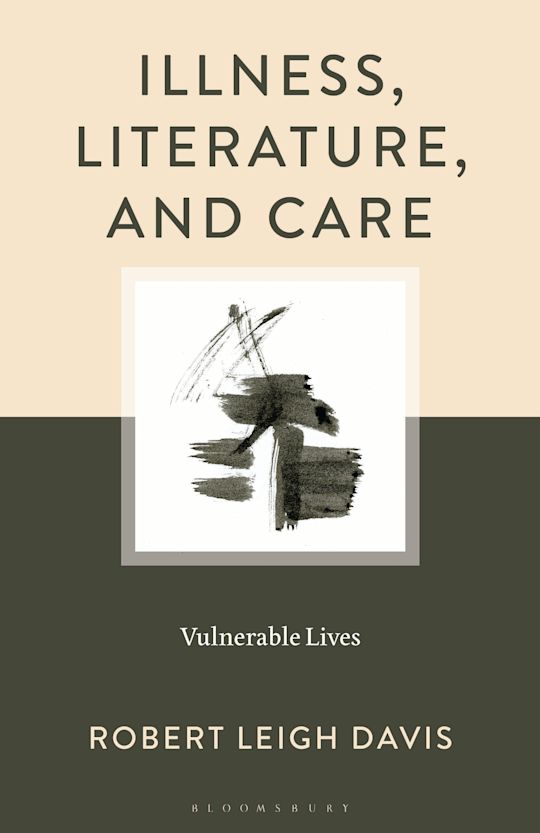
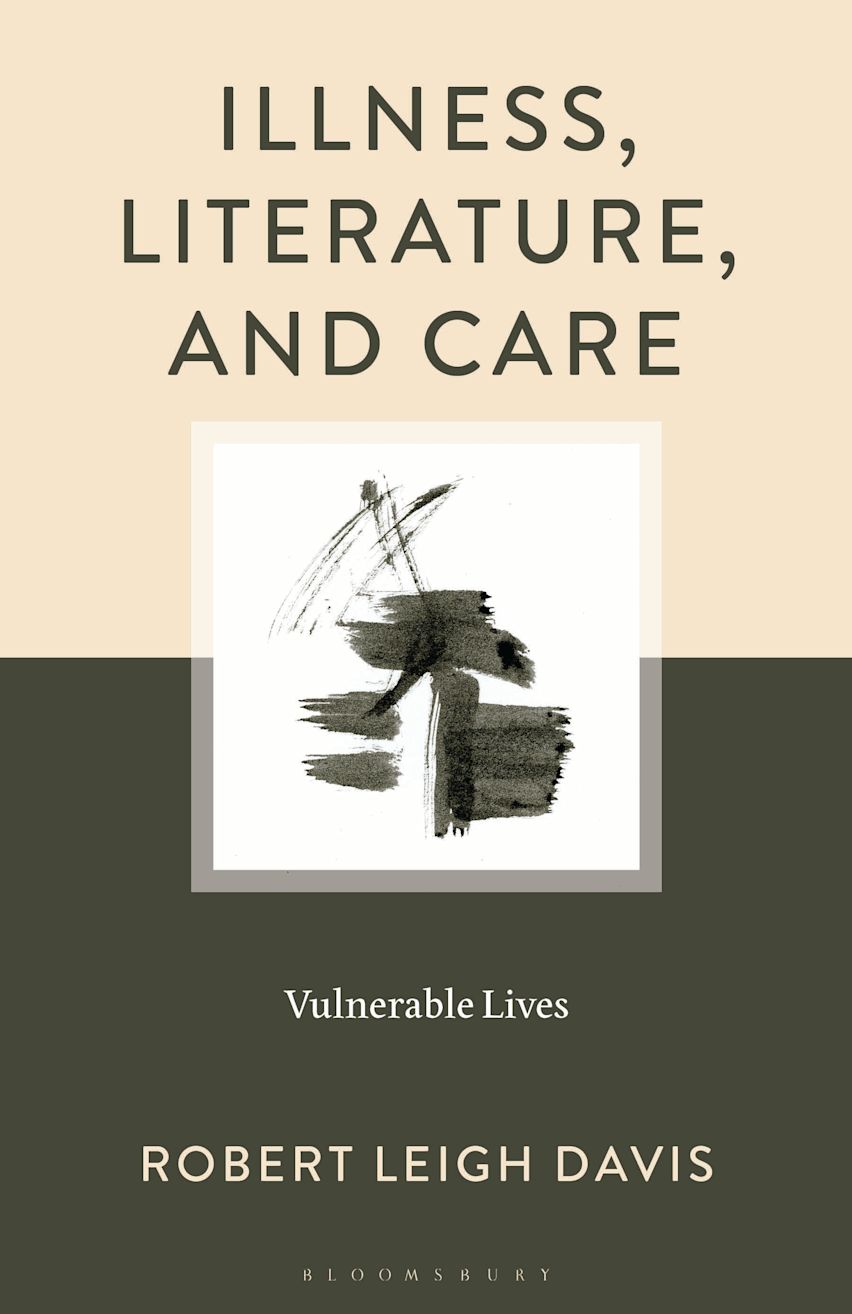
- Illness, Literature, and Care
Payment for this pre-order will be taken when the item becomes available
- Delivery and returns info
-
Free CA delivery on orders $40 or over
You must sign in to add this item to your wishlist. Please sign in or create an account
Description
At the heart of Illness, Literature, and Care is a view of care as attunement, a dynamic process of fragile rapport.
Care in this mode does not abandon tradition and expertise, the collection of skills and practices built up over time. Instead, it holds that expertise lightly in the face of each new encounter, rising to the possibilities of the present moment rather than deploying a preformed response. Robert Leigh Davis shows how the open character of attunement situates care in spontaneous interactions, often with strangers, where abstract principles are less valuable than meeting people on their own terms, listening to them, being in sync with them-and then, allowing that meeting to guide the choices that follow. Davis develops this idea by examining scenes of care in Walt Whitman, William Carlos Williams, Simone Weil, Flannery O'Connor, Nancy Mairs, Cortney Davis, graphic medicine, and the literature of nursing. Davis shows that good care is not an abstract principle one might work out in universal terms, but an evolving set of practices tuned to the demands of a concrete occasion: a care moment.
Table of Contents
Acknowledgments
About the Author
Introduction
1. Facing War: Walt Whitman and Simone Weil
2. Pragmatism and Care: William Carlos Williams and John Dewey
3. Violence and Vulnerability in Flannery O'Connor
4. Care and the Uncanny in Nancy Mairs
5. Reframing Dementia: Graphic Care in Dana Walrath and Sarah Leavitt
6. The Practice of the Everyday in the Literature of Nursing
Bibliography
Index
Product details

| Published | Jan 08 2026 |
|---|---|
| Format | Hardback |
| Edition | 1st |
| Extent | 232 |
| ISBN | 9781666949193 |
| Imprint | Bloomsbury Academic |
| Illustrations | 6 b/w illus |
| Dimensions | 229 x 152 mm |
| Publisher | Bloomsbury Publishing |
About the contributors
Reviews
-
Robert Davis's dazzling study, Illness, Literature, and Care: Vulnerable Lives illuminates the crucial role played by emotional and physical attunement in caregiving. Arguing that "literature . . is an attunement device that schools its readers in reciprocity and rapport," Davis explores the tensions of caregiving revealed in the writings of Walt Whitman, William Carlos Williams, Simone Weil, Flannery O'Connor, Nancy Mairs, and Cortney Davis as well as graphic memoirs about dementia care by Dana Walrath and Sarah Leavitt and the literature of nursing. Informed by psychologist Daniel Stern as well as thinkers ranging from John Dewey to Kelly Oliver and Annemarie Mol, this study offers new ways to understand and support the caring self. Davis writes beautifully, to boot: this is a wonderful read!
Susan Squier, Brill Professor Emerita of Women's, Gender, and Sexuality Studies and English, The Pennsylvania State University, USA
-
For the many years I worked as a nurse, and for the many years I've written poems and stories about being a nurse, I never thought academically about what I was doing. Of course, I used my clinical judgment and the knowledge gained through interactions with so many who were ill and suffering--and I almost automatically opened my heart to patients, often sensing in my own body an echo of their vulnerabilities. But when I read Robert Davis's Illness, Literature, and Care, my breath catches in my throat when I come to the word "attunement." Yes, I think. A word to name something beyond words, something felt but so difficult to pin down. In Vulnerable Lives Davis engages with a wide variety of authors--from Whitman to Mairs--whose works honor and inform this complicated dance we call "caring." Vulnerable Lives is scholarly-- and yet it is also achingly tender. Davis gives us a way to think deeply about all the individual moments, actions, and attentions that constitute that mysterious energy, the being one with, that I've experienced as a nurse. Like the best, most intuitive caregiver, he has done this not only with scholarly attention but also with deep tenderness.
In Robert Davis's Illness, Literature, and Care I read "Caring for someone else depends on a capacity for insecurity and exposure," and I'm transported back to a day when I paused just inside a patient's doorway, a little afraid to enter. For a few moments I simply waited, existing within the room's atmosphere. Colorful get-well cards were taped to the whiteboard; the evening shift nurse had drawn a smiley face with magic marker next to her name. But the air vibrated with fear and sorrow--I felt it as a breeze or a scent, wafting over me with every beat of the patient's heart. In his deeply researched, engaging, and insightful book about caregiving, Davis names this heighted awareness "attunement," giving me--a long-experienced nurse--a tender way to peel away the layers of the complicated dance between a provider and the person who, at that moment, just happens to be a patient.
Caregiving has always seemed to me to be a complicated dance, one for which there are no rehearsals, no lessons--not even my years in nursing school--only the lived, spontaneous, deep awareness of another, especially of another who is suffering. Davis's Illness, Literature, and Care is scholarly, well researched and annotated, and yet it is also achingly tender, introducing readers to the nuances of caring--what Davis names "attunement"--in a new and exciting way. He has found the right words for something that exists almost beyond words--the mysterious (I've called it the "sacred") dance of a caregiver and a care receiver--emotionally, intuitively, physically--even during the most mundane, most daily ministrations. I've felt what Robert Davis has written about so clearly and generously. I hope everyone who's involved in caring for others--laypersons, students, or professionals--will read this book.Cortney Davis, recipient of the Prairie Schooner Poetry Prize, the Connecticut Center for the Book Nonfiction Prize, and the American Journal of Nursing Book of the Year Award