Description
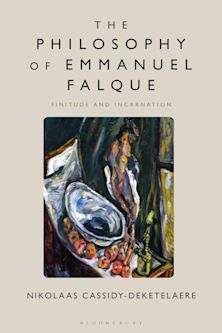
It has been 25 years since Dominique Janicaud derisively proclaimed the “theological turn” in French phenomenology due to the return of God to philosophy through the influence of “religious” thinkers such as Lévinas, Ricoeur, and Marion. Since then, the “theological turn” has flowered into a fully-fledged movement on both sides of the Atlantic. But, what will be the shape and direction of the second generation of the “theological turn”?
In this important new book, Emmanuel Falque engages with all the major twentieth-century French phenomenologists—something heretofore unavailable in English. He argues that rather than being content to argue for the return of God to philosophy, something fought for and developed by the foregoing generation of the “theological turn,” it is necessary to stage a philosophical confrontation, or disputatio, with them and their work in order to ensure the ongoing vitality of the unexpected contemporary relationship between philosophy and theology. Drawing on the legacies of Jaspers and Heidegger, who both staged their own “loving struggles” to arrive at defining philosophical conclusions, Falque confronts, interrogates, and learns from his most influential philosophical forebears to steer the “theological turn” in a new direction. Offering a novel and creative philosophy of the body, Falque argues for a reorientation of philosophy of religion generally and the “theological turn” specifically from a philosophy of revelation from above to a philosophy of the limit from below.
Table of Contents
Product details
| Published | Oct 15 2018 |
|---|---|
| Format | Ebook (Epub & Mobi) |
| Edition | 1st |
| Pages | 304 |
| ISBN | 9781786605337 |
| Imprint | Rowman & Littlefield |
| Publisher | Bloomsbury Publishing |
Reviews

ONLINE RESOURCES
Bloomsbury Collections
This book is available on Bloomsbury Collections where your library has access.
Related Titles