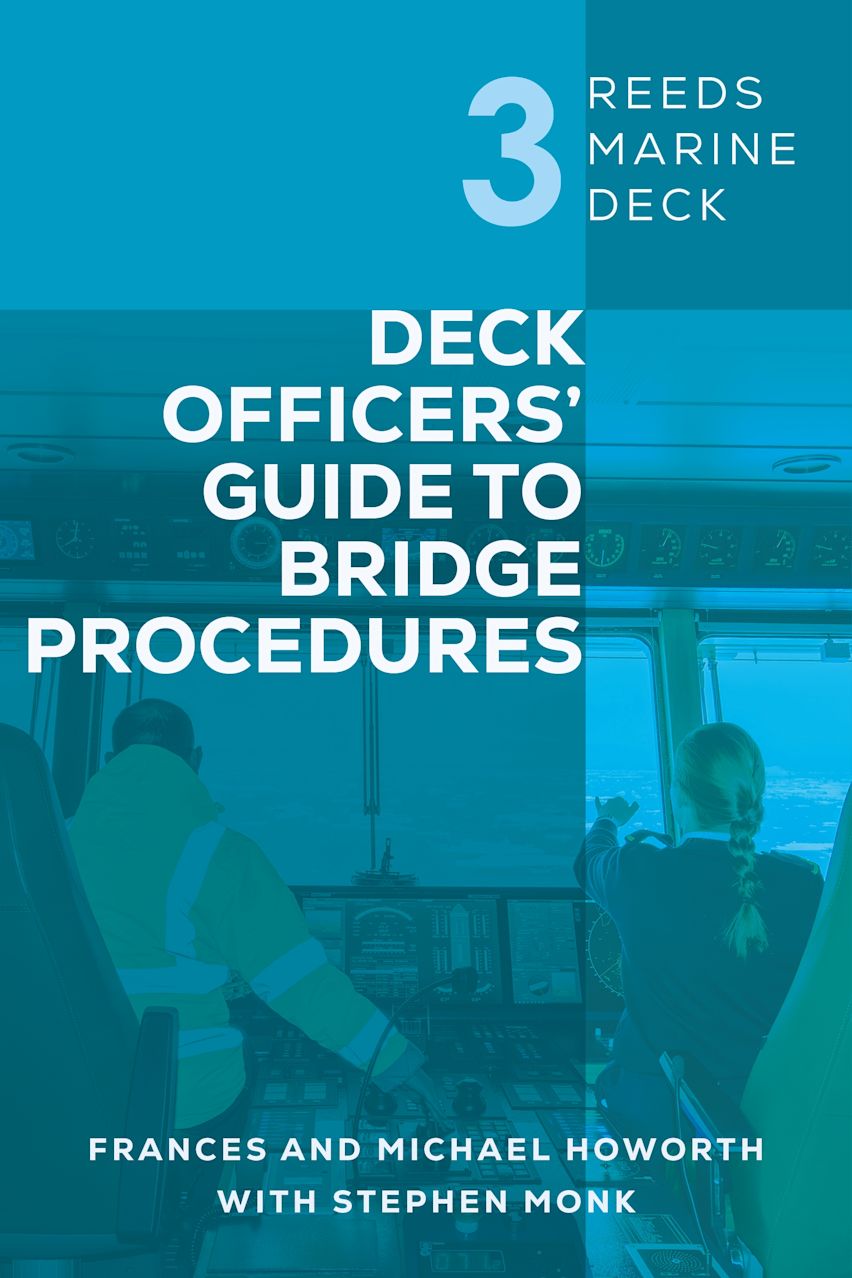
Reeds Marine Deck 3: Deck Officers’ Guide to Bridge Procedures
- Textbook
Reeds Marine Deck 3: Deck Officers’ Guide to Bridge Procedures
- Textbook
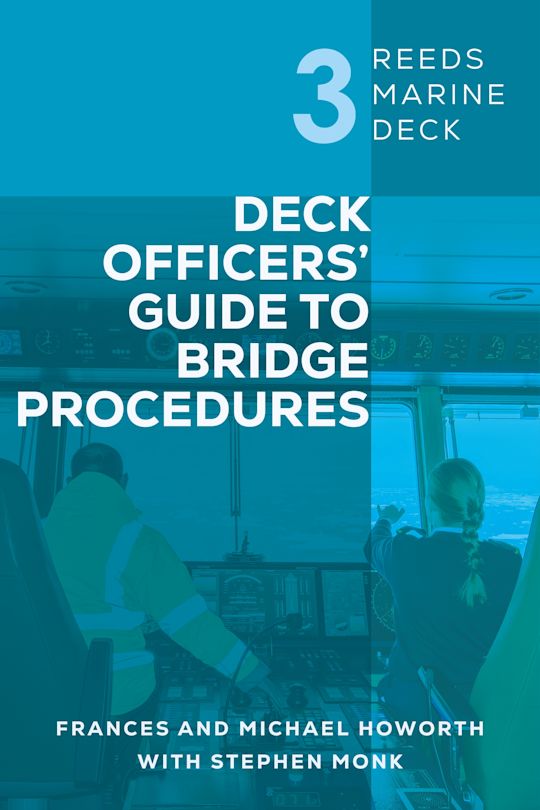
Available for purchase via Bloomsbury etextbooks on publication date
Description
The essential guide to safe and effective bridge procedures for yacht officers and deck students.
This essential guide to safe and effective bridge operations will give you the confidence to manage and work on the navigating bridge effectively, reduce errors and communicate clearly during routine and critical operations. Covering modern navigational practices, role-specific advice, bridge resource management and passage planning, it aligns with STCW-95 standards and supports both training and onboard practice. It is an essential textbook for all those studying and preparing
for Flag State professional qualifications.
Fully updated to reflect technological advances, this handbook draws on years of sea time, instructing and mentoring experience into practical advice that aids all deck officer ranks to become trusted professionals. It addresses real-world challenges often missed in classroom training, from balancing work and rest under MLC rules to preparing for audits and Flag inspections. Relevant for large yachts, cruise ships and all seagoing vessels, it is packed with photographs, templates and checklists, to help you stay compliant and safe.
Table of Contents
1. The duties and responsibilities of the OOW
-Not looking to repeat the ICS Bridge Procedures Guide but to clarify to an OOW why their job isn't always about saying yes to guests
-Helping provide guidance and clarification on what their principal duties are and how to balance those against demands from owners
-Help to those wishing to become an OOW from within the industry or who are completely new to it.
-Painting the picture in reality of what the job entails
-Pre and post joining aspects to consider.
-Contracts, working hours (regulated)
-Vessel familiarisation
-Equipment familiarisation
2. Why the navigation outfit must be maintained
-Overview of the regulations
-Products in use including official and unofficial charts.
-How to do updates (specifics included within the annexes from electronic chart display) manufacturers on their weekly procedures and most common errors
-Dos and Don'ts
-Aspects to be monitored by the Captain and auditors
-Tricks of the trade
3. Electronic charts
-Official charts
-Risk assessments
-Data gathering / surveys and how to contribute to this (Crowdsource Bathymetry (CSB))
-Reality and understanding not just the difference between both chart types but how to work with and incorporate both into safe navigation.
-Education to OOWs, management and auditors
4. Preparing for audits
-From the OOW yacht perspective including common pick-ups
-Equipment familiarity on the bridge and around the yacht associated with the bridge (steering and propulsion)
-From the auditor perspective
-Guidance to management companies on expectations and audits
5. Passage planning
-Taking the theory and what's cover in the publications and putting it into reality
-Taking the reality and refining it to learn the safest way to navigate
-CATZOCs
-XTD
-Sanitised areas versus a navtrack
-Clarity of the safety contour and safety depth
-Using the tools of the trade (charts, electronic licences, equipment familiarity) to your advantage
-Navigating on either paper or ECDIS including generic and type familiarisation
-A checklist of points to consider and why, including an explanation of what goes wrong if you don't
-Polar and remote area operations – considerations to take into account
- Aspects for the Captain to consider when reviewing the passage plan
-Passage planning from the management company perspective
6. Maintaining the bridge watch
-How to work with your team
-How to work alone (when appropriate)
-Dos and Don'ts when on watch (any why)
-Getting the most out of the equipment
-Rules of the Road and the common pick-ups (from tests)
-Handing over the watch (NOCWISS)
-Fixing methods and what happens if you don't follow up appropriately
7. Emergencies
-Preparing for them and the initial reactions by the OOW
- Man overboard
- Collision and grounding
- Search and Rescue
- Helicopter operations
- Casualty Extraction
- Guest operations
- Fire / Flood
-Information to be captured. Building your case for mitigation and working with accident investigators
8. The deck officer career path
-Responsibilities and aspects relevant to the OOW, Chief Officer and Captain
-Crew welfare or points specific to the bridge
-Drafting your first Standing Orders – taking ownership
- Working with the owner / guests, hints, tips and guidance
-Authority and delegation to the OOW
-Mentoring and strength in depth
-ISM and SPS – working with management for documentary coverage
-Confidentiality agreements and learning from mistakes
-CHIRP – accident reporting for lessons learnt
Product details
| Published | Sep 10 2026 |
|---|---|
| Format | Ebook (Epub & Mobi) |
| Edition | 2nd |
| Extent | 240 |
| ISBN | 9781399421188 |
| Imprint | Reeds |
| Illustrations | Colour diagrams and illustrations throughout |
| Series | Reeds Marine Deck |
| Publisher | Bloomsbury Publishing |