The Socio-Politics of Legal Design and its Epistemic Consequences
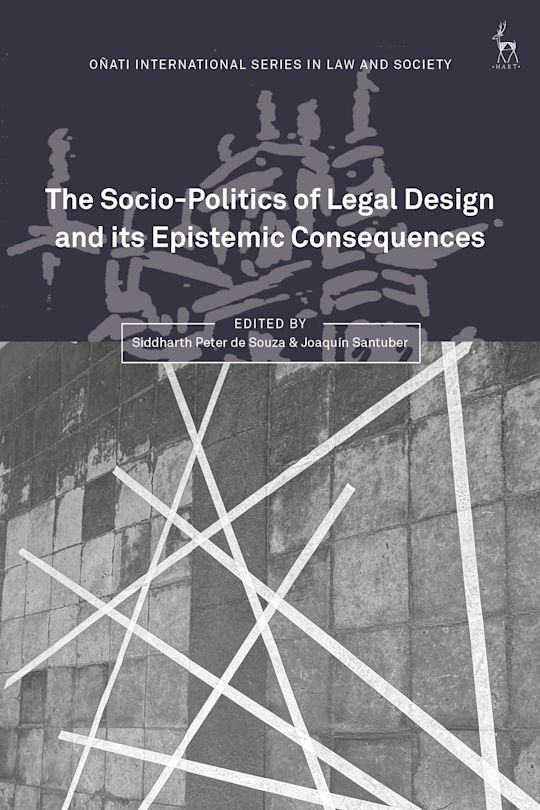

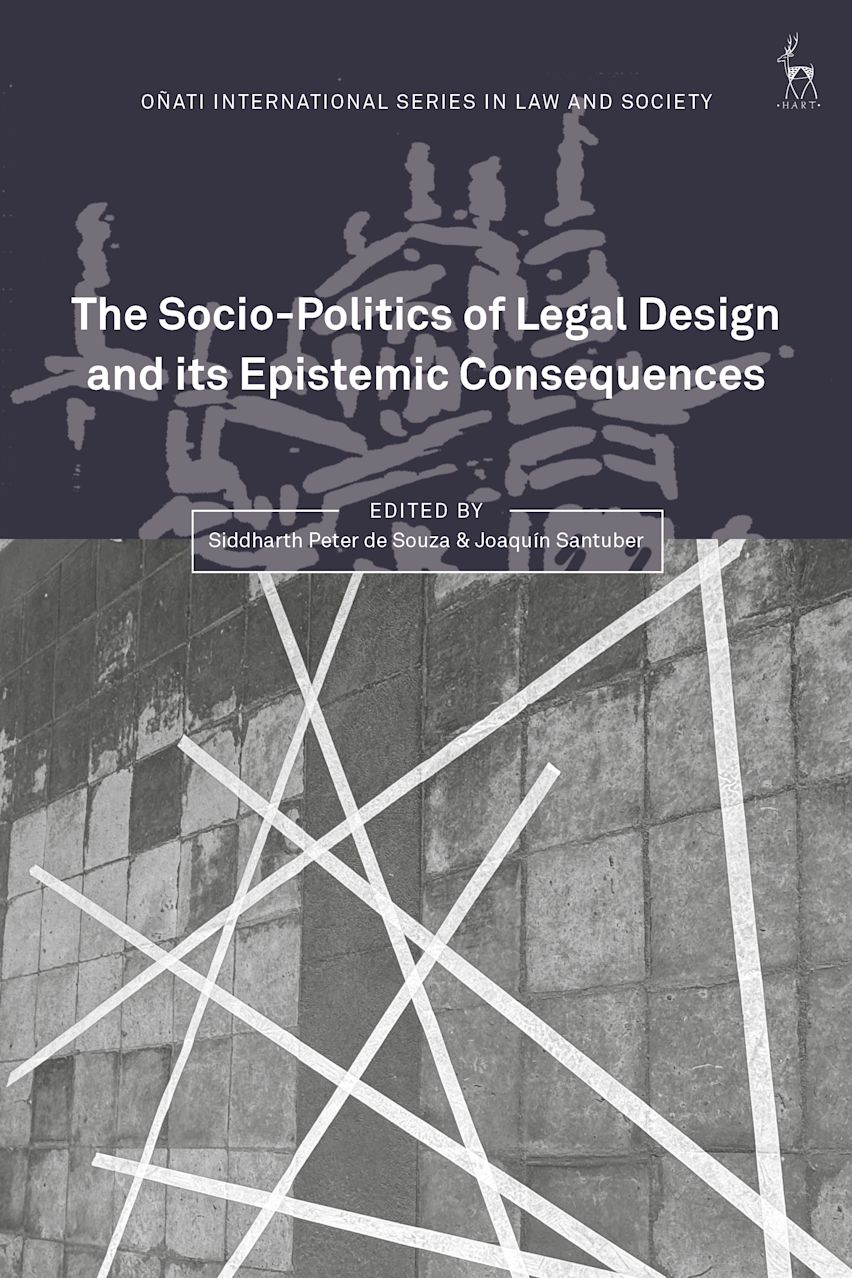
The Socio-Politics of Legal Design and its Epistemic Consequences
Buying pre-order items
Ebooks and Audiobook
You will receive an email with a download link for the ebook or audiobook on the publication date.
Payment
You will not be charged for pre-ordered books until they are available to be shipped. Pre-ordered ebooks will not be charged for until they are available for download.
Amending or cancelling your order
For orders that have not been shipped you can usually make changes to pre-orders up to 72 hours before the publishing date.
Payment for this pre-order will be taken when the item becomes available
- Delivery and returns info
-
Free CA delivery on orders $40 or over
Description
This book brings together diverse perspectives from researchers working in the fields of law, justice, and design to interrogate the emergence of vocabularies and methods of legal design and unpack their epistemic consequences.
Legal design has emerged in the last decade as an interdisciplinary practice, at the intersection of law and justice, and initially human-centred design. Despite the short history of legal design as a discipline, its foundations in human-centred design have been questioned. Justifying all sorts of innovation for the universal needs of users is even more problematic for human-centred design due to its large adoption in industry and the public sector. Placing a market type of human-consumer at the centre of the legal design activity justifies the reproduction of capitalist and oppressive systems by placing the inspiration for new products and services on the human-user-consumer. The adoption of such practices in policy and legal design can be seen as a tool to impose the market values over democracy, justice, and equality.
This book offers a wide array of alternatives and reference points for making sense of legal design. It critically addresses issues of epistemic injustice in the designing of legal services and systems, bringing together the tradition of socio-legal studies in dialogue with new concepts and frameworks from critical design approaches.
Table of Contents
2. Speculation in Legal Design? Ontological Concerns and Critical Alternatives, Michael Doherty (Lancaster University, UK)
3. Transforming Legal Inquiry and Design through Practice Based Research and Community Engagement, Jules Rochielle Sievart (Northeastern University, USA)
4. Bridging Paradigms: Comparing the Elements of Human-Centric Design in Legal Design and People-Centered Justice Frameworks, Ebru Metin (Tallinn University of Technology, Estonia), Nina Toivonen (University of Helsinki, Finland) and Jaana Kovalainen (University of Lapland, Finland)
5. Legal Design with Silent Agents – Biomimicry as a Strategy to Understand the Rationales of Nonhuman Beings in Legal Design, Nina Toivonen (University of Helsinki Finland)
6. Does The Legal Design Lexicon need to be Designed: A Theoretical and Critical Study, Dorra Harrar (Legal.D, Tunisia)
7. The Transformative Role of the Public Sector in the Evolving Practice of Legal Design, Kanan Dhru (The Hague University of Applied Sciences, The Netherlands)
8. Weaving an Emergent Future: Law, Science, Engineering, and Indigeneity, Ade Mabogunje (Stanford University, USA)
9. Neither Objects Nor Materials But Worlds, Sankalp Bhatnagar & Elena Kuran (Northeastern University, USA)
10. A Grounds-Up View of Design: Making Meaning of Design through Rooted Legal Design, Bhawna Parmar (Barabar Design, India)
11. Speculations on an Island Wide Citizens' Assembly for Cyprus, Amanda Perry-Kessaris (Kent University, UK)
12. Legal Design, Democracy, and Collective Sense-Making, Abdul Rehman Khan and Hallie Jay Pope (Seton Hall University School of Law, USA)
13. Democracy and Play, Siddharth Peter de Souza, Varsha Aithala, Siddhi Gupta and Saumya Varma (Justice Adda, India)
14. Justice Beyond the User-Experience: Designing for the Sublime in Courts, Inspired by Courts and Judicial Processes, Pablo Hermansen (School of Design, Pontificia Universidad de Chile, Chile) and Joaquín Santuber (Johannes Kepler University, Austria)
15. Making the Cloud Rain: A 'Law and Political Economy' Reading of Bahrain's 'Cloud First Policy', Bader Alnoaimi (IISJ, Onati, Spain)
Product details
| Published | Jun 25 2026 |
|---|---|
| Format | Hardback |
| Edition | 1st |
| Pages | 320 |
| ISBN | 9781509990061 |
| Imprint | Hart Publishing |
| Dimensions | 234 x 156 mm |
| Series | Oñati International Series in Law and Society |
| Publisher | Bloomsbury Publishing |

Related Titles