- Home
- ACADEMIC
- Religious Studies
- Religious Studies - Other
- Tongues of Fire
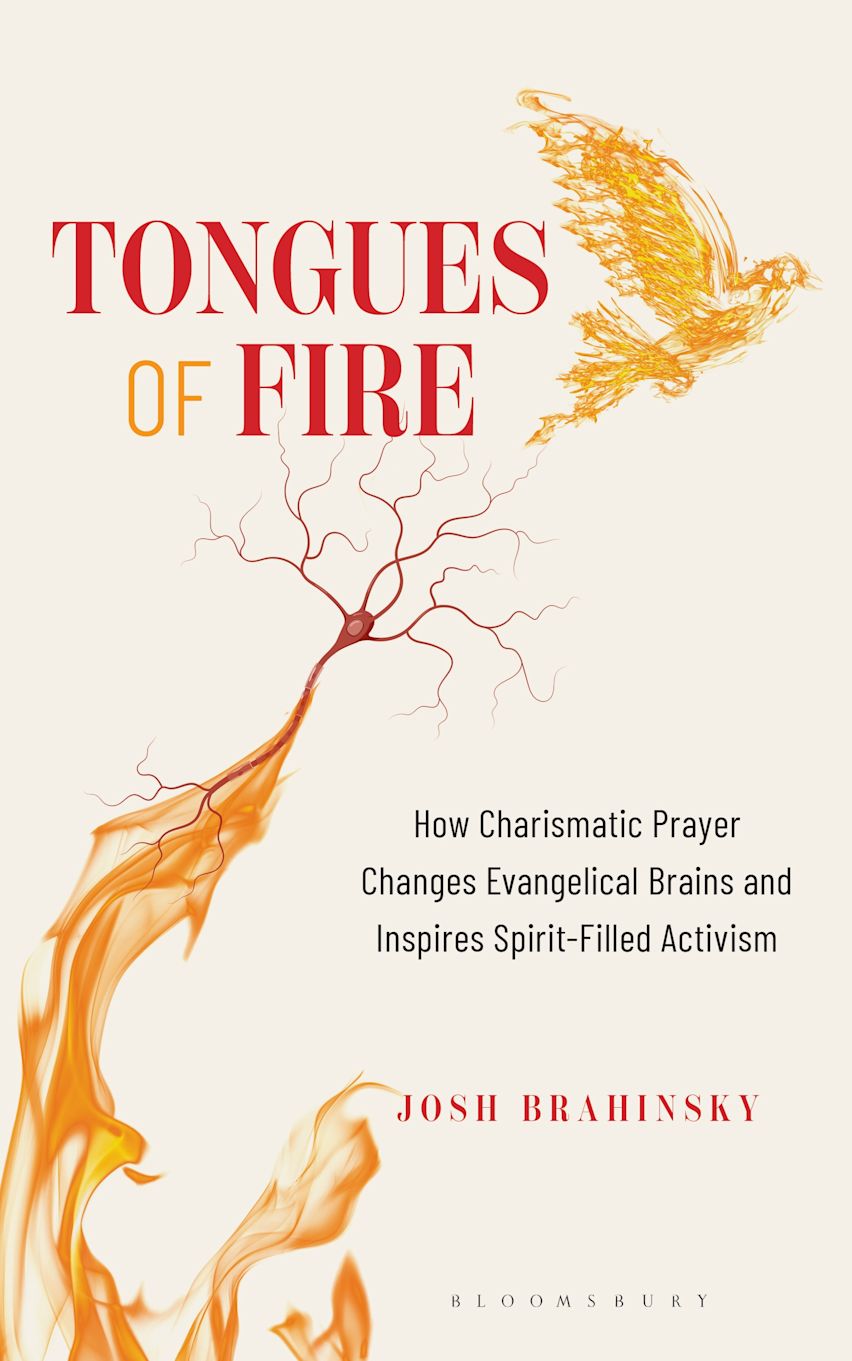
Tongues of Fire
How Charismatic Prayer Changes Evangelical Brains and Inspires Spirit-Filled Activism
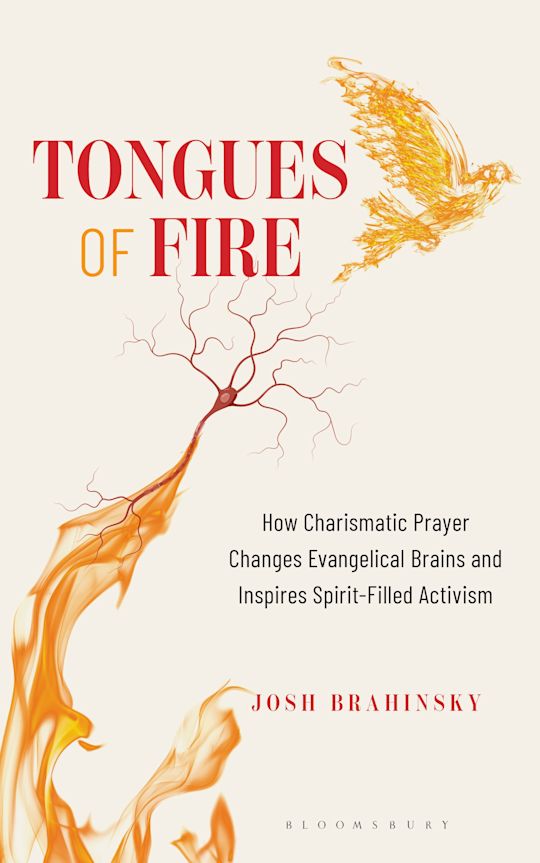
Tongues of Fire
How Charismatic Prayer Changes Evangelical Brains and Inspires Spirit-Filled Activism

Payment for this pre-order will be taken when the item becomes available
You must sign in to add this item to your wishlist. Please sign in or create an account
Description
In Tongues of Fire, anthropologist Joshua Brahinsky embarks on an 18-year journey into the mind-body practices of charismatic evangelicals-Christians known for their exuberant worship and the enigmatic practice of speaking in tongues. With nearly half a billion followers worldwide, this movement has profoundly shaped both spiritual and political landscapes.
What compels believers to return to this practice day after day, year after year? How does an act of surrender that fosters a powerful sense of divine presence simultaneously drive political engagement? Through immersive fieldwork-including attending revivals, missionary training schools, and church services-Brahinsky investigates the deep pull of tongues prayer through conducting extensive interviews, participating in worship, and even scanning practitioners' brains in MRI machines, capturing the interplay of mind, body, and faith in real-time.
Tongues on Fire examines a high-energy practice that blends spiritual release with empowerment. Speaking in tongues generates a suggestive certainty-fueling not only personal transformation but also large-scale social activism. Charismatic leaders like Pat Robertson, Jerry Falwell, and Paula White-Cain have harnessed this fervor to reshape U.S. politics, merging faith with ideological movements.
This interdisciplinary study-spanning anthropology, neuroscience, and religious studies-offers the most extensive exploration of tongues prayer to date. Tongues on Fire reveals how this practice cultivates both submission and power, creating a force that inspires hope while also driving some of the most polarizing political movements of our time. From revivalist gatherings to the depths of the MRI machine, this book uncovers the hidden mechanics of faith, transformation, and influence-illuminating the far-reaching impact of an ancient practice in today's world.
Table of Contents
1. Letting Go
2. Training
3. Attention Arousal Release
4. Feel and Say
5. MRI
6. Loosen the Mind
7. Certainty
8. Agency
9. Activism
Bibliographic Essays
Bibliography
Notes from chapters
Product details

| Published | Mar 05 2026 |
|---|---|
| Format | Ebook (Epub & Mobi) |
| Edition | 1st |
| Extent | 320 |
| ISBN | 9798881804992 |
| Imprint | Bloomsbury Academic |
| Publisher | Bloomsbury Publishing |
About the contributors
Reviews
-
We know so little about speaking in tongues, a spiritual practice widely used in the United States and around the world. Brahinsky is a fluid writer and a careful listener who has worked with tongues-speakers for years. He has much to say about the way people feel speaking in tongues in their bodies and experience it in their minds. We are in great need of a good book which will explain the practice, and explain how the practice changes those who use it. This is that book.
Tanya Luhrman, author of How God Becomes Real and When God Talks Back
-
Tongues of Fire tells fascinating stories that draw you in. It provides a remarkable coupling of anthropology and neuroscience that skillfully explores how modern Christians train their bodies to transform their consciousness. In the process, Brahinsky expands our current understanding of how related meditative practices and psychedelic experiences can shape both our immediate experience of the world, and our sense of human potential. This kind of forward-thinking research, told in terms we can all understand, is deeply needed in our field and in our world today.
Michael Lifshitz, Professor of Transcultural Psychiatry at McGill University and the Jewish General Hospital in Montreal
-
Christian mind-body practices have been largely ignored by the recent explosion of research on contemplation. And yet, as some of the world's most skilled and influential contemplative practitioners, Charismatic Christians are all around us. This close exploration of their understudied high arousal practice asks us to rethink what is healthy, what is normal, and what is possible. Brahinsky's vital blend of anthropology and neuroscience charts new terrain in the field of contemplative science.
Michael Murphy, co-founder of Esalen Institute, author of Golf in the Kingdom, The Kingdom of Shivas Irons, and In the Zone
-
Interwoven with explication from informants, whether students, professors, administrators, church members, etc., Brahinsky provides a rich phenomenology of Pentecostal glossolalia, one that lifts up its physicality, sensuality, and affectivity so that readers come into new appreciation of the significance-semiotically, kinesthetically, neurologically, and otherwise-of charismatic tongues as empowering human agency, especially how such is cultivated and experienced. For believers and scholars, including those who reject this binary, Tongues of Fire deepens, rather than removes, the complexity, if not also mysteriousness, of Pentecostal-charismatic spirituality.
Amos Yong, Professor of Theology and Mission, Fuller Seminary
-
As a researcher whose scientific work is a practice of loving God with my whole mind, I find Dr. Brahinsky's groundbreaking book combines important social narratives with empirical brain data, ultimately demonstrating measurable aspects of spirituality, purpose, and motivation. For those who believe that all creation awaits liberation, this book brings us closer to liberating important aspects of ourselves.
Sherol Chen, PhD, Google AI Research
-
Through two-decades of engagement with Evangelicals, Joshua Brahinsky has explored the practice of speaking in tongues. In this richly detailed and revealing study of charismatic prayer, Brahinsky explores the social, psychological and spiritual significance of “letting go” or surrender to God. His observations and theory-building, which bring together experience-near ethnography with neuroscience, will inform the next generation of contemplative studies.
Laurence J. Kirmayer, MD, Distinguished James McGill Professor and Director of the Division of Social and Transcultural Psychiatry, McGill University