The Bloomsbury Handbook of Literacy
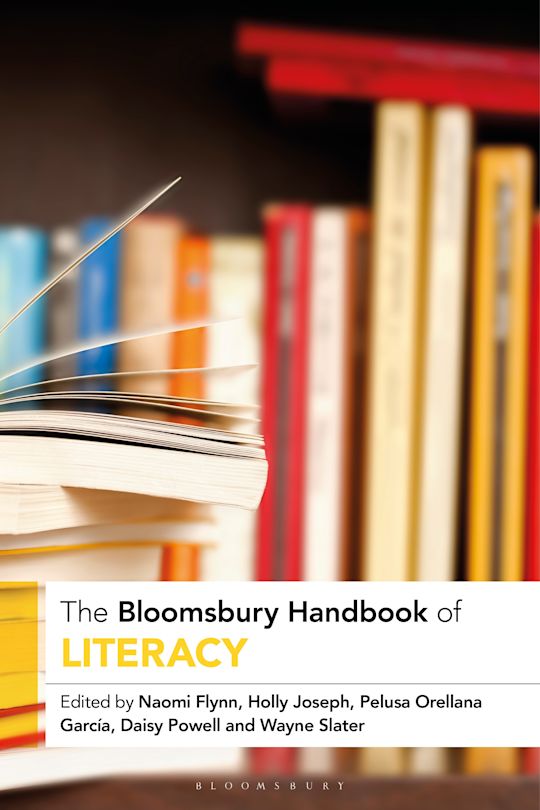

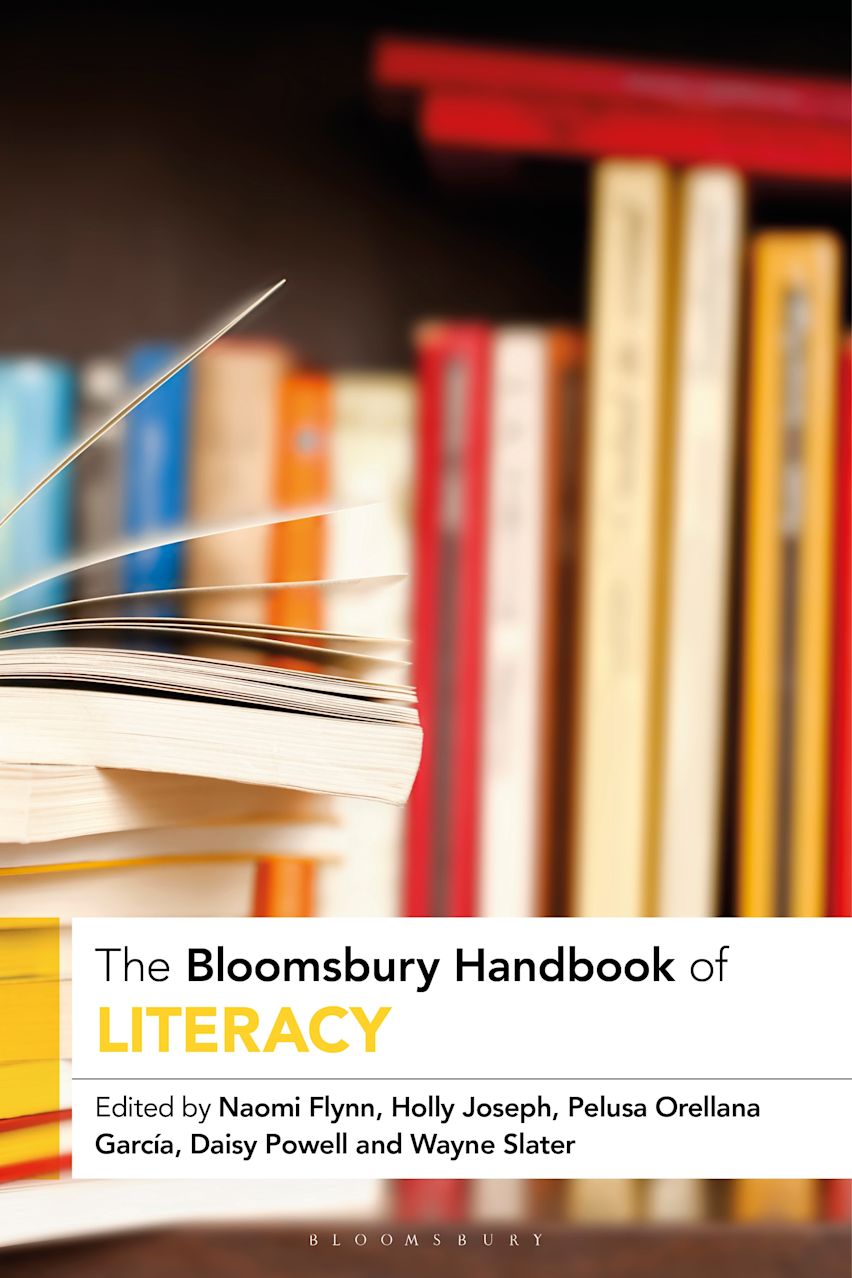
The Bloomsbury Handbook of Literacy
Description
This collection of international, research-informed case studies gives a unique range of perspectives on the state of literacy in the twenty first century, as both a discipline and a function of everyday life. Expanding the focus of current debate beyond Western, English speaking contexts, it challenges received wisdoms and lays out the huge variations in what literacy is and what it is for.
Taking a thematic approach, the chapters examine literacy in its broadest sense. In section one they focus on early literacy development and the family in different global contexts. Section two tackles assumptions about the teaching of literacy from across continents, and foregrounds the place of multilingualism in classrooms. This is followed by chapters focussed on literacy and social adversity that shed light on the challenges faced by those denied access to literacy education and learning resources. In the fourth section, authors unravel the complexities of assessing literacy and the challenges of fitness for purpose for diverse learners. Finally, the book explores digital literacy and AI in school settings, and questions their use as tools for scaffolding teaching and learning.
This handbook captures the richness and diversity of different approaches to literacy, and widens the horizons that determine how we examine it and the factors that relate to it.
Table of Contents
Part One: Early literacy development and the family
1. What predicts early literacy?, Catherine McBride (The Chinese University of Hong Kong), Hyohyun Shin, & Maria McQuade (University of Glasgow, UK)
2: Family influences on literacy development, Katrina Dulay (City, University of London, UK)
3. Family literacy programs and young children's early development, Jim Anderson (University of British Columbia, Canada), Harini Rajagopal (University of British Columbia, Canada), Assadullah Sadiq (California State University – Channel Islands, USA), and Laura Teichert (Western Michigan University, USA)
4. Reading development in children at family risk of dyslexia, Sara Hart (Florida State University, USA)
5. Preparing Children for Literacy Education in Rural African Contexts. Laura Shapiro (Aston University, UK) and Pamela Wadende (Kisii University, Kenya)
Part Two: perspectives on literacy teaching
6. An Examination of the Literacy Education Policy and Practices in Uganda: Challenges and Opportunities, Samuel Andema (Aga Khan University - Institute for Educational Development in East Africa, Tanzania) and Medadi E. Ssentanda (Makerere University, Uganda & Stellenbosch University, South Africa)
7. When breaking the code becomes literacy: An Australian perspective of the shift away from balanced approaches to literacy teaching and learning, Annette Woods (Queensland University of Technology, Australia) Barbara Comber (University of South Australia)
8. Teaching of literacy in two Latin-American countries: a Comparative analysis, Celia Rosemberg, University of Buenos Aires, Argentina) and Katherine Strasser, (Pontificia Universidad Catolica de Chile)
9. Literacy Teaching in Wales, Alison Glover, Catharine Bleasdale, Nia Cole-Jones, Carys Jennings, Sarah Stewart and Leigh Worrall (The Open University, UK)
10. Preparing US Teacher Candidates in the Science of Reading: A Multifaceted Approach, Erin K. Washburn, Paola Pilonieta and Alicia Stewart Kitten (University of North Carolina at Charlotte, USA)
11. Literacy teaching in China
Part Three: Literacy and Social Adversity
12. Literacy and the school to prison pipeline, Keisha Green (University of Massachussets, USA)
13. Literacy and Oral Language in Prisoners, Frøydis Morken, Wenche Andersen Helland, Lise Øen Jones (University of Bergen, Norway)
14. Literacy in Refugee Education: A Global Review, Sana Tibi (Florida state University, USA) & Celia Reddick (Harvard, USA)
15. Integrating Literacy and Well-being: Advancing the Language Education of Refugee Children in Canada, Redab Al-Janaideh (University of Toronto – Mississauga, Canada), Kathleen Hipfner-Boucher (University of Toronto, Canada), Xi Chen (University of Central Lancashire, UK) and Jennifer Jenkins (University of Southampton, UK)
16. Early Literacy Development: Harnessing the Potential of Educational Media to Boost Children's Vocabulary and Print Awareness, Susan B. Neuman (New York University, USA)
Part Four: Assessing Literacy
17. Diagnostic Literacy Assessments: The Driving Force for Instruction, Tracy Johnson (University of Indianapolis, USA)
18. Icelandic Academic Vocabulary: from creating a list to developing an assessment, Sigridur Olaffsdottir (University of Iceland, Iceland)
19. Literacy learning and teaching in Finland, Kaisa Leino & Marja-Kristiina Lerkkanen (University of Jyvaskyla, Finland)
20. Using assessment for instruction, Danielle V. Dennis (University of Rhode Island, USA)
21. Developmentally Appropriate Literacy Assessments to Inform Instruction, María Elsa Porta (Universidad Nacional de Cuyo, Argentina) and Gloria Ramirez (Thompson Rivers University, Canada)
22. High stakes assessment and the literacy curriculum: exploring the possibilities for change in the English system, Gemma Moss (UCL Institute of Education, UK)
Part Five: Digital Literacy and AI
23. Digital literacy/AI around the world, Florence Gabriel, Rebecca Marrone, Sam Fowler, John Kennedy, and Srecko Joksimovic, (University of South Australia, Australia)
24. Fostering Writing with Digital Literacy Tools and Dialogic Learning Designs, Rebecca Jesson, (University of Auckland, New Zealand)
25. Creating/invention and communication skills with digital literacy tools, Hiller Spires (North Carolina State University, USA)
26. A review of AI in schools to support instruction and learning, Robert F. Murphy (Rand Corporation, USA)
27. Initiative: AI Write, Carola Strobl et al (University of Antwerp, Belgium)
28. Primary school teacher's use and perception of digital technology in early reading and writing education in inclusive settings, Linda Falth (Linnaeus University. Sweden)
29. Assessing the role of age, education, gender, and income on the digital divide, Frederico Cruz-Jesus (Universidade Nova de Lisboa, Portugal)
30. State of the art and practice in AI in education, Wayne Holmes (University College London, UK)
31. Artificial intelligence in early childhood education, Jiahong Su (University of Hong Kong)
Product details

| Published | 15 Oct 2026 |
|---|---|
| Format | Ebook (Epub & Mobi) |
| Edition | 1st |
| Extent | 416 |
| ISBN | 9781350516403 |
| Imprint | Bloomsbury Academic |
| Series | Bloomsbury Handbooks |
| Publisher | Bloomsbury Publishing |