
Description
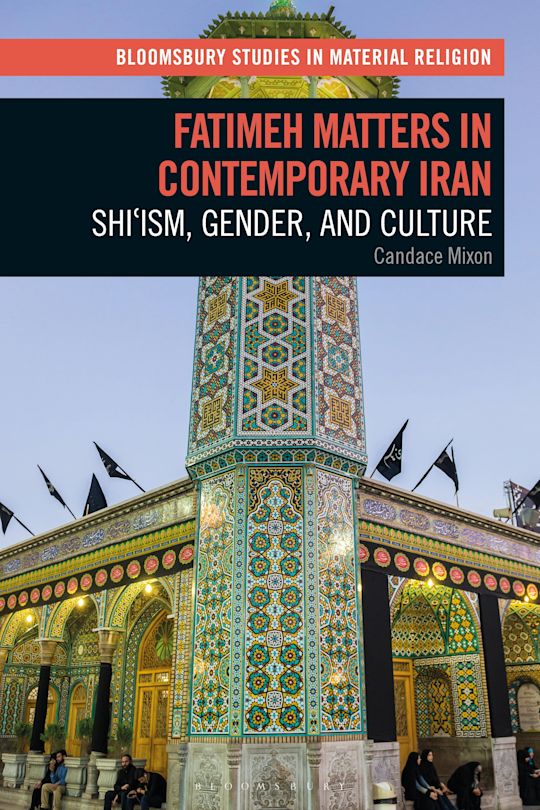
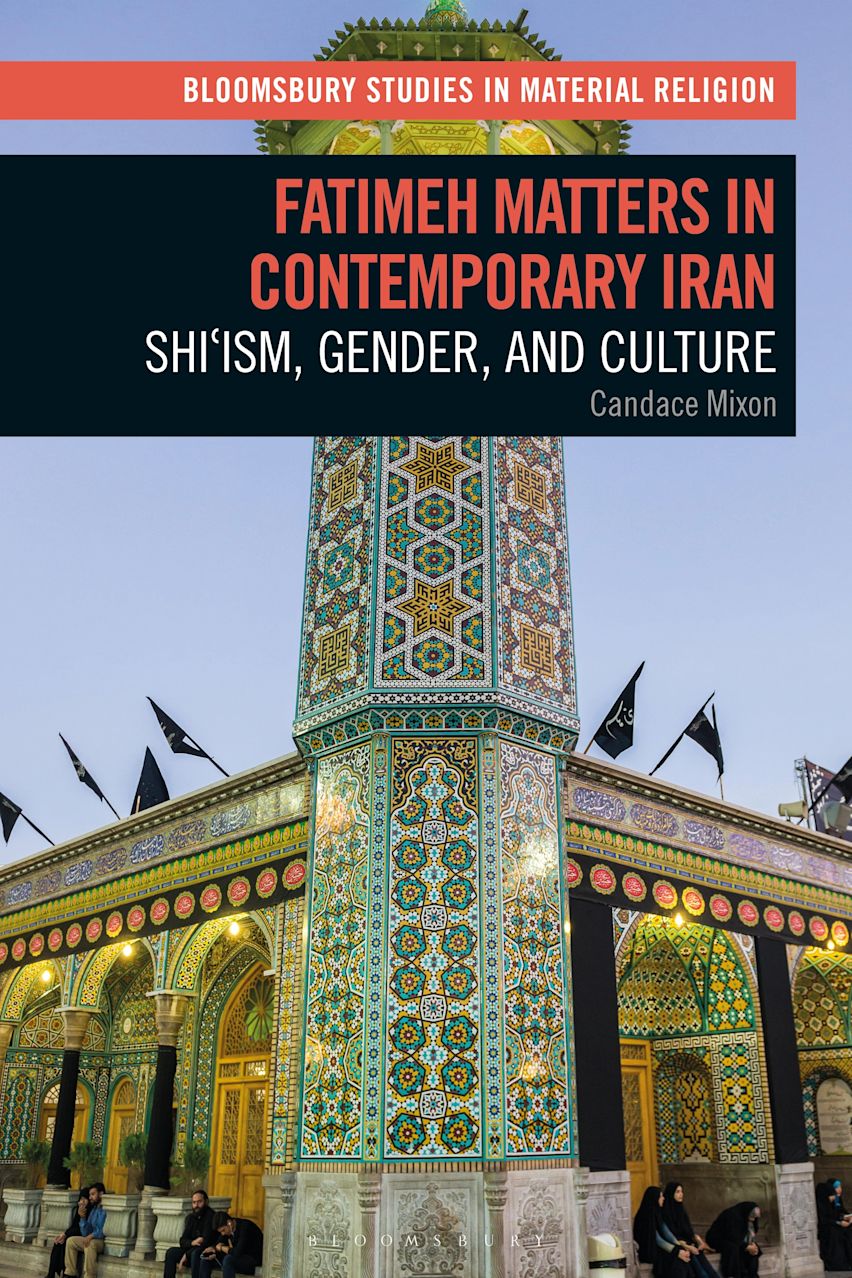
This book shows that Fatimeh, daughter of Muhammad, is central to Iran's cultural, religious, and political fabric by tracing the ceremonies, sermons, places, and everyday items used and produced to honor her in the country today.
Historically often treated as a woman of little significance, Fatimeh has become a key figure in the project of state building after the Iranian Revolution as the Iranian state, clerics, artists, and others have reimagined the importance of the mother of the Twelver Shi'i Imamate. In this study grounded in research conducted in Iran, Candace Mixon walks us through a wealth of material objects that reveal Fatimeh's crucial role in the culture, politics, and religious ideology of contemporary Iran. She traces Fatimeh's presence in objects and places as varied as pamphlets, sacred manuscripts, the holy shrine cities of Mashhad and Qom, and the tile factory of the Astan-e Quds-e Razavi Foundation – a site where religious material culture is literally manufactured.
Mixon draws on theories from the fields of material culture studies, religious studies, Islamic studies, and gender studies to consider how these objects, ephemeral and sacred alike, can enrich our understanding of Iran's political and religious history. By reconsidering established historical narratives in light of her analysis, she shows that, in today's Iran, Fatimeh matters more than ever.
Accessibility Information
Additional accessibility information
- EPUB 3.0
- Conforms with the requirements of EPUB Accessibility Spec v1.1
- WCAG level AA
- WCAG v2.2 compliant
- accessibility@bloomsbury.com
Hazards
The publication contains no hazards
Support for non-visual reading
- No accessibility features offered by the reading system, device or reading software are disabled or otherwise unusable with the product
- Has alternative text descriptions for images
Visual adjustments
Appearance of the text and page layout can be modified according to the capabilities of the reading system (font family and size, spaces, as well as color of background and text)
Navigation
- Page list to go to pages from the print source version
- Elements such as headings, tables, etc for structured navigation
- All or substantially all textual matter is arranged in a single logical reading order
- Content is enhanced with ARIA roles to optimize organization and facilitate navigation
- Purposes of all links are made clear
Rich content
Language tagging provided
Table of Contents
Introduction: Fatimeh Matters in Contemporary Iran
1. A Material State: Iranian Shi'ism and Fatimeh
2. Introducing the Sermon of Fatimeh as It Becomes a Pious Artifact
3. The Intangible Cultural Heritage of Fatimeh's Sermon
4. Making Fatimeh in Mashhad: Mourning Constructions and Material Proliferation
5. Building Space in Mashhad: Astan-e Quds-e Razavi's Tile Factory and Its Support for Fatimeh
Conclusion: Fatimeh Matters in Contemporary Islamic Studies
Epilogue: After Khamenei, Another Khamenei
Appendix: Lesson Plans for Teaching Shi'ism and Shi'i History in Undergraduate Classrooms
References
Index
Product details

| Published | 12 Nov 2026 |
|---|---|
| Format | Ebook (Epub & Mobi) |
| Edition | 1st |
| Pages | 240 |
| ISBN | 9781350588196 |
| Imprint | Bloomsbury Academic |
| Illustrations | 15 bw illus |
| Series | Bloomsbury Studies in Material Religion |
| Publisher | Bloomsbury Publishing |
Related Titles