The Megachurch-Industrial Complex
Searching for Transcendence in the Culture Industry


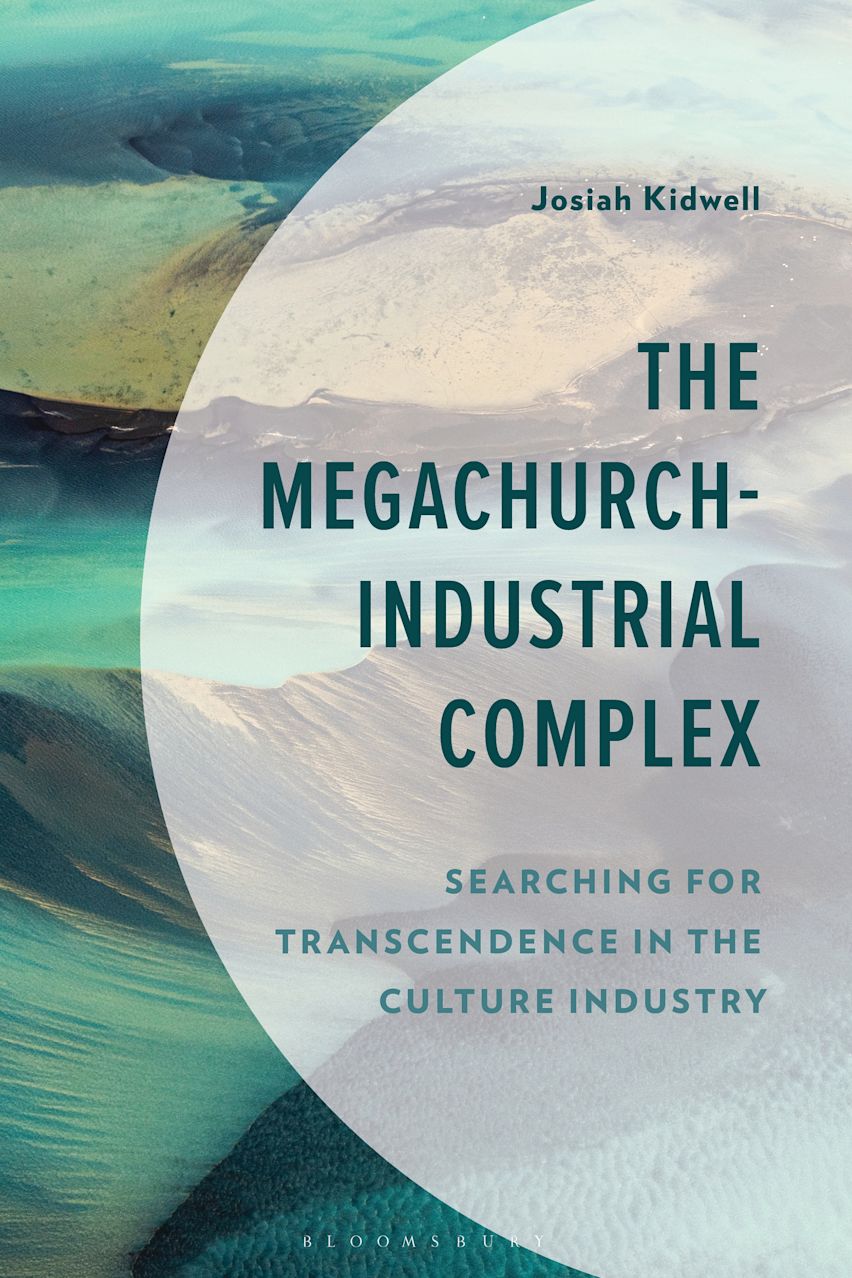
The Megachurch-Industrial Complex
Searching for Transcendence in the Culture Industry
Description
A Las Vegas megachurch transforms faith into spectacle to attract the unchurched, even as its iconoclastic approach strains longstanding religious and cultural traditions.
Drawing on critical theory, media studies, and the sociology of religion, Josiah Kidwell situates the church's evolution within broader patterns of rationalization in civil society and the spectacle-driven urban landscape of Las Vegas. Drawing on extensive fieldwork, he chronicles the church's shift into an entertainment-oriented religious franchise and unpacks the cultural tradeoffs that accompany this change. Kidwell explores how new media and popular culture reshape place attachment, recast communal life, and introduce the one dimensional logic of the culture industry into spaces once defined by slow building social bonds. Throughout, Kidwell resists deterministic accounts, highlighting how members interpret, negotiate, and sometimes push back against these changes while also revealing the subtle erosions they produce in social life. Ultimately, this book offers a sharp, multilayered portrait of religion's adaptation to an entertainment-saturated society-and will be of interest to scholars of religion, media studies, cultural sociology, and anyone curious about the future of communal life in an age of spectacle.
Accessibility Information
Additional accessibility information
- PDF/UA-2, 1.4
- accessibility@bloomsbury.com
Hazards
The publication contains no hazards
Support for non-visual reading
Has alternative text descriptions for images
Navigation
- Page list to go to pages from the print source version
- Elements such as headings, tables, etc for structured navigation
- All or substantially all textual matter is arranged in a single logical reading order
Table of Contents
Acknowledgments
Introduction: New Life Church in Perspective
Chapter One: Religious Micro-Place Attachments: Getting Plugged in and Unplugged at New Life Church
Chapter Two: Organizing and Disorganizing a Multisited Megachurch: Exploring New Life Church's Mediated Approach to Coordinating Religious Brand and Uniformity
Chapter Three: The Rationalization of Church Life: A “One-Size-Fits-All” Approach to Religious Community and Identity
Chapter Four: The Sanctuary of the Spectacle: Megachurches and the Production of Christian Celebrities and Consumers
Conclusion
Methodological Appendix
References
Index
About the Author
Product details

| Published | 12 Nov 2026 |
|---|---|
| Format | Ebook (PDF) |
| Edition | 1st |
| Pages | 176 |
| ISBN | 9798216264439 |
| Imprint | Bloomsbury Academic |
| Series | The Frankfurt School in New Times |
| Publisher | Bloomsbury Publishing |
Reviews
Related Titles