Panorama, A World History
Volume 1: Beginnings to 1500
- Textbook
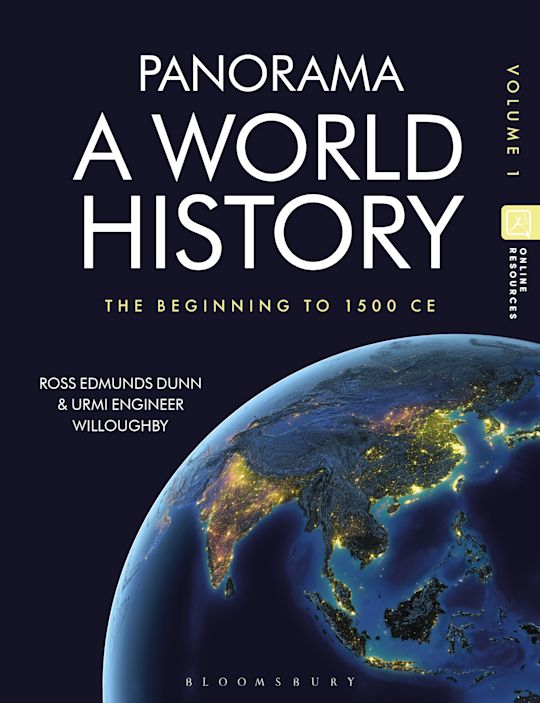

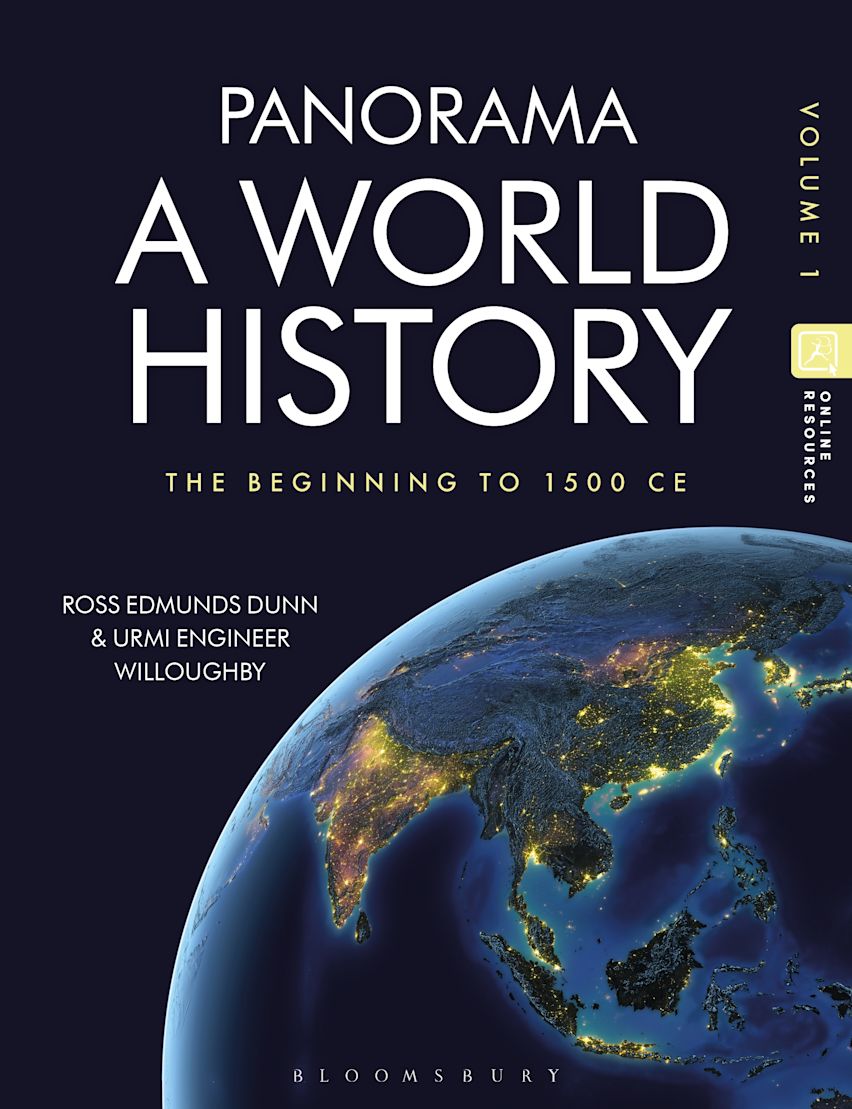
Panorama, A World History
Volume 1: Beginnings to 1500
- Textbook
Description
How did Teotihuacán in Mexico become one of the world's largest cities? Why did Roman soldiers in Britain worship a Persian god? What important roles did women play in the Mongol empire?
Panorama explores these questions by following the journey of humankind in a global context, weaving a world-scale narrative with a single chronological thread. It empowers you to connect the regional histories of particular states, empires, and cultural traditions to larger patterns of change on hemispheric and global scales-examining migratory movements, networks of trade, the spread of religions, pandemics, and environmental transformations.
Richly illustrated with 120 images and over 50 maps, this new edition is organized into four chronological parts, each covering a defined era in world history. Volume 1 starts with the Paleolithic era and extends to the late fifteenth century CE.
Each chapter includes dedicated learning features:
· “Individuals Matter” presents biographical sketches of individuals, both notable historical figures and ordinary people, whose lives in some way illuminate the chapter's main developments.
· “Weighing the Evidence” asks you to analyse and interpret primary sources, either texts or visual artifacts.
· “Thinking about the Past with Global and Comparative Themes” encourages you to examine the threads of change that cut across global space and time.
· “Thinking History” questions help consolidate your knowledge, and “Reflecting on the Past” questions invite you to contemplate broader chapter themes.
· In-margin definitions of words and phrases help you build key vocabulary.
With its unique global narrative, chronological storytelling and exceptional features, Panorama provides a clear framework to analyse and engage with the changes, continuities, and anomalies in our world's past-and their impact on the present.
Table of Contents
Tour of the book
Online resources
About the Authors
Prologue
Acknowledgements
PART 1 - SETTLING THE PLANET: BEGINNINGS TO THE FIRST MILLENNIUM BCE
Introduction - The Earth: World History's Theater
The Human Past, A Story of Growing Complexity
Geography on a Global Scale
Afroeurasia
Australia
North and South America
The Oceans
1. The Peopling of the World 7,000,000–10,000 BCE
Human Ancestors in Africa and Beyond
Early Hominin Evolution
Well-Traveled Hominins
Other Hominins
Modern Humans in Africa: The First 100,000 Years
The Debut of Homo Sapiens
The Power of Language
Colonizing the World
The Routes Eastward to Asia and Australia
North to Europe
The American Frontier
Why Did Homo Sapiens People the Earth?
Homo Sapiens: The Last Hominin
Why People Look Different from Each Other, but not Much
Global Culture of the Upper Paleolithic
A Multicultural World
Social and Economic Life
Technical Wonders
Paleolithic Artists
Individuals Matter: The Turkana Boy, a Distant Ancestor
Weighing the Evidence: Ornament-Makers of the Santa Elina Rock Shelter
Global and Comparative Themes: Sources of evidence for Paleolithic history
2. Farms, Cities, and the New Agrarian Age 10,000-2000 BCE
The Coming of Farmers: A Peculiar Event
Early Farming and the Big Thaw
The Drift toward Domestication
The Spread of Agrarian Societies
Sunrise over the Village
Super Villages
Early Complex Societies
Irrigation and Complex Society in Mesopotamia
Complex Society on the Nile
Harappan Society in the Indus Valley
Interregional Communication and Commerce
Complex Societies and the Environment
Individuals Matter: Ötzi: A Neolithic Hunter
Weighing the Evidence: A Pharaoh's Warning in Stone
Global and Comparative Themes: The spread of farming
3. Afroeurasia's Moving Frontiers: Farmers, Herders, and Charioteers 3000-1000 BCE
Across Afroeurasia: More Farmers, More Cities
The Cavalcade of Inventions
Complex Society and Commerce in the Mediterranean Basin
Developments in Western Europe
The Oxus complex society in Central Asia
Complex Society in East Asia
Pastoral Nomads Ride into History
Horses, Riders, and Wagons
Pastoral Nomadic Society
Encounters between Agrarian Societies and Migrating Peoples
Indo-European Speakers in Southwest Asia: The Hittite Empire
States of Mesopotamia and Syria
From Middle Kingdom to New Kingdom in the Nile Valley
Rivalry and Diplomacy among Militarized Kingdoms
Early Greeks
Indic Migrants in Iran and India
Migrations from the Steppes into Europe
Chariot Riders in East Asia
Developments in the Afroeurasian Tropical Belt
Herders and Farmers South of the Sahara Desert
Austronesian Farmers in Southeast Asia
Individuals Matter: The Beauty of Xiaohe: A Woman of the Steppes
Weighing the Evidence: “Here Is the Situation”: The King of Alashiya Writes to the Pharaoh of Egypt
Global and Comparative Themes: The Indo-European languages
4. Early Odysseys in the Americas, Australia, and Oceania 8000–500 BCE
Farmers and Platform Builders in the Americas
American Farmer Power
Norte Chico: The World's First Cities?
Andean Societies
Maize, Sculptures, and Ballgames in Mesoamerica
The Olmecs
North of Mexico
Change in Australia
Change over the Long Term
Were Australians Becoming Farmers?
Pioneers on the Pacific Frontier
Colonizers of Near Oceania
Into Remote Oceania
Pacific Migration and the Lapita Culture
Individuals Matter: Harvester Mountain Lord: A Mesoamerican King
Weighing the Evidence: The Olmec Heads
Global and Comparative Themes: Different types of societies
PART 2 - AGRARIAN SOCIETIES AND THEIR INTERCONNECTIONS 1200 BCE - 300 CE
5. Afroeurasia: Centers of Power, Trade, and New Ideas 1200–600 BCE
The Clang of Iron
The Spread of Iron: The Southwest Asian Epicenter
The Spread of Iron: The Tropical African Epicenter
Iron's Benefits and Costs
Warfare, Empire Building, and Trade in Southwest Asia and the Mediterranean Lands
Twelfth-Century Troubles
The Neo-Assyrian Empire
The Hebrews and the Origins of Judaism
Phoenicians and Greeks: Trade and Migration
Up the Nile to Nubia
Woodland Europe
India: A New Era of City Building?The Shape of Indian Society
New Kingdoms and Cities
The Early Hindu Tradition
The East Asian Sphere
The Era of the Western and Eastern Zhou
Destruction and Innovation during the Later Zhou Period
China's Near Neighbors
Individuals Matter: Adad-Guppi: Babylonian Priestess and Queen Mother
Weighing the Evidence: The Book of Songs (Shijing)
Global and Comparative Themes: New inventions, discoveries, and institutions
6. Empire Building and Cultural Exchange from India to the Mediterranean 600–200 BCE
Persia Ascending
Empire Building on a New Scale
The Achaemenids as Universal Rulers
The Persian Empire as Communications Hub
The Achaemenids and the Teachings of Zoroaster
Achaemenid Multiculturalism
Inventive Greeks
Government and Society in Greek City-States
The Flowering of Athens
Alexander the Great and the Hellenistic Era
Alexander's Campaigns
Foundations of the Hellenistic World
Cultural Trends
Buddhism and the Maurya Empire in India
Foundations of Buddhism
The Reign of Ashoka Maurya
Cavalry and Caravans in Inner Eurasia
Nomad Power
Early Times on the Silk Roads
Individuals Matter: Queen Arsinoe: Ruler of Ptolemaic Egypt
Weighing the Evidence: Rock Edicts of the Emperor Ashoka
Global and Comparative Themes: The spread and endurance of Greek-style culture
7. An Age of Giant Empires 300 BCE – 300 CE
Rome and Mediterranean Unification
Rome the Republic
Rome the Empire
The Era of the Han Empire in East Asia
The Qin Dynasty and the First Emperor
The Han State and the Ascendance of Confucianism
States Between Rome and China
The Xiongnu and Their Relations with Han China
The Parthian and Kushan Empires
The African Kingdoms of Kush and Axum
Bridges across Afroeurasia
Afroeurasian Roads, Trails, and Sea Lanes
The First Missionary Religions
Individuals Matter: Boudica: British Rebel Leader
Weighing the Evidence: Trade in the African Port of Adulis
Global and Comparative Themes: Comparing early Buddhism and Christianity
8. American Complexities 900 BCE – 900 CE
Complex Societies in North America
Empire Builders of Teotihuacán
Zapotec Society in the Oaxaca Valley
The Innovative Maya
Developments in Upper North America
South America: Complex Societies along the Andean Spine
Andes Urbanization: Chavín de Huántar
Back to the Coast: The Moche Society
The Nazca
Troubles in the Sixth Century
Individuals Matter: Lady Xoc: An Aristocratic Woman in Maya Politics
Weighing the Evidence: An Account of Creation in the Popol Vuh
Global and Comparative Themes: Empires and cultural styles
PART 3 - SHIFTING POWER, THICKENING WEBS AFROEURASIA, 200–1000 C.E
9. Turbulent Centuries 200-600 CE
The Shifting Map of Empires
Turbulence in Inner Eurasia
China after the Han Empire: Growth without Unity
The Sasanids: A New Power in Persia
Crisis and Recovery in the Roman Empire
The Huns and the Collapse of the Western Empire
A New Empire in South Asia
The Mediterranean Fractured
Religions for Troubled Times
The Buddhist Web
The Christian Web
The Manichean Way
Tropical Africa: Farmers, Towns, and Iron
The Nok Culture
The African East and South
Southeast Asian Contributions to African Society
Individuals Matter: St. Augustine of Hippo, Christian Theologian
Weighing the Evidence: The Sculptures of Nok
Global and Comparative Themes: The decline and fall of empires
10. Afroeurasia in the Era of the Arab Empire 500–800 CE
Empire-Building in the Great Arid Zone
Empires along the Silk Roads
The Arab State and the Emergence of Islam
The Arab Muslim Empire
Christian Societies in Europe and Africa
The Byzantine Empire Holds Its Own
Christian Society in Central and Western Europe
Dwindling Christian Society in North Africa
East Asia: Return to Unity in China
The Tang State
Cultural Integration
Individuals Matter: The Empress Wu: Patron of Buddhism
Weighing the Evidence: Two View of the Battle of Tours
Global and Comparative Themes: The relative success of empire-building between the sixth and eighth centuries
11. State Power and Expanding Networks of Exchange 750–1000 CE
Muslim Power and Prosperity
From Damascus to Baghdad: The Abbasid Empire
The Byzantine Recovery
Islam on New Frontiers
A “Green Revolution” in Muslim Lands
Muslim Urban Society
The Stream of Ideas
Cities, Merchants, and Kingdoms along the Chain of Seas
Trade of the Arabian Sea
The Maritime Empire of Srivijaya
China: Rising Economy, Falling Dynasty
Korea and Japan at the Eastern End of the Chain of Seas
The Sahara Rim: A New Zone of Intercommunication
Bridging the Sahara
The Empire of Ghana
Islam in West Africa
Europe's Struggle for Stability
Muslims and Magyars
The Viking Adventure
The Changing Shape of Western Europe
Individuals Matter: Abu Bakr al-Razi, Muslim Physician
Weighing the Evidence: Bjarni Herjolfsson and the Viking Discovery of America
Global and Comparative Themes: Land and sea basins as significant historical regions
PART 4 - INTERCONNECTIONS AND THEIR CONSEQUENCES 900-1500
12. Dynamic Centuries across Afroeurasia 1000–1250
The East Asian Powerhouse in the Song Era
The Elements of China's Prosperity
Governing China in an Era of Change
China and Its Near Neighbors
Japan within and without the Chinese Sphere
China in the Hemisphere
Colonizers in Remote Oceania
Settling Polynesia
Complexities of Oceanic Societies
Conquerors and Migrants in the Muslim Lands
Turkic Horse Power
New Empires in the Western Mediterranean
Cultural Trends in the Muslim Lands
Foundations of Urban Society in Europe
Warm Weather, Better Plows
New Order in Political Life
The Expansion of Western Christendom
European Commercial Power in the Mediterranean
Western Europe's Cultural Style
Individuals Matter: King Philip II: French State-Builder
Weighing the Evidence: A Jewish Merchant Writes to His Wife
Global and Comparative Themes: Comparing the three regions of Oceania
13. Afroeurasia in the Era of Mongol Power 1200–1350
The Ascendance of the Mongol Empires
Chinggis Khan's Path of Conquest
Explaining Mongol Power
Mongol Expansion after Chinggis
Mongol Murderers: A Deserved Reputation?
The Ambiguous Mongol Peace
Silk Road Traffic
Slaves, Diplomats, and Career Seekers
Cross-Fertilization in Science and Technology
The Changing Religious Map
Profit and Power in the Southern Seas
Trade and State Building in Southeast Asia
The South Asian Pivot
East and Southern Africa in the Indian Ocean World
Trans-Saharan Connections
North Africa between the Mediterranean and the Sahara
The Mali Empire
Other West African Kingdoms
Urban Society in Europe
Many Governments and Languages
Private Groups and Charters
The Flow of Ideas
Individuals Matter: Sorghaghtani Beki: A Woman of Influence
Weighing the Evidence: Ibn Battuta Assesses the Mali Empire
Global and Comparative Themes: The growth of Buddhism Christianity, and Islam
14. Cities and Empires in the Americas 900–1500
American Societies in a Time of Environmental Change
The Mound Builders of Cahokia
Ancestral Puebloans on the Colorado Plateau
Maya, Mixtec, and Toltec
The Coming of the Nahuas
The Caribbean and Amazonia
States of the Andes
American Empires in the Fifteenth Century
The Aztec Empire
The Incas
Individuals Matter: Nezahualcoyoti (Fasting Coyote): Political Strategist, Survivor, and Poet
Weighing the Evidence: Chastity and Marriage in Inca Society
Global and Comparative Themes: Effects of environmental change in the Americas
15. Calamities and Recoveries across Afroeurasia 1300–1500
Environmental Crises of the Fourteenth Century
Downpour and Drought
The Great Pestilence
Crises in the Political and Social Realms
China: The Collapse of Mongol Rule
Political and Economic Troubles in the Central Muslim Lands
Europe in the Aftermath of the Black Death
Fifteenth-Century Recuperation
Technologies for the Future
Ming China: New Prosperity and a Maritime Thrust
South Asia: A Steadier Course of Change
Astronomy and Empire Building in the Central Muslim Lands
The Meaning of Recovery in Europe
Individuals Matter: Ibn Khaldun: A Thinker for Troubled Times
Weighing the Evidence: Perspectives on the Black Death
Global and Comparative Themes: Comparing pandemics
Good Reading list
Index
References
Product details

| Published | 19 Feb 2026 |
|---|---|
| Format | Ebook (Epub & Mobi) |
| Edition | 2nd |
| Pages | 608 |
| ISBN | 9781350434226 |
| Imprint | Bloomsbury Academic |
| Illustrations | 120 color illus |
| Publisher | Bloomsbury Publishing |

Reviews

Related Titles