
- Home
- ACADEMIC
- Theology
- Practical and Pastoral Theology
- Participation and Hebrews
You must sign in to add this item to your wishlist. Please sign in or create an account
Description
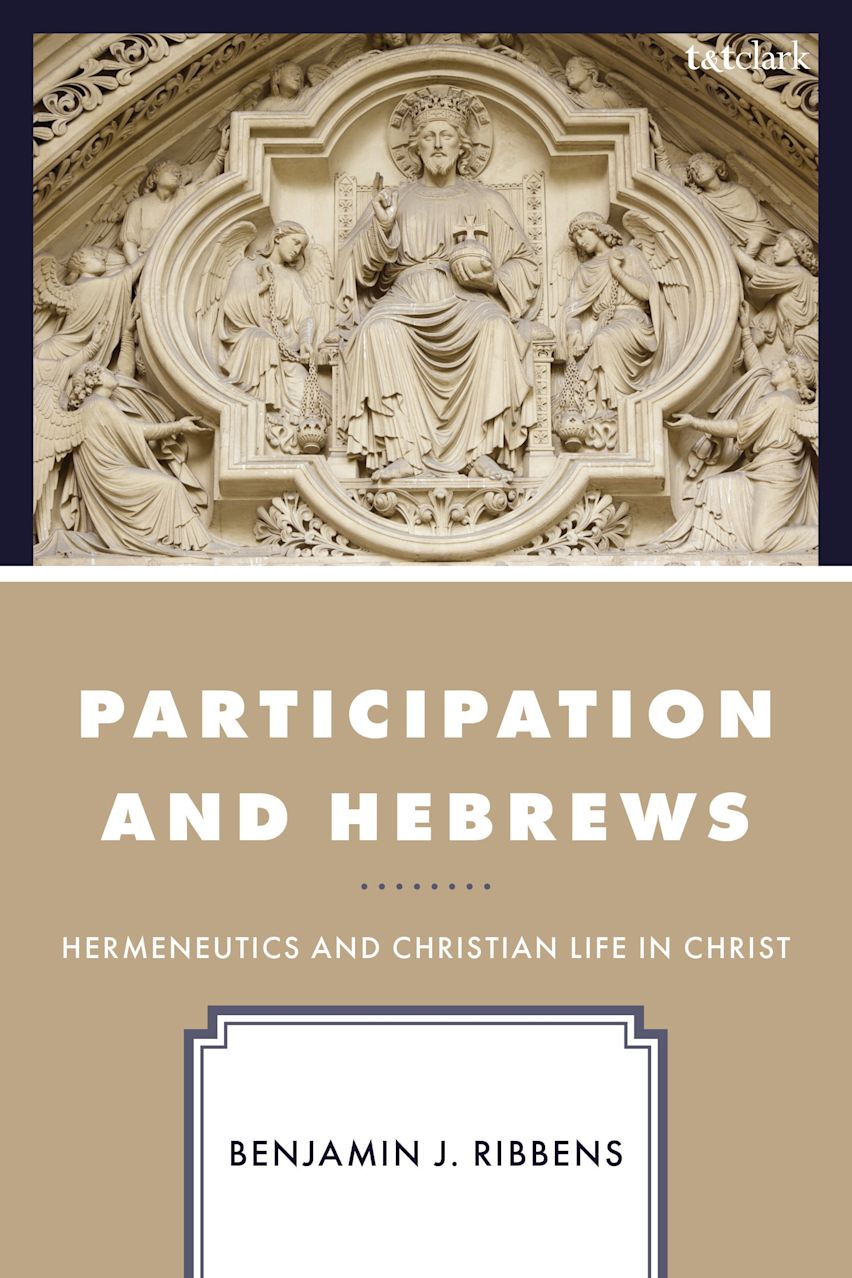
This book applies an approach of participatory exegesis to the book of Hebrews, illuminating one of its central, unifying themes: participation.
When interpreting Scripture, Hebrews depicts earthly and Old Testament realities such as sanctuary, sacrifice, and son/king participating in heavenly and new covenant realities; the life of believers is a life of participation in Christ and the heavenly realm-and even the act of reading Scripture is a participation in divine discourse. Across four sections (The Literal and Christological Senses; The Teleological Sense; The Tropological Sense; Soteriology), Benjamin Ribbens brings together Hebrews scholarship with participatory exegesis, union with Christ, and a broad framework of participation. Such an emphasis on participatory exegesis-as outlined by Matthew Levering and Hans Boersma-resolves tensions within contemporary Hebrews scholarship, introducing a biblical studies methodology into theological inquiries. In doing so, Ribbens offers a fresh reading of Hebrews, building on on-going discussions within the field of the Hebrews' call for active participation in and with the divine.
Table of Contents
1: Participatory Exegesis – The Literal and Christological Senses
2: Participatory Exegesis – The Teleological Sense
3: Participatory Exegesis – The Tropological Sense
4: Participation in Christ – Soteriology
5: Reading Scripture as Participatory Experience
Conclusion
Product details
| Published | 06 Aug 2026 |
|---|---|
| Format | Ebook (Epub & Mobi) |
| Edition | 1st |
| Pages | 208 |
| ISBN | 9781978764996 |
| Imprint | T&T Clark |
| Publisher | Bloomsbury Publishing |
About the contributors
Reviews
-
Benjamin Ribbens's patient and conscientious treatment of the Epistle to the Hebrews demonstrates that the author thought of the relationship between earthy and heavenly realities as participatory or sacramental in character. The various levels of meaning in Hebrews-literal, Christological, teleological, and tropological-make sense only within a participatory framework of reality. This book proves beyond doubt that participation is not an alien metaphysical imposition upon the biblical text but simply describes New Testament's own use of the Old. This book is a milestone in theological exegesis.
Hans Boersma, Nashotah House Theological Seminary
-
For the ancient Israelites even prior to the Hellenistic era, 'history' was a reality that involved not simply temporal agents but also the governing and active presence of the God who drew his people into covenantal relationship. This understanding of history--just as 'critical' as ours today--is profoundly displayed in Hebrews, through what Ribbens identifies as integrated Christological, teleological, and tropological participatory modes. From this perspective, Ribbens opens up Hebrews's understanding of union with Christ and of Israel's Scriptures as 'sacramental'. He thereby leads us beyond any shallow dichotomy between Platonic and apocalyptic in the exegesis of Hebrews.
Matthew Levering, Mundelein Seminary
-
Clear, precise, thorough, and eminently useful-everything I'd expect in an excellent work by an excellent scholar. Those interested in reading Hebrews as Hebrews intends to be read will want to pay careful attention to this book.
Michael Kibbe, Great Northern University
-
Participation is much discussed but little explored beyond a few key texts. Benjamin Ribbens brings Hebrews into the discussion. In so doing, he deepens readings of Hebrews and widens accounts of participation in a varied and broad direction. It's a very important model of theological exegesis.
Michael Allen, Reformed Theological Seminary
-
With lucid writing, first-rate research, and suggestive proposals, Benjamin Ribbens applies the theological framework of 'participation' to Hebrews, offering a participatory approach to exegesis, which elucidates, among other things, the various ways that believers participate in Christ and the outcomes of his saving work. Moreover, Ribbens treats even the act of reading or hearing scripture itself as dynamically participatory. Some, no doubt, will wish to push back on particular points, but all will be prompted to consider the text of Hebrews through a new lens, musing, 'Why didn't I think of this before!?'
George H. Guthrie, Regent College