Peaceful Political Transitions in Ghana
Elections, Institutions, and Impact
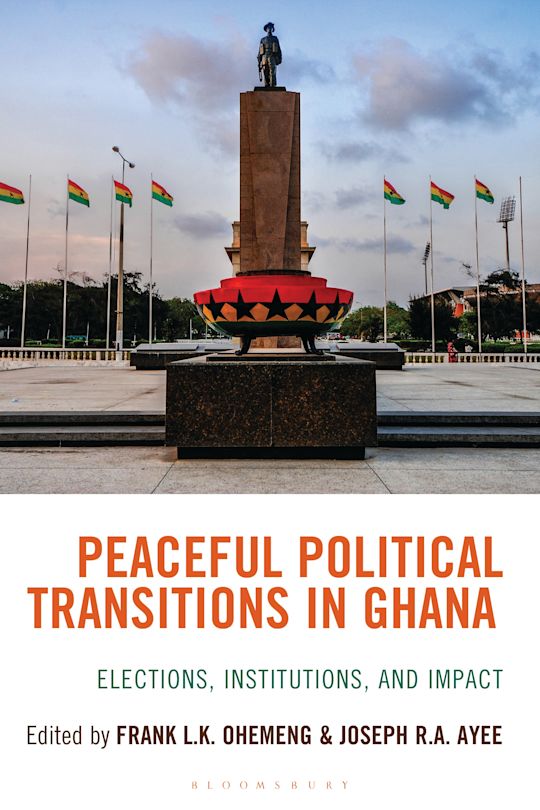

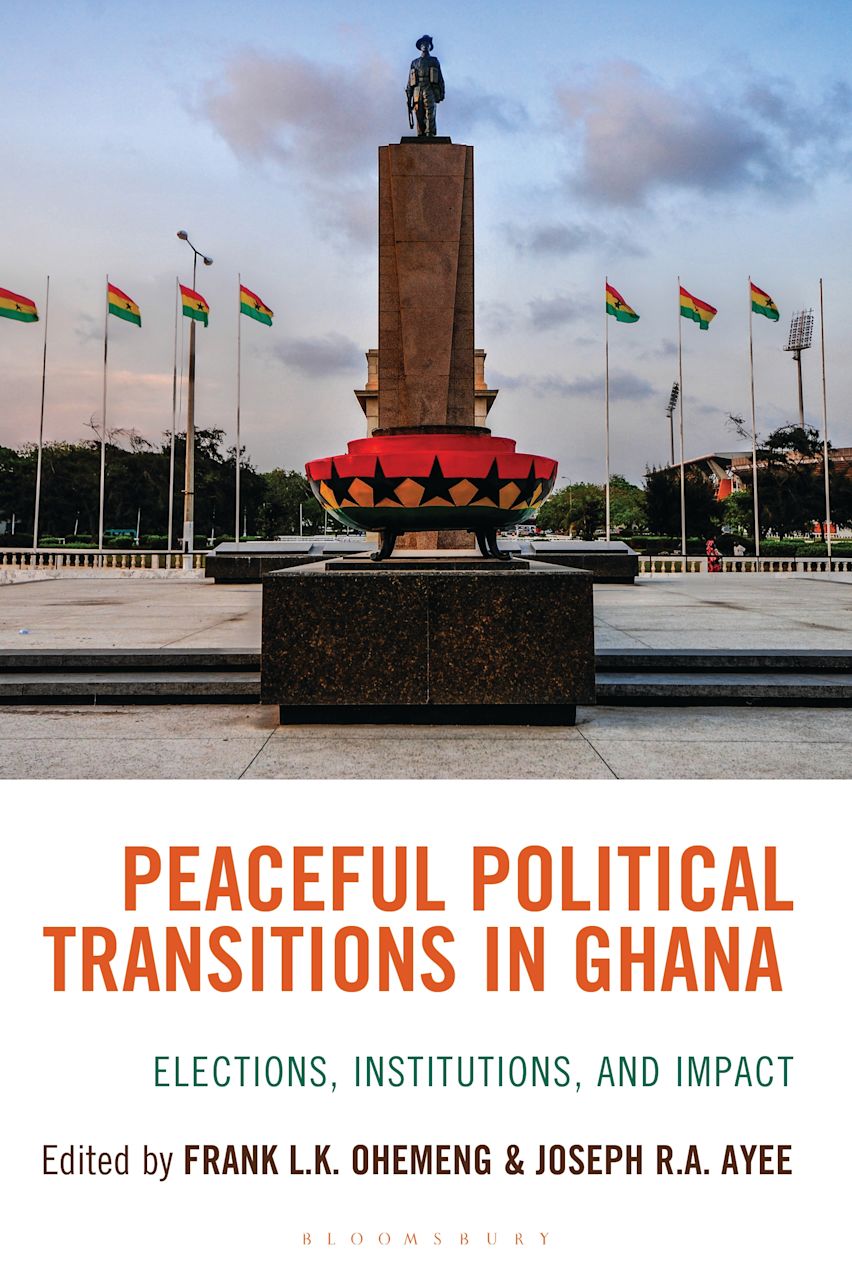
Peaceful Political Transitions in Ghana
Elections, Institutions, and Impact
Description
Examining nine peaceful political transitions in Ghana from 1993 to 2025, this book covers the dynamics of these transitions, the role of local and international actors, and institutions in these transitions, and the achievements and challenges encountered.
The phenomenon of political transition has attracted considerable interest from scholars and state and non-state actors, largely because of the global emerging trend of democratic backsliding or erosion. This volume speaks to this concern by unpacking peaceful political transitions. Contributors in this edited volume by Frank Ohemeng and Joseph Ayee examine the role of politicians, institutions, bureaucrats, economic development, the electoral management body, political parties, media, gender, and international actors during nine political transitions in Ghana from 1993 to 2025. The transitions were undertaken without widespread conflict. The gains, deficits, risks, opportunities, and lessons of political transitions are also discussed.
Ultimately, the volume argues that despite the peaceful turnover of elections, which has raised Ghana's image as a beacon of democracy, political transition continues to be challenging and requires further improvement to ensure a seamless future transition among political parties. The lessons and implications of the findings for theoretical, comparative, empirical, and policy scholarship are also highlighted.
Table of Contents
List of Tables
Preface and Acknowledgments
Introduction. Interface of Peaceful Political Transitions, Elections, and Institutions
Frank L.K. Ohemeng (Concordia University, Canada) and Joseph R.A. Ayee (Independent Scholar, Accra, Ghana)
1. Theoretical Framework: Political Transition in Perspective
Lord Mawuko-Yevugah (Ghana Institute of Management and Public Administration, Ghana) and Jeffred Okoe Aryeetey (University of Ghana, Ghana)
2. Bureaucracy and Political Transitions: A Subservient Servant or Master in Its Own Right?
Frank L.K. Ohemeng (Concordia University, Canada) and Joseph R.A. Ayee (Independent Scholar, Accra, Ghana)
3. Political Transition and its impact on Economic Programs and Development in Ghana
Alexander Bilson Darku (University of Lethbridge, Canada)
4. Electoral Management and Political Transitions: The Case of Ghana's Electoral Commission
Maame Adwoa Gyekye-Jandoh (University of Ghana, Ghana)
5. Political Parties in Circular Political Transitions in Ghana: A Comparative and Theoretical Perspective
George Bob-Milliar (Kwame Nkrumah University of Science and Technology, Ghana)
6. Mediatization and Democratic Development: The Media and Political Transitions in Ghana, 1992–2024
Wilberforce S. Dzisah (Ghana Institute of Management and Public Administration, Ghana) and James K. Asante (University of Media, Arts and Communication, Ghana)
7. Engendered Political Transitions in Ghana? Impacts on Women's Rights and Representation
Gretchen Bauer (University of Delaware, USA) and Rosina Foli (University of Ghana, Ghana)
8. Ensuring Effective Political Transition in Ghana: The Role of International Actors
Rosina Foli (University of Ghana, Ghana) and Rexford Darko (University of Ghana, Ghana)
Conclusion. Ghana in Future Political Transitions: A Prognosis
Joseph R.A. Ayee (Independent Scholar, Accra, Ghana) and Frank L.K. Ohemeng (Concordia University, Canada)
Index
About the Contributors
Product details

| Published | 15 Oct 2026 |
|---|---|
| Format | Ebook (Epub & Mobi) |
| Edition | 1st |
| Pages | 240 |
| ISBN | 9781978764132 |
| Imprint | Bloomsbury Academic |
| Illustrations | 2 bw illus & 6 tables |
| Publisher | Bloomsbury Publishing |
Related Titles