- Home
- ACADEMIC
- Politics & International Relations
- Politics - Other
- Perspectives on Conflict
Perspectives on Conflict
Insights for Professional and Personal Practice
- Textbook
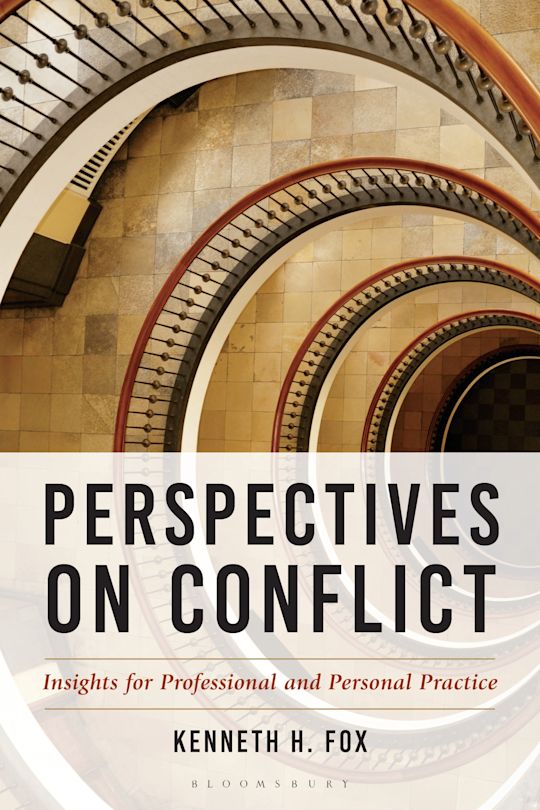
Perspectives on Conflict
Insights for Professional and Personal Practice
- Textbook

Inspection copy added to basket
Choose your preferred format. If you would prefer an ebook and it is not displayed below, please visit our inspection copies page.
Please note ebook inspection copies are fulfilled by VitalSource™.
Buy from Bloomsbury eTextBooks
You are now leaving the Bloomsbury Publishing website. Your eBook purchase will be with our partner https://www.vitalsource.com.
Your credit card statement will show this purchase originating from VitalSource Technologies. They will also provide any technical assistance you might require.
You must sign in to add this item to your wishlist. Please sign in or create an account
Description
This multi-perspective examination provides deep insight into the many ways people can better understand conflict, with practical application to various roles and settings.
Kenneth H. Fox provides a broadly interdisciplinary examination of conflict insights and dives into implications of how this can inform more reflective, insightful, and comprehensive conflict practice across a range of professional and personal settings. While the book is grounded in theory, it is written to be practical and accessible to students and practitioners.
The book is organized into 3 parts. Part 1 introduces several metaphors that help the reader envision conflict in complementary ways and examines the importance of adopting multiple perspectives for broadening insights into conflict. It also introduces technical language that helps clarify the implications of conflict intervention and invites the readers to appreciate and engage in reflective and reflexive conflict practice.
Part 2 examines sample conflict theories from six, broad disciplinary perspectives: the body; the non-conscious mind; the strategic mind; language and symbols; the co-creation of meaning; and social systems, structures, and the conflict ecosystem. Together, these 6 perspectives help provide a holistic sense of the conflicts we experience. Part 3 shifts focus to practical application of the insights examined. It discusses how the various perspectives impact the work of a conflict practitioner in general as well as particular practice roles and settings.
Table of Contents
Acknowledgements
List of Figures
Part One
1. Introduction
2. A Language of Conflict
3. Cultivating Capacity for Conflict Practice
Part Two
4. The Body
5. The Nonconscious Mind
6. The Strategic Mind
7. Language and Symbols
8. The Co-creation of Meaning
9. Systems, Structures and the Conflict Ecosystem
Part Three
10. Implications for Conflict Practice
11. A Few Loose Ends
Bibliography
Index
About the Author
Product details

| Published | 08 Jan 2026 |
|---|---|
| Format | Ebook (Epub & Mobi) |
| Edition | 1st |
| Extent | 216 |
| ISBN | 9781538186893 |
| Imprint | Bloomsbury Academic |
| Illustrations | 1 bw table 6 bw lineart |
| Publisher | Bloomsbury Publishing |

About the contributors
Reviews
-
In this treasure of a volume, Ken Fox shares gathered wisdom from decades as a scholar, teacher, and practitioner. The book is something rare, as relevant for someone starting out as for veterans of conflict work. Fox centers good conflict practice around self-awareness – emotional, cognitive, and somatic – translating theory into practice in ways only possible for a seasoned expert. Both moving and genuine, the book is conversational, accessible and comprehensive, and it will quickly become an essential classic in the field.
Michelle LeBaron, Professor of Law, University of British Columbia, Vancouver, Canada
-
As an educator committed to helping students become 'fit for purpose' as conflict practitioners, I find this book invaluable. Ken Fox makes a compelling case for strategies that truly prepare students and practitioners for the complexity of conflict work, addressing persistent gaps in the field. He underscores the importance of reflective and reflexive practice and the need to embody humility and curiosity, even in a profession that often casts us as experts. This book is a necessary companion for cultivating the critical capacities required for effective and ethical conflict practice.
Cherise D. Hairston, Jimmy and Rosalynn Carter School for Peace and Conflict Resolution, George Mason University, USA; elder of the National Association for Community Mediation
-
Kenneth Fox has written the kind of book many conflict practitioners have been waiting for. It helps us slow down, think more clearly, and reconnect with the deeper questions beneath our work. He invites us into a rich exploration of what conflict is, how it works, and what it means to engage with it meaningfully. Fox brings a rare combination of academic breadth, practical wisdom, and genuine curiosity to his analysis. This book doesn't just inform practice; it enriches the practitioner, encouraging deeper reflexivity, greater self-awareness, and a willingness to keep learning.
Samantha Hardy, Director of The Conflict Management Academy, Australia
-
Perspectives on Conflict provides an admirable theoretical framework and helpful definitions which integrate and celebrate different approaches to conflict. Fox weaves together ways of understanding conflict, enriched with imagery that highlights the significance and purpose of each perspective. The resulting multidisciplinary tapestry serves as a valuable resource for seasoned conflict practitioners and offers guidance and insight for anyone who wants to be more intentional about how they engage with others.
Aimee Gourlay, Senior Fellow, Dispute Resolution Institute, Mitchell Hamline School of Law; former CEO, Mediation Center for Dispute Resolution