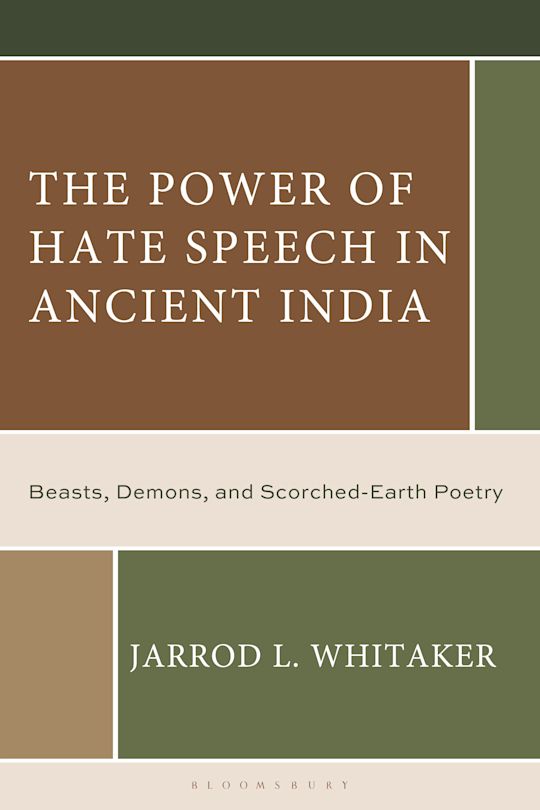
The Power of Hate Speech in Ancient India
Beasts, Demons, and Scorched-Earth Poetry

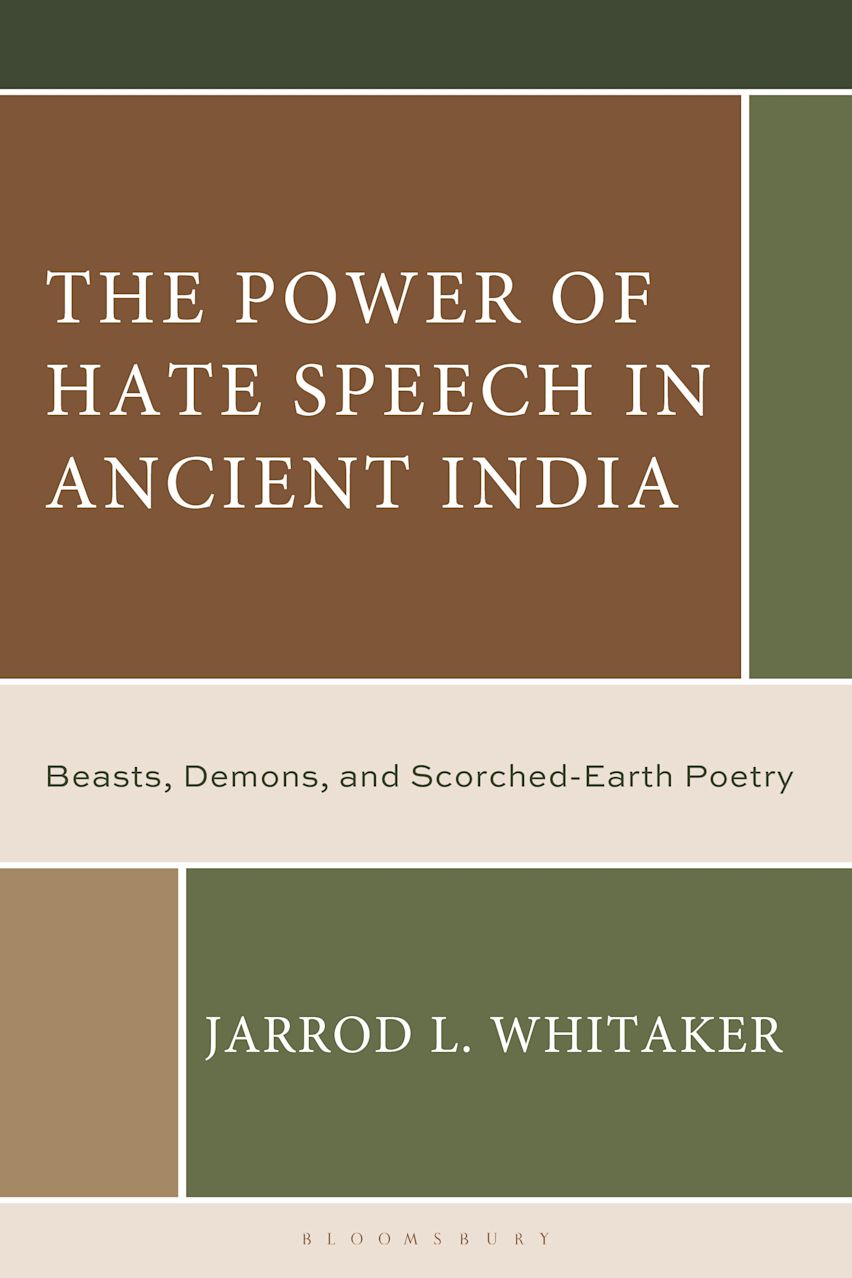
The Power of Hate Speech in Ancient India
Beasts, Demons, and Scorched-Earth Poetry
Description
This book argues that early Vedic poet-priests deployed various forms of hate speech to negotiate interpersonal conflict and in/out-group status.
Jarrod L. Whitaker illuminates a lived reality in which ancient Indian ritualists had to contend with serious threats to the staging of their ritual performances from rival ritualists, members of the wider community, cultural outsiders, and even wild animals. Consequently, this book offers an in-depth study of how ancient Indian poet-priests construct and reproduce their identities and sociopolitical expectations in ritual performances through the ubiquitous use of ritualized hate speech. It provides hitherto unnoticed insights into the complex discursive practices, ethical values, and interpersonal relationships that ritual practitioners had to negotiate some 3000 years ago in north India.
Table of Contents
1: Ritual Order Vs Monstrous Chaos
2: Hate Speech
3: Bráhman-Haters and Brahmáns As Haters
4: “Discord-Sowers,” Pests, and the Animal-Other
Conclusion
Appendix 1: Translation Of RV.7.104.1-25
Appendix 2: Translation Of RV.10.87.1-25
Appendix 3: Rgvedic Appearances of “Hate” as a Subjective Quality
Bibliography
Product details

| Published | 06 Aug 2026 |
|---|---|
| Format | Ebook (PDF) |
| Edition | 1st |
| Extent | 224 |
| ISBN | 9798216389668 |
| Imprint | Bloomsbury Academic |
| Publisher | Bloomsbury Publishing |
Reviews
Related Titles