Resisting the Wasteocene
Fighting the Global Dump

Resisting the Wasteocene
Fighting the Global Dump
Description
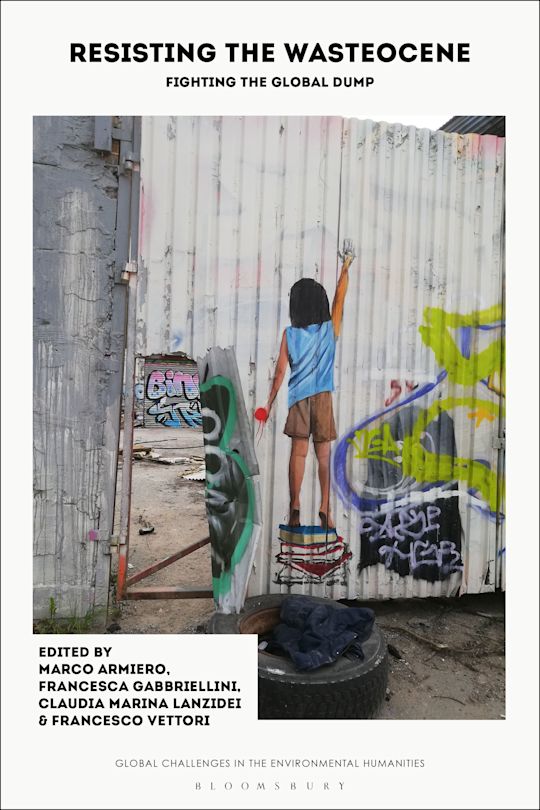
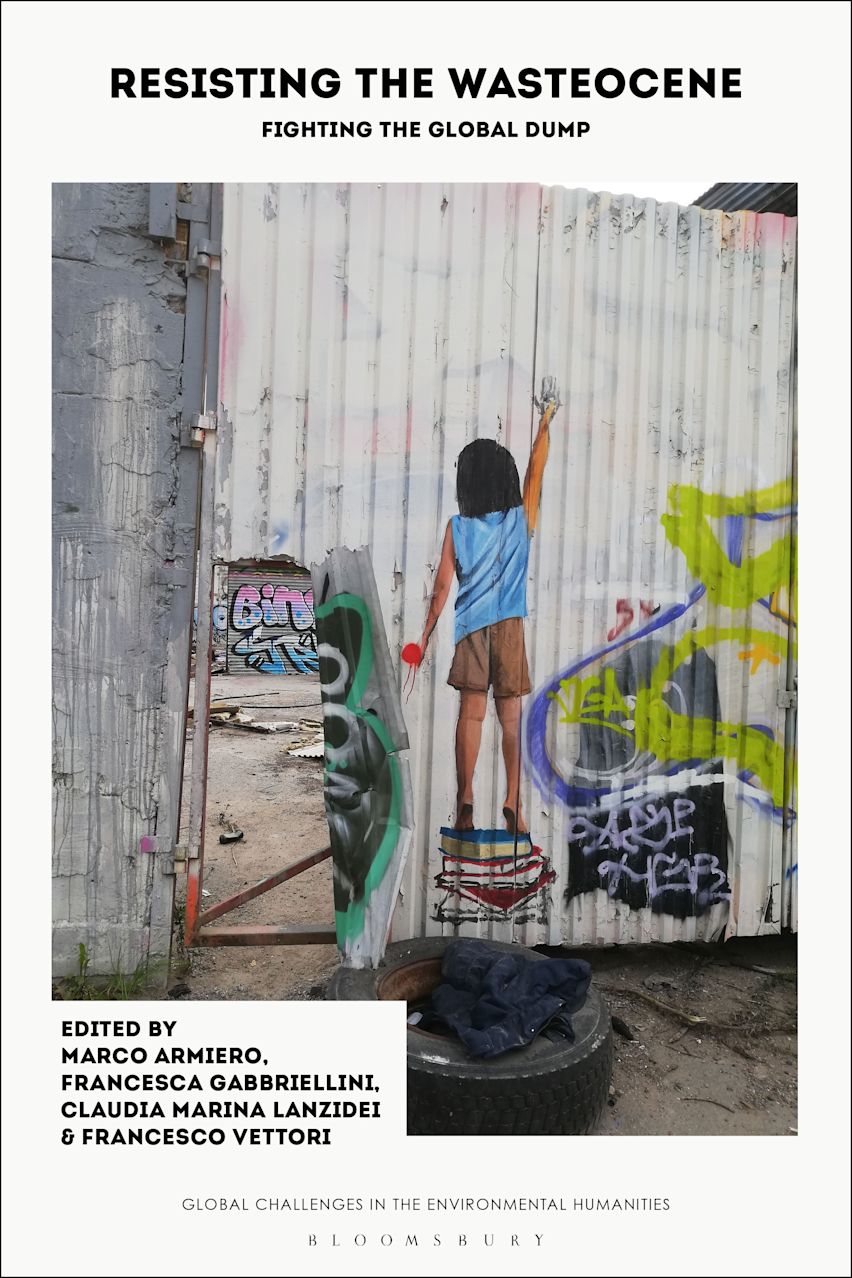
Challenging the dominant narrative of the Anthropocene, Resisting the Wasteocene highlights wasting relationships that produce both wasted people and ecosystems. This book exposes how such relationships seek to turn communities into socioecological dumps, while also tracing their forms of resistance.
Across case studies from Eastern Europe, Bangladesh, China, Senegal, Cuba, Italy, and more-and drawing on history, anthropology, cultural studies, and geography-it maps the toxic infrastructures that silence and normalize injustice. With its global, interdisciplinary scope and provocative critique of Anthropocene discourse, this volume makes the Wasteocene visible while opening possible pathways for resisting and escaping it.
Accessibility Information
Additional accessibility information
- EPUB 3.0
- Conforms with the requirements of EPUB Accessibility Spec v1.1
- WCAG level AA
- WCAG v2.2 compliant
- accessibility@bloomsbury.com
Hazards
The publication contains no hazards
Support for non-visual reading
- No accessibility features offered by the reading system, device or reading software are disabled or otherwise unusable with the product
- Has alternative text descriptions for images
Visual adjustments
Appearance of the text and page layout can be modified according to the capabilities of the reading system (font family and size, spaces, as well as color of background and text)
Navigation
- Page list to go to pages from the print source version
- Elements such as headings, tables, etc for structured navigation
- All or substantially all textual matter is arranged in a single logical reading order
- Content is enhanced with ARIA roles to optimize organization and facilitate navigation
- Purposes of all links are made clear
Rich content
Language tagging provided
Table of Contents
2. Organizing the Human: Subverting the Wasteocene, Melanie Samson (University of Johannesburg, South Africa)
3. Commoning, Consumption, and the Body on Montevideo's Waste-scape, Patrick O'Hare (University of St Andrews, UK)
4. Circular Logics: Proposals and Counter-Proposals for Extended Producer Responsibility, Christine Hegel (Western Connecticut State University, USA) and Taylor Cass Talbott (International Alliance of Waste Pickers, North America)
5. Decolonizing the Wasteocene: the Black female collectivity of Brazilian waste pickers, Dieric Guimarães (Federal University of Bahia, Brazil) and Flavia Maximo
6. The Dump in Cuba, Claudia Lanzidei (Independent Researcher, Italy)
7. Waste as a lens: Unpicking toxic narratives of climate migrants in Dakar and Saint Louis, Senegal, Sarah Walker (University of Bologna, Italy)
8. Green Ship Recycling: A Toxic Narrative of the Wasteocene? Camelia Dewan (Uppsala University, Sweden)
9. Wasting Peace: Environmental Violence and its Vicissitudes in Post-war Bosnia and Herzegovina, Damir Arsenijevic (University of Tuzla, Bosnia and Herzegovina)
10. Culinary Garbo-politics: Marginalized communities, discarded foods, and repressive governmentalities in India, Sayan Dey (Bayan College, Oman) & Tias Maity (Alliance University, Bangalore)
11. The Socialist Experience of Waste and Recycling from Soviet Ukraine to State-Socialist Hungary, Viktor Pál (University of Ostrava, Czechia) and Tetiana Perga (National Academy of Sciences of Ukraine)
12. In the cracks of the Wasteocene. Building circular communities through solidarity networks in central Italy, Francesco Vettori (University of Bologna, Italy)
13. Wasteocene as Method: Reimagining Narratives, Value(s) and Commons, Julie Sze (University of California, Davis, USA)
14. The Waste of the West? Sandra Swart (Stellenbosch University, South Africa)
15. What Would a Multispecies Wasteocene Look Like? Lingjing Wu (Renmin University of China)
16. Wasting the World. Class, Capital & Cheap Toxification in the Capitalist World-Ecology, Jason Moore (Binghamton University, USA)
17. Conclusion, Claudia Marina Lanzidei (Independent Researcher, Italy) and Francesco Vettori (University of Bologna, Italy)
Product details

| Published | 21 Jan 2027 |
|---|---|
| Format | Ebook (Epub & Mobi) |
| Edition | 1st |
| Pages | 272 |
| ISBN | 9781350546455 |
| Imprint | Bloomsbury Academic |
| Illustrations | 8 bw illus |
| Series | Global Challenges in the Environmental Humanities |
| Publisher | Bloomsbury Publishing |
Related Titles