The Senate of Pakistan and Regional Representation
History, Role, and Parliamentary Performance
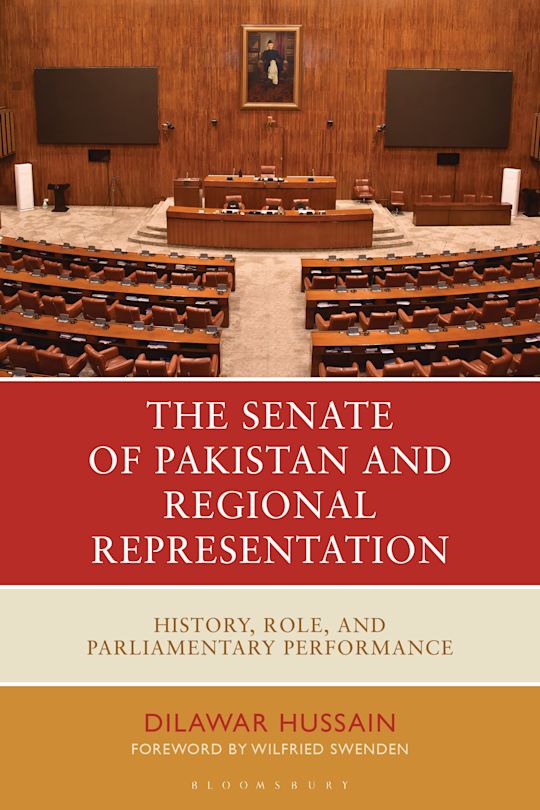

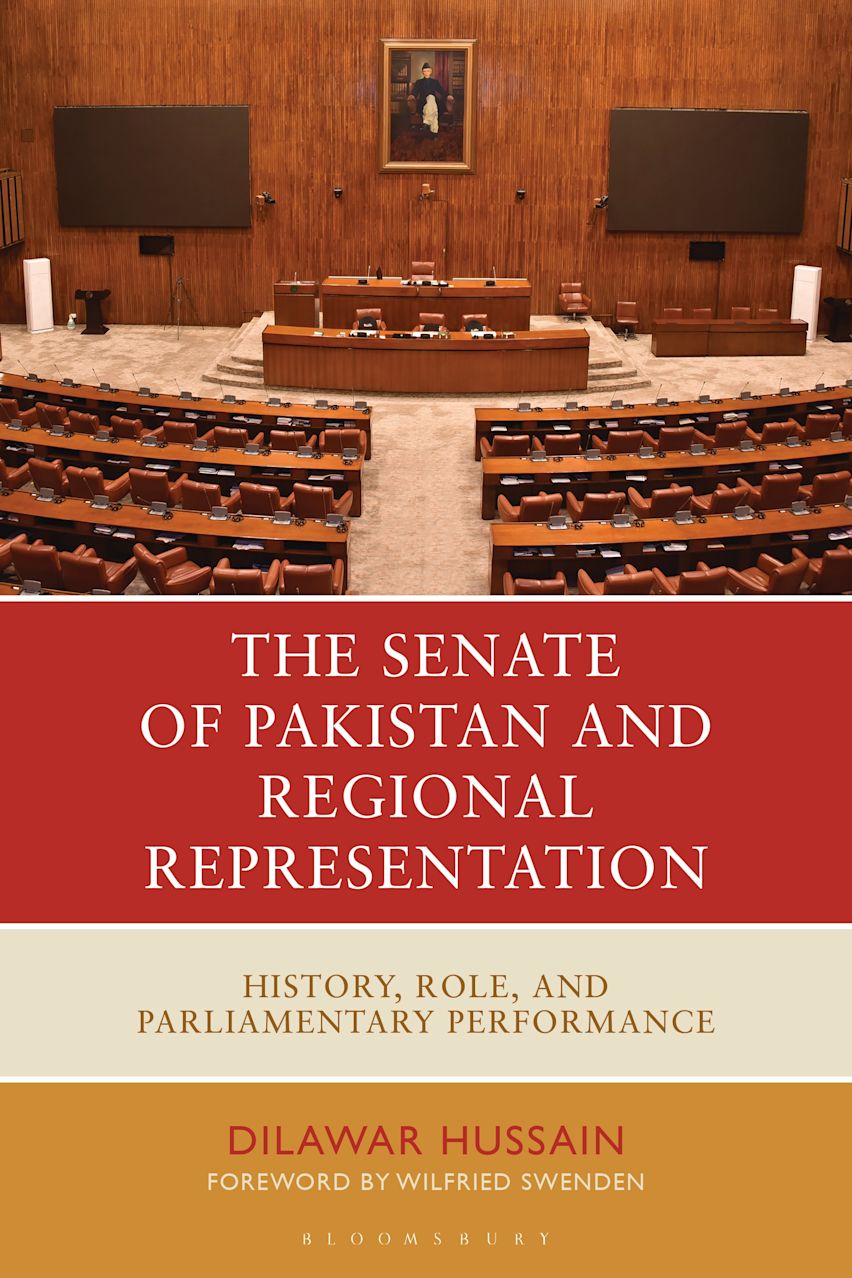
The Senate of Pakistan and Regional Representation
History, Role, and Parliamentary Performance
Description
In the first major book on the Senate of Pakistan since its creation in 1973, Dilawar Hussain explores its institutional history, membership, constitutional powers and key functions and how these have changed since the introduction of the Eighteenth Constitutional Amendment in 2010.
This book provides empirical flesh to the assumption that, in a federal state, a second chamber is needed to accommodate regional concerns at a federal level. The author explores the institutional history of the Pakistani Senate through its composition, constitutional powers, and key functions as a regional chamber and explains the broader institutional environment in which it operates.
This book analyses the impact of the Pakistani Senate as an overseer of federal policies and legislation of the federal government and appraises the parliamentary performance of the senators in advancing concerns of the provinces at the federal level.
It also argues that the parliamentary nature of the Pakistani federation has strengthened the executive branch in which the Pakistani Senate operates, and has thus undermined its role as a regional chamber. Within a historical and comparative context, the book provides insight into the Senate's 'political legitimacy' and options for its institutional reforms.
Additionally, through the exploration of bicameralism internationally, the book offers a conceptual framework for assessing the institutional strength, institutional design and parliamentary performance of the political institutions. This theoretical, methodological and empirical study is a major contribution to the empirical study of parliamentary behavior and the changing nature of political representation in Pakistan and beyond.
Table of Contents
List of Tables
Foreword by Wilfried Swenden
Acknowledgments
List of Abbreviations
Introduction
1. Role of Federal Second Chamber as a Chamber of Regions: A Conceptual Framework
2. Institutional Rationale and Design: Role of the Senate of Pakistan as a Chamber of Regions
3. Institutional Strength and Capacity: Constitutional Powers of the Senate of Pakistan
4. Bicameral Incongruence: Compositional Distinctiveness of the Senate of Pakistan
5. Non-Legislative Policy Work of the Senate of Pakistan: Empirical Evidence and Appraisal
6. Legislative Policy Work of the Senate of Pakistan: Empirical Evidence and Appraisal
Conclusion and Recommendations
Epilogue: The Contemporary Senate of Pakistan
Annex I: Constitution-Making Process and Creation of the Senate of Pakistan: A Chronology, 1971-1973
Annex II: Members of the Constitution Committee, 1972
Annex III: Province/Territory-wise List of the Members of First Senate Elected in August 1973
Annex IV: The Eighteenth Constitutional Amendment of 2010: Extended Role of the Senate of Pakistan
Bibliography
Index
Product details

| Published | 06 Aug 2026 |
|---|---|
| Format | Ebook (Epub & Mobi) |
| Edition | 1st |
| Extent | 240 |
| ISBN | 9798765156155 |
| Imprint | Bloomsbury Academic |
| Illustrations | 8 b&w illus & 24 tables |
| Publisher | Bloomsbury Publishing |
Reviews
Related Titles