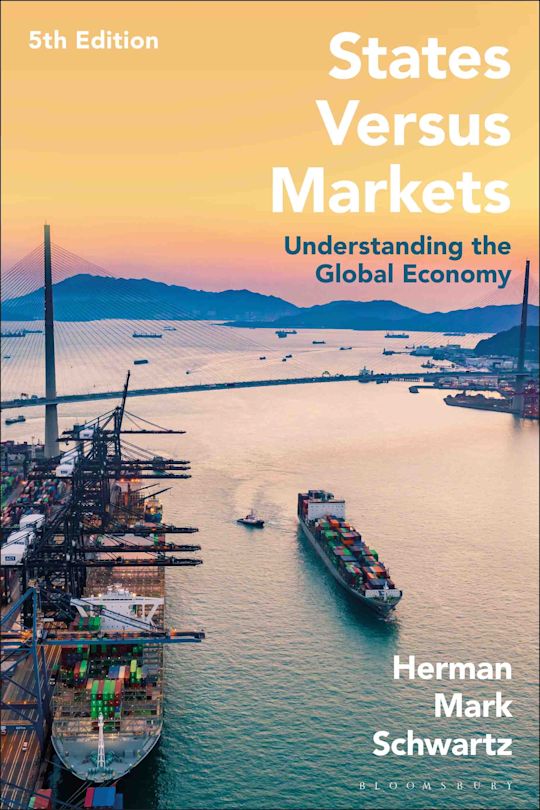

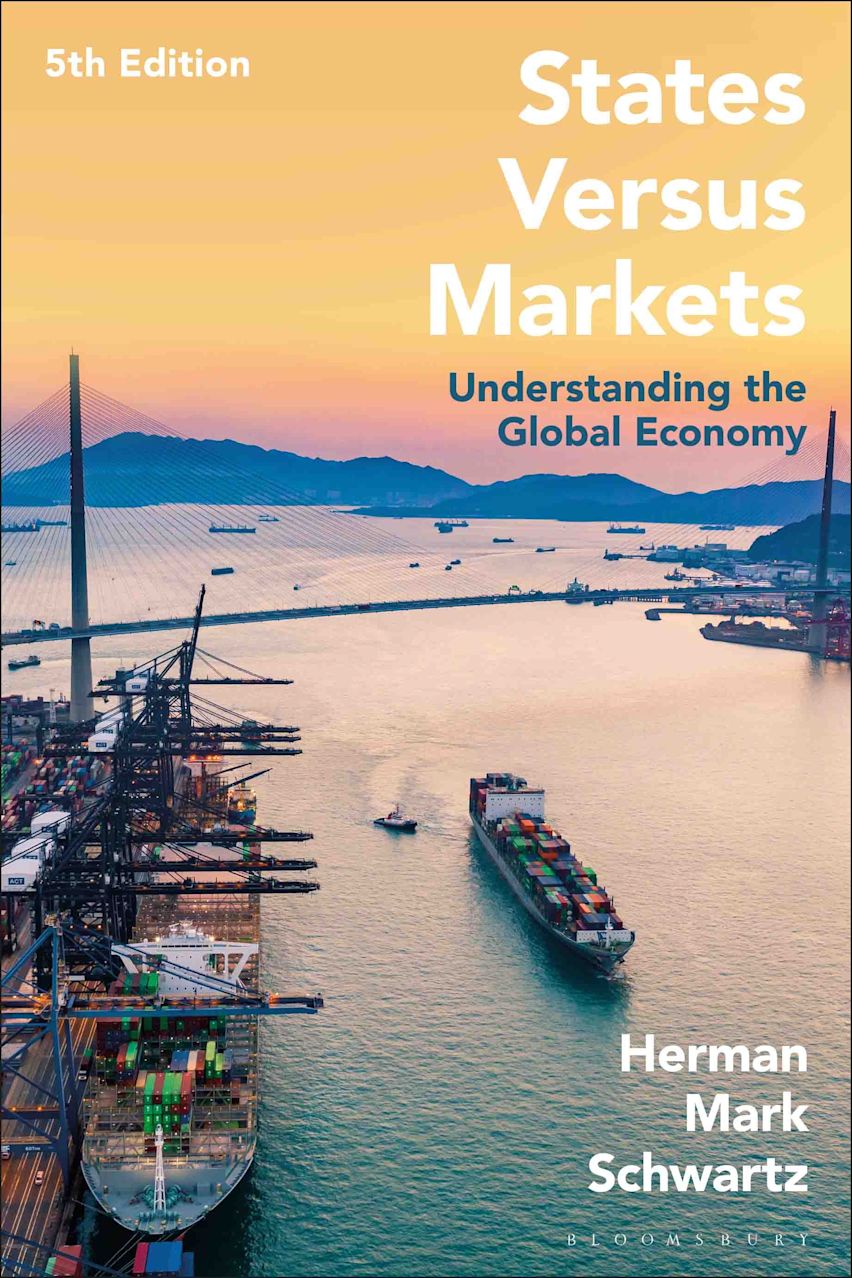
Description
The book covers some of the most exciting concepts in world politics – how to connect the production of goods and services in one region to the markets for those goods, and how this can lead to conflicts among states that try to create, enhance or subdue these markets. Fundamentally, it seeks to answer an enduring question in world politics – which has more power, states or markets?
This fifth edition examines globalization as a recurrent process by which markets have periodically redistributed economic activity. It links the regional production of goods and services with markets located elsewhere, showing how this can lead to conflicts among states. Taking into account the Covid-19 pandemic and the consequences of the recent revival of industrial policy, as well as the both Chinese and American efforts to redefine the Washington consensus, this book offers coverage of the latest developments in global political economy, offering:
- Increased emphasis on de-globalizaition/slo-balization
- New chapter on migration migration and labour exploitation
- Discussion of the long-term fallout of the 2008 financial crisis
- How Covid-19 exposed the fragility of supply chains
- The debate about the rising income of the global middle class
- More discussion of the role of multinational and transnational companies and associated controversies – regulatory arbitrage and tax avoidance, e.g. Apple and anti-competition
- The role of ICT, AI and biotechnology
This is the ideal text for upper level undergraduate and postgraduate students looking to analyse the influence of global markets on state policies and geo-economic position.
Table of Contents
1 The Rise of the Modern State
2 European Mafias Abroad
3 States, Markets, and the Origins of International Inequality
4 Economic and Hegemonic Cycles
5 The Industrial Revolution and Late Development
6 Agricultural Exporters and the Search for Labor
7 Agriculture-Led Growth and Crisis in the Periphery: Ricardian Success, Ricardian Failure
8 The Collapse of the Nineteenth-Century Economy
Part II The Fall and Rise and Fall Again of Globalization
9 Depression 2.0, US Domestic Politics, and the Foundation of the Post-World War II System
10 International Money, Capital Flows, and Domestic Politics
11 Transnational Firms
12 Industrialization in the Old Agricultural Periphery: The Rise of the Newly Industrialized Countries
13 Industrialization in the Old Agricultural Periphery: The Rise of the Newly Industrialized Countries, part 2
14 Flow of People
15 Trade and the Rise and Fall of Globalization 2.0
16 US Hegemony: Declining from Below
17 US Hegemony and Global Stability
Product details

| Published | 05 Feb 2026 |
|---|---|
| Format | Ebook (PDF) |
| Edition | 5th |
| Pages | 496 |
| ISBN | 9781350458338 |
| Imprint | Bloomsbury Academic |
| Publisher | Bloomsbury Publishing |

Reviews
Related Titles