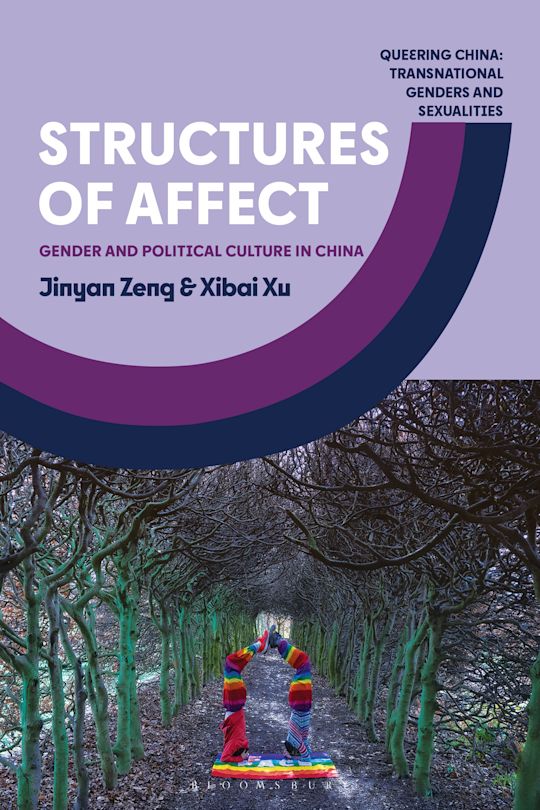

Description
Examines the central role of affect and gender in shaping personality, community, nationhood and political discourse in contemporary China.
Drawing on (auto)ethnography, interviews, films, podcasts, and cultural and artistic productions from the 2000s to 2025, this book demonstrates how authoritarian rule is sustained through complex affective mechanisms, while also tracing the subtle, everyday forms of affective resistance that emerge within and against these structures.
Proposing 'structures of affect' as its analytical framework, the study investigates how the formative experiences of China's ruling elites cultivated an enduring 'affective attachment' to the Chinese Communist Party (CCP), a process that reinforces authoritarian legitimacy. At the same time, it reveals how latent hierarchy, gendered violence and forms of 'affective antagonism' within activist communities have reproduced the very sexism and authoritarian practices that their activism seeks to oppose. Through this examination, the book highlights the practices of affective negotiation at the grassroots level, including Sinophone-Tibetan feminist podcasting, the 'affective queering' of community-making, self-making and solidarity among the younger generation, and the 'affective suffering' captured in cinematic responses to the Russo-Ukrainian War and China's COVID-19 governance.
Ultimately, this book offers a nuanced account of political culture as lived, embodied and emotionally mediated practice. It concludes by advocating a feminist ethics of care and envisioning alternative modes of living and political engagement in repressive contexts, grounded in a transformative affective ethos.
Table of Contents
Notes on Spelling, Names, and Chinese Characters
Author Biographies
Introduction: A Feminist Study of China's Political Culture
1. Affective Activism: 'No Enemies', 'Love' and Reactionary Impulses
2. Affective Party Family: Identification of Cadre Descendants
3. Affective Suffering: Cinematic Conversations on China's COVID-19 Control and Ukraine War
4. Affective Podcasting: Forging Feminist Community for Sinophone-Tibetans
5. Affective Queering: The Visuality of Community-Making
6. Toward an Affective Ethos: Practices of Self-Making and Solidarity
Appendix: Filmography
References
Index
Product details

| Published | 13 Jan 2027 |
|---|---|
| Format | Ebook (Epub & Mobi) |
| Edition | 1st |
| Pages | 176 |
| ISBN | 9781350475052 |
| Imprint | Bloomsbury Academic |
| Series | Queering China: Transnational Genders and Sexualities |
| Publisher | Bloomsbury Publishing |

Reviews
Related Titles