
Description
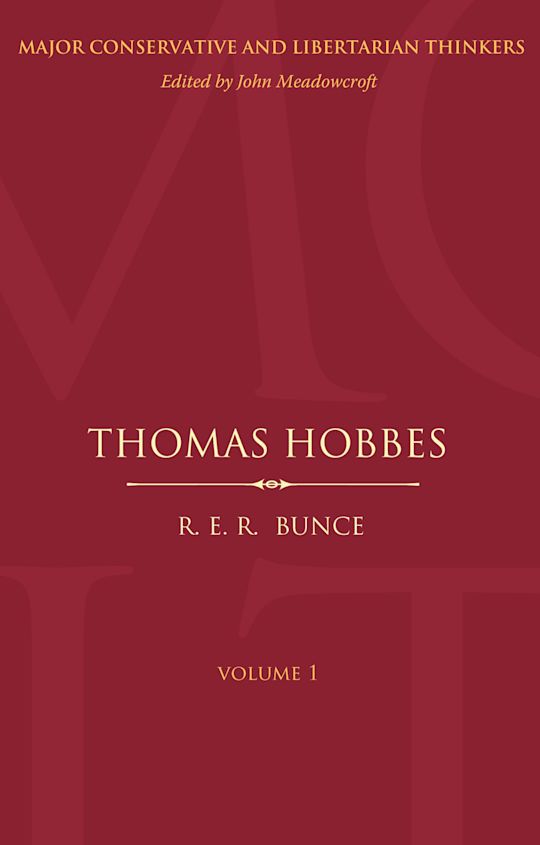
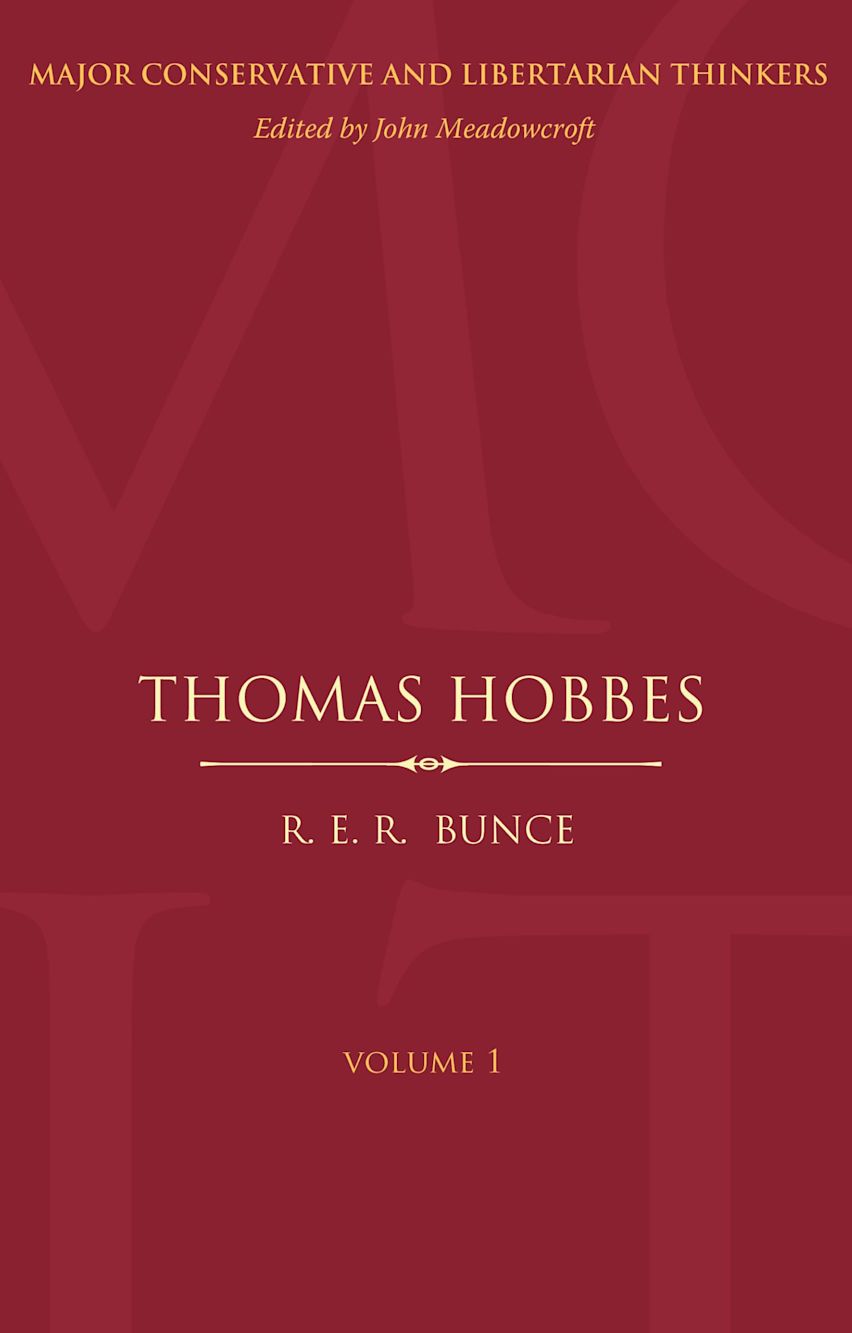
In this volume, Dr Bunce (University of Cambridge) introduces Hobbes' ambitious philosophical project to discover the principles that govern the social world. If Hobbes' immodest assessment that he successfully attained this goal may be disputed, Bunce nevertheless captures the extraordinary enduring value of Hobbes' work for the contemporary reader. Thomas Hobbes's name and the title of his most famous work, Leviathan, have come to be synonymous with the idea that the natural state of humankind is 'nasty, brutish, and short' and only the intervention of a munificent overlord may spare men and women from this unenviable fate by imposing order where there would otherwise be chaos. The problem that Hobbes formulated resonates through the centuries as the enduring dilemma of political organisation and social cooperation. Indeed it can be seen today in fields as diverse as theoretical game theory and international relations.
Table of Contents
Chapter 1. Hobbes's Life
Early Life
Employment as a Humanist
Hobbes and the New Science
Philosopher in Exile
Return to England
Last Years
Conclusion: life and philosophy
Chapter 2. Hobbes's Civil Philosophy
Introduction
The nature of Hobbes's political thought
Hobbes's Works
Human Nature: Reason, Knowledge, Imagination, and Passion
Man, Born Unfit for Society
The Condition of Mere Nature
The Laws of Nature
Persons, Authors, Representation, and the State
The Creation of the State Through Mutual Covenants
Types of Sovereignty
The Rights and Duties of the Sovereign
Liberty Under the Sovereign
The Life of the Commonwealth
The Fool
The Death of the Commonwealth
Conclusion: The Science of Natural Justice
Chapter 3. Reception and Interpretation
Introduction
Hobbism and Atheism
Hobbes's Disciples
Human Nature and the State of Nature
Social Contract and the State
Obligation and Law
Hobbes as a Theorist of Bourgeois Society
Hobbes and the Prisoner's Dilemma
Hobbes the Sceptic
Hobbes and Rhetoric
Conclusion: Understanding Hobbes
Chapter 4. Hobbes Today
New Leviathan and Totalitarianism
Back to Nature
Hobbes and Contemporary Conservatism
Liberal Before Liberalism
Conclusion
Suggested Further Reading
Hobbes's Life
Hobbes's Works
Natural Philosophy, Mathematics, and Language
Theology
Ethics and Political Thought
Reception
BibliographyIndex
Product details
| Published | 14 Feb 2013 |
|---|---|
| Format | Ebook (Epub & Mobi) |
| Edition | 1st |
| Extent | 176 |
| ISBN | 9781623568726 |
| Imprint | Continuum |
| Series | Major Conservative and Libertarian Thinkers |
| Publisher | Bloomsbury Publishing |
Reviews

ONLINE RESOURCES
Bloomsbury Collections
This book is available on Bloomsbury Collections where your library has access.
Related Titles