Algorithmic Justice
Artificial Intelligence and the Transformation of Criminal Justice


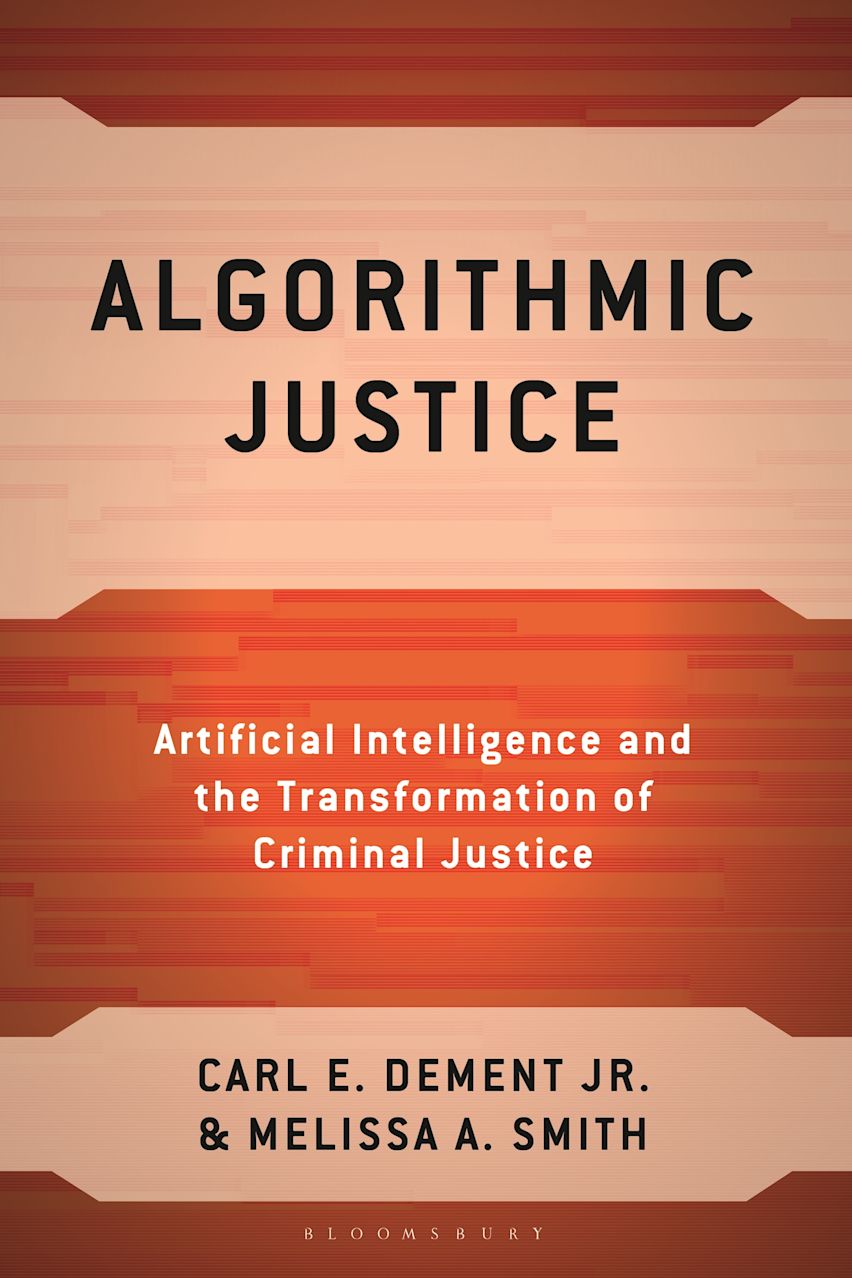
Algorithmic Justice
Artificial Intelligence and the Transformation of Criminal Justice
Buying pre-order items
Ebooks and Audiobook
You will receive an email with a download link for the ebook or audiobook on the publication date.
Payment
You will not be charged for pre-ordered books until they are available to be shipped. Pre-ordered ebooks will not be charged for until they are available for download.
Amending or cancelling your order
For orders that have not been shipped you can usually make changes to pre-orders up to 72 hours before the publishing date.
Payment for this pre-order will be taken when the item becomes available
- Delivery and returns info
-
Free UK delivery on orders £30 or over
Description
While AI-assisted tools promise greater efficiency, consistency, and accuracy in criminal justice, they also introduce ethical, procedural, and epistemological challenges demanding careful oversight.
Carl E. Dement Jr. and Melissa A. Smith investigate the rapidly evolving relationship between artificial intelligence and the written narratives that shape the criminal justice process. Drawing on original interviews with judges, prosecutors, defense attorneys, law enforcement officers, and forensic specialists, they examine how large language models are transforming the way case narratives are drafted, reviewed, and interpreted. Situating these shifts within wider debates about trust, human judgment, and the role of technology in public service, the book blends empirical insight with careful analysis, offering a balanced, accessible framework for understanding both the promise and the risks of AI-assisted writing in criminal justice settings. Dement and Smith ultimately show that the integrity of future justice narratives will depend not on AI alone, but on thoughtful human–AI collaboration grounded in expertise, ethics, and accountability-reminding readers that how and who writes justice shapes how we deliver it.
Table of Contents
Chapter 1: Framing the Issue
Chapter 2: AI and CJ at Present
Chapter 3: Large Language Models
Chapter 4: The Role of LLMs in CJ
Chapter 5: LLM Challenges and Risks
Chapter 6: Training, Education, and Integration
Chapter 7: From Concept to Practice
Chapter 8: Human Oversight in AI-Assisted Reporting
Chapter 9: Future Directions, Innovations, and Conclusion
References
Index
About the Authors
Product details

| Published | 12 Nov 2026 |
|---|---|
| Format | Hardback |
| Edition | 1st |
| Pages | 176 |
| ISBN | 9781666979077 |
| Imprint | Bloomsbury Academic |
| Illustrations | 1 table |
| Dimensions | 229 x 152 mm |
| Series | Policing Perspectives and Challenges in the Twenty-First Century |
| Publisher | Bloomsbury Publishing |
Related Titles