- Home
- ACADEMIC
- Politics & International Relations
- Introduction to International Relations
- The Autocrat’s Predicament
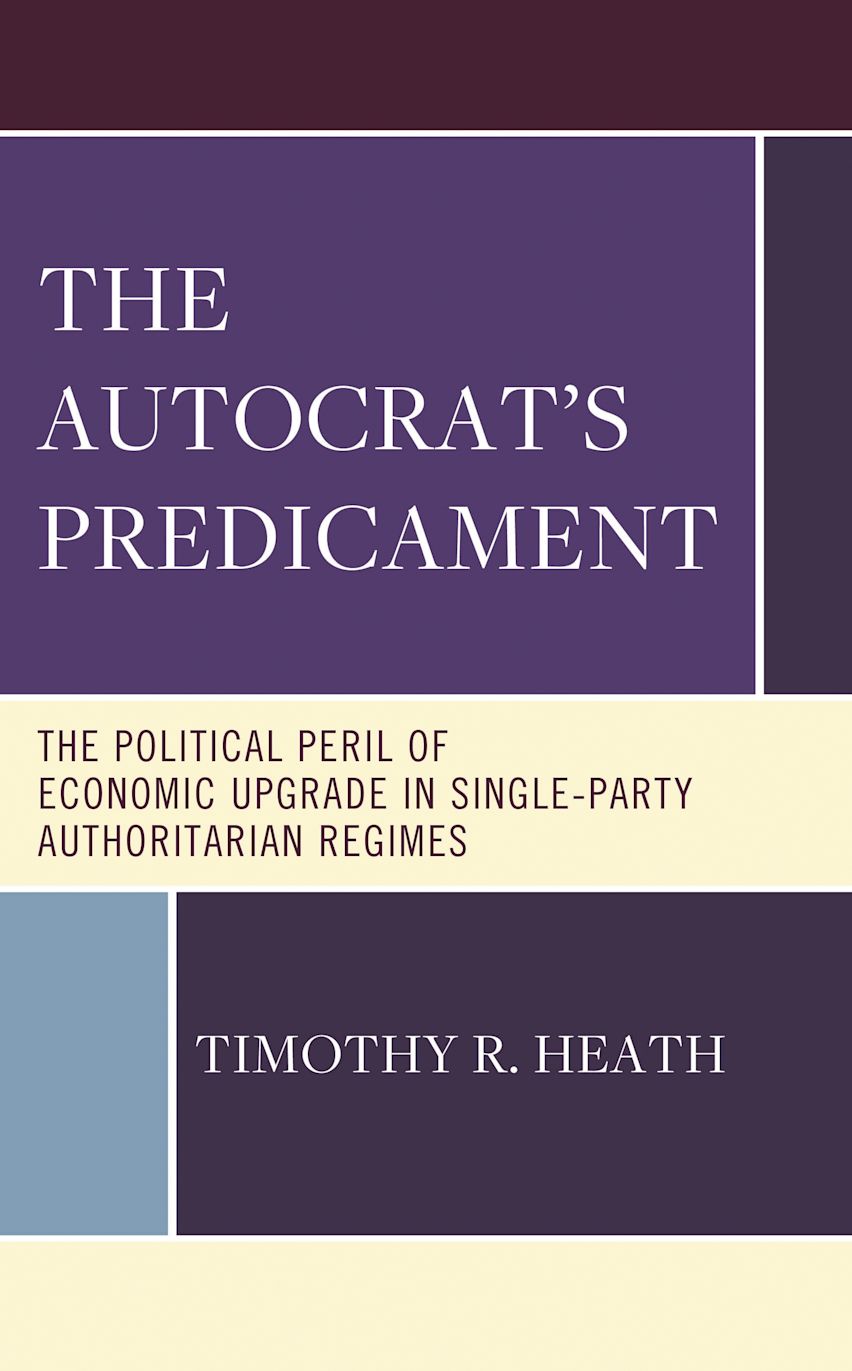
The Autocrat’s Predicament
The Political Peril of Economic Upgrade in Single-Party Authoritarian Regimes
The Autocrat’s Predicament
The Political Peril of Economic Upgrade in Single-Party Authoritarian Regimes

You must sign in to add this item to your wishlist. Please sign in or create an account
Description
In their quest for national revival, China’s leaders under Xi Jinping have sought to improve the economy’s performance. The disappointing economic record of authoritarian regimes provides ample grounds for doubt, yet not all have failed. Why have some succeeded where most did not? The theory of the “enabling condition” highlights the central role that politics plays in the pursuit of economic advancement. The theory explains that a political situation characterized by a strong central leadership, weak elite opposition, and a united public offers favorable prospects for enacting concentrated growth policies. This arrangement enables the central leadership to enlist the public in convincing elites to implement policies that they might otherwise resist. Focusing on the experience of single party, authoritarian regimes, The Autocrat’s Predicament: The Political Peril of Economic Upgrade in Single Party, Authoritarian Regimes examines episodes in the histories of the People’s Republic of China, Taiwan, and the Soviet Union. It concludes that China’s unfavorable political situation could be potentially unfriendly for its ambitions to build an efficient, highly productive economy.
Table of Contents
Chapter 1. The Theory of the Enabling Condition
Chapter 2. China 1991-1997: Deng Xiaoping's Triumph and a Toxic Political Legacy
Chapter 3. China 2004-2010: Hu Jintao: Professionalization Fails to Convert Opposing Elites
Chapter 4. China 2013-2020: A Fragmented Public Undermines Xi's Centralization Strategy
Chapter 5. Taiwan 1973-79: Success Amid a Looming Threat of an Elite-Led Popular Mobilization
Chapter 6. Soviet Union 1985-1990: Weak Central Leadership, Strong Elite Opposition Dooms Perestroika
Chapter 7. Comparative Analysis
Conclusion
Product details
| Published | 03 Nov 2023 |
|---|---|
| Format | Ebook (Epub & Mobi) |
| Edition | 1st |
| Pages | 232 |
| ISBN | 9781666947403 |
| Imprint | Lexington Books |
| Illustrations | 7 tables; |
| Publisher | Bloomsbury Publishing |
About the contributors
Reviews
-
“China’s economic growth has been outstanding over the past four decades, but continuing that trajectory depends on changing China’s growth model from one of extensive growth to one of intensive growth. Tim Heath argues that this transformation depends more on political considerations than economic policies. In particular, he argues that single party, Leninist-style polities have a difficult time transforming their economic systems because they usually lack what he calls an 'enabling condition' – a combination of a strong central government, a weak opposition, and a cohesive public – but efforts to shore up one of these conditions tends to weaken one or more of the other two conditions. This is a novel and welcome new approach to understanding China’s political economy.”
Joseph Fewsmith, Boston University
-
“This compelling book explains why economic modernization requires at least limited political liberalization. Heath’s argument offers a clear warning to China’s leaders and holds important insights for China watchers abroad.”
Bruce Dickson, George Washington University
-
“Heath’s timely and expansive book puts China’s pursuit of innovation-driven growth in comparative perspective, with an emphasis on politics. The Autocrat’s Predicament shows how difficult it is for authoritarian regimes to orchestrate economic growth and renders Xi Jinping’s particular political strategies legible. Anyone interested in understanding the evolution and future of China’s pursuit of political control and economic growth should read this book.”
Meg Rithmire, Harvard Business School
-
“Timothy Heath has written an insightful and exhaustive exploration of why and how China’s rulers turn to force and coercion to solve economic problems, and why this matters for the world. It is essential reading for anyone attempting to understand China’s future trajectory.”
Jude Blanchette, Freedman Chair, CSIS
-
In The Autocrats Dilemma, Heath highlights the importance of the political conditions that autocratic leaders must create to pursue policies that foster intensive economic growth. He offers a novel contribution to the literature on the political economy of one-party authoritarian states, with sobering implications for China’s future economic growth and political development.
M. Taylor Fravel, The Massachusetts Institute of Technology
-
“Countries strive to implement policies that bring about sustained economic growth through more efficient use of resources and rising productivity, but these policies often fail. Tim Heath presents a new and convincing explanation behind the success or failure of these policies, identifying an enabling condition of strong central leadership, weak elite opposition, and a cohesive public. He applies this to single-party authoritarian states, but it is applicable far more broadly, making this book an important contribution to researchers and practitioners alike for understanding the foundations of economic policy reform.”
Howard J. Shatz, RAND Corporation
ONLINE RESOURCES
Bloomsbury Collections
This book is available on Bloomsbury Collections where your library has access.