- Home
- ACADEMIC
- Philosophy
- Philosophy of Science
- The Bloomsbury Handbook of Émilie Du Châtelet
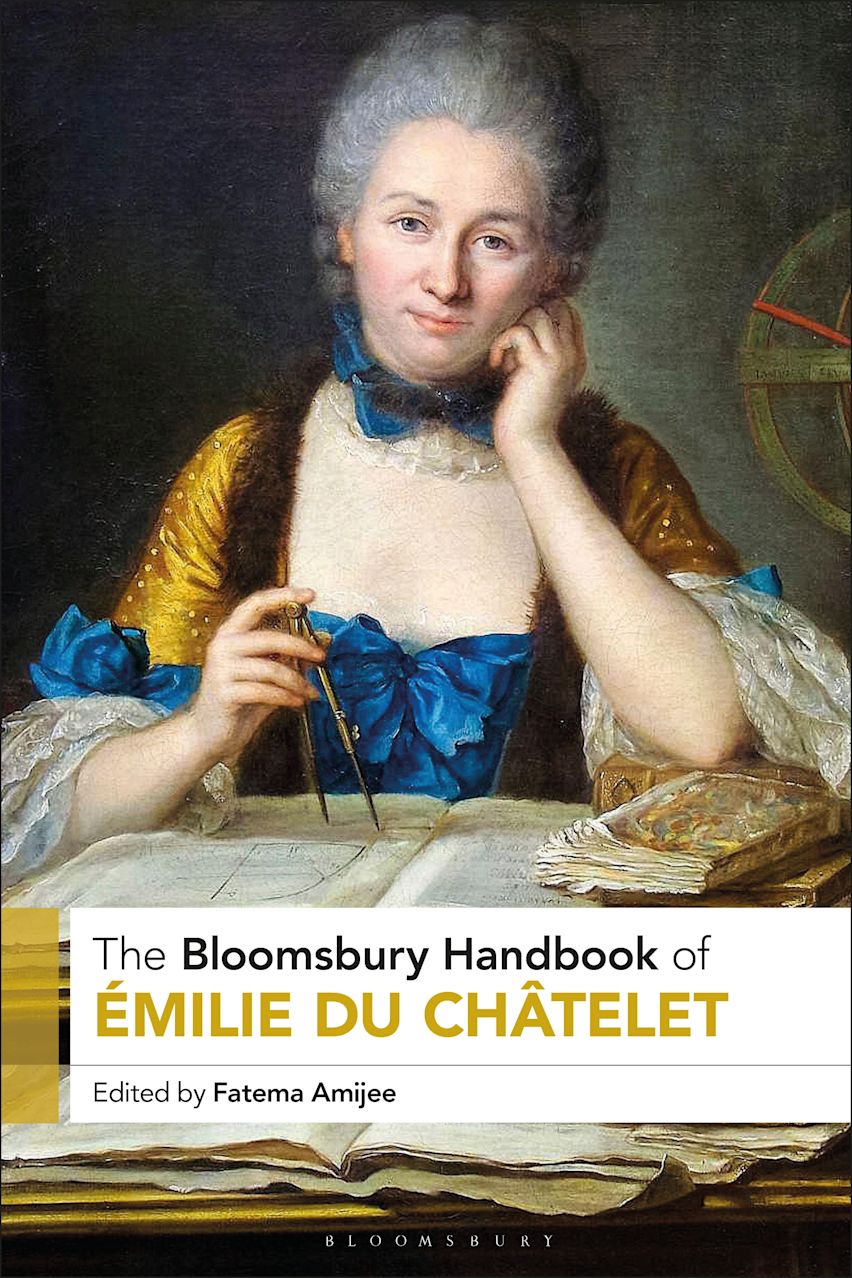
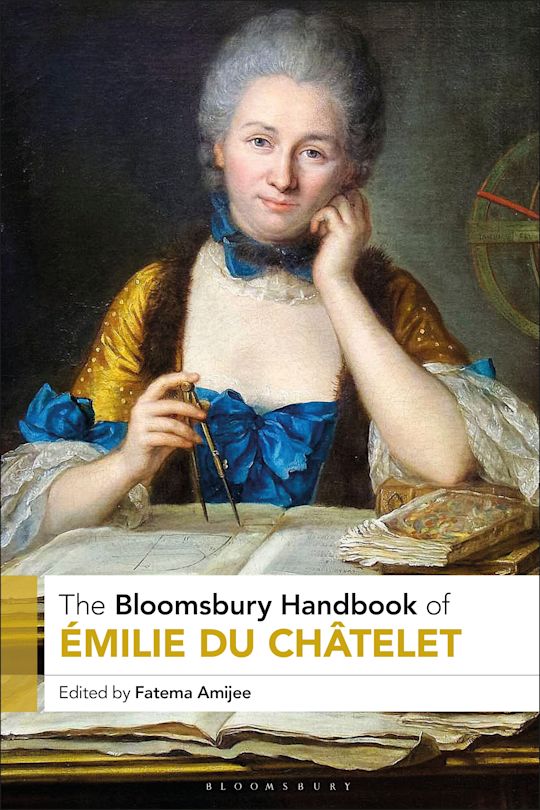
The Bloomsbury Handbook of Émilie Du Châtelet
Payment for this pre-order will be taken when the item becomes available
You must sign in to add this item to your wishlist. Please sign in or create an account
Description
The first scholarly volume on Émilie Du Châtelet's philosophy highlights her novel contributions to metaphysics, philosophy of science, and ethics.
As an understudied figure in the history of early modern philosophy, this volume re-positions her thinking alongside philosophical predecessors like Leibniz, Newton, Wolff, and Voltaire, as well as considering her own influence in the decades and centuries after her death.
Established and emerging scholars of early modern philosophy cover all aspects of Du Châtelet's philosophical work including her metaphysical views on the Principle of Sufficient Reason, the Principle of Contradiction, and natural theology, as well as her writings on epistemology, space and time, philosophy of mathematics, freedom, imagination and happiness. By positioning Du Châtelet firmly within the history of philosophy and the philosophy of science, Fatema Amijee's edited volume contributes to the renewed scholarly attention on early modern women philosophers. Essential reading for students and scholars of early modern philosophy, history of science, philosophy of science, and feminist philosophy, this go-to text on Du Châtelet marks a new era of scholarly attention for a formerly neglected figure.
Table of Contents
Part I Émilie Du Châtelet's Epistemology
The Principle of Sufficient Reason and the Principle of Contradiction in Du Châtelet, Michael Della Rocca (Yale University, USA)
The Principle of Contradiction and its role in Du Châtelet's Account of Knowledge, Clara Carus (Paderborn University, Germany)
The Limits of Knowledge in Du Châtelet's Philosophy, Anne-Lise Rey (University Paris Nanterre, France)
Part II Émilie Du Châtelet's Philosophy of Science and Metaphysics
Du Châtelet's Natural Theology, Stephen Harrop (Yale University, USA)
The Principle of Sufficient Reason as a Principle of Reasoning in Du Châtelet, Fatema Amijee (University of British Columbia, USA)
Du Châtelet's Philosophy of Mathematics, Aaron Wells (Paderborn University, Germany)
Émilie Du Châtelet on Space, Jeffrey McDonough (Harvard University)
Émilie Du Châtelet on the Role of Hypotheses, Karen Detlefsen (confirmation from author pending)
Part III Émilie Du Châtelet on Happiness, Freedom and the Imagination
Èmilie Du Châtelet on Freedom, Reason, and Happiness, Marcy P. Lascano (University of Kansas, USA)
Du Châtelet on Happiness and the Good Life, Julia Jorati (University of Massachusetts, USA)
The Power of Illusion: Du Châtelet on the Liberating Force of the Imagination, Julia Borcherding (University of Cambridge, UK)
Part IV The Impact of Leibniz, Wolff and Newton on Du Châtelet's Philosophy
A Revisit to the Manuscript of the Institutions de Physique: New Insights into the Wolffian Impact, Phillip Sloan (University of Notre Dame, France)
Newton and Newtonianism in Emilie Du Châtelet's Instituions de physique, Sarah Hutton (University of York, UK)
Beyond Newton and Leibniz: Du Châtelet's Novel Argument in her Institutions de Physique, Andrew Janiak (Duke University, USA)
Émilie Du Châtelet's Influence
Potential contributors:
Qiu Lin (Duke University)
Casper Jacobs (University of Pittsburgh)
George E. Smith (Tufts University)
Monica Solomon (Bilkent University)
Bryce Gessell (Southern Virginia University)
Index
Product details
| Published | 22 Jan 2026 |
|---|---|
| Format | Ebook (PDF) |
| Edition | 1st |
| Extent | 264 |
| ISBN | 9781350343061 |
| Imprint | Bloomsbury Academic |
| Publisher | Bloomsbury Publishing |

About the contributors
Reviews
-
In this volume, scholars and experts summarise the key topics of Du Châtelet's research, providing an overview of her work which has now been disseminated around the world. This handbook comprehensively presents the essential concepts and topics from the various areas of Du Châtelet's philosophy, metaphysics, epistemology, natural sciences, mathematics and religion.
Ruth Edith Hagengruber, Director Centre for the History of Women Philosophers and Scientist, Univ. Paderborn
-
Though long neglected, Du Châtelet is starting to be considered a central figure in eighteenth-century philosophy. This impressively comprehensive volume includes contributions by leading experts who jointly demonstrate the richness and philosophical importance of Du Châtelet's thought. It is an invaluable resource for students and scholars of early modern philosophy.
Julia Jorati, Professor of Philosophy, University of Massachusetts Amherst
-
This volume provides an accessible introduction to Du Châtelet's wide-ranging philosophical interests, while at the same time making important new contributions to our understanding of her work. For anyone interested in 17th and 18th century European philosophy, it will be an engaging and enjoyable read, offering something for students and specialists alike.
Katherine Brading Professor of Philosophy Duke University, USA
-
In recent years, there has been an explosion of interest in the philosophy of Émilie Du Châtelet, the Enlightenment's most famous woman. This volume represents the state of the art. It covers a wide range of topics from Biblical criticism and Newtonian science to issues in epistemology and the nature of liberty. Highly recommended
Andrew Janiak, Professor of Philosophy, Duke University.
-
This is an excellent exploration of Émilie du Châtelet's original and profound theories. This volume sheds light on major philosophical questions such as the principles of reason and contradiction, space, freedom, etc and establishes the central place that Emilie du Châtelet now occupies in the history of philosophy.
Anne-Lise Rey, Full Professor of Philosophy of Science, Paris Nanterre University, France