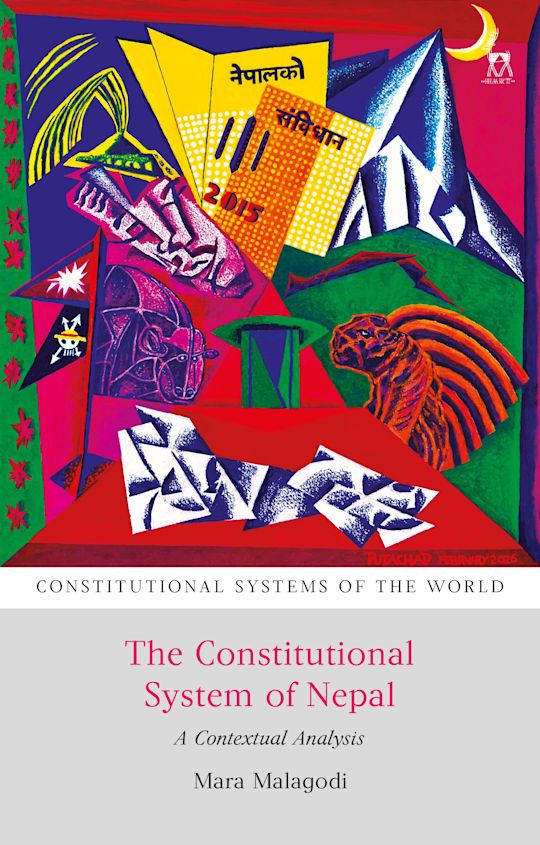

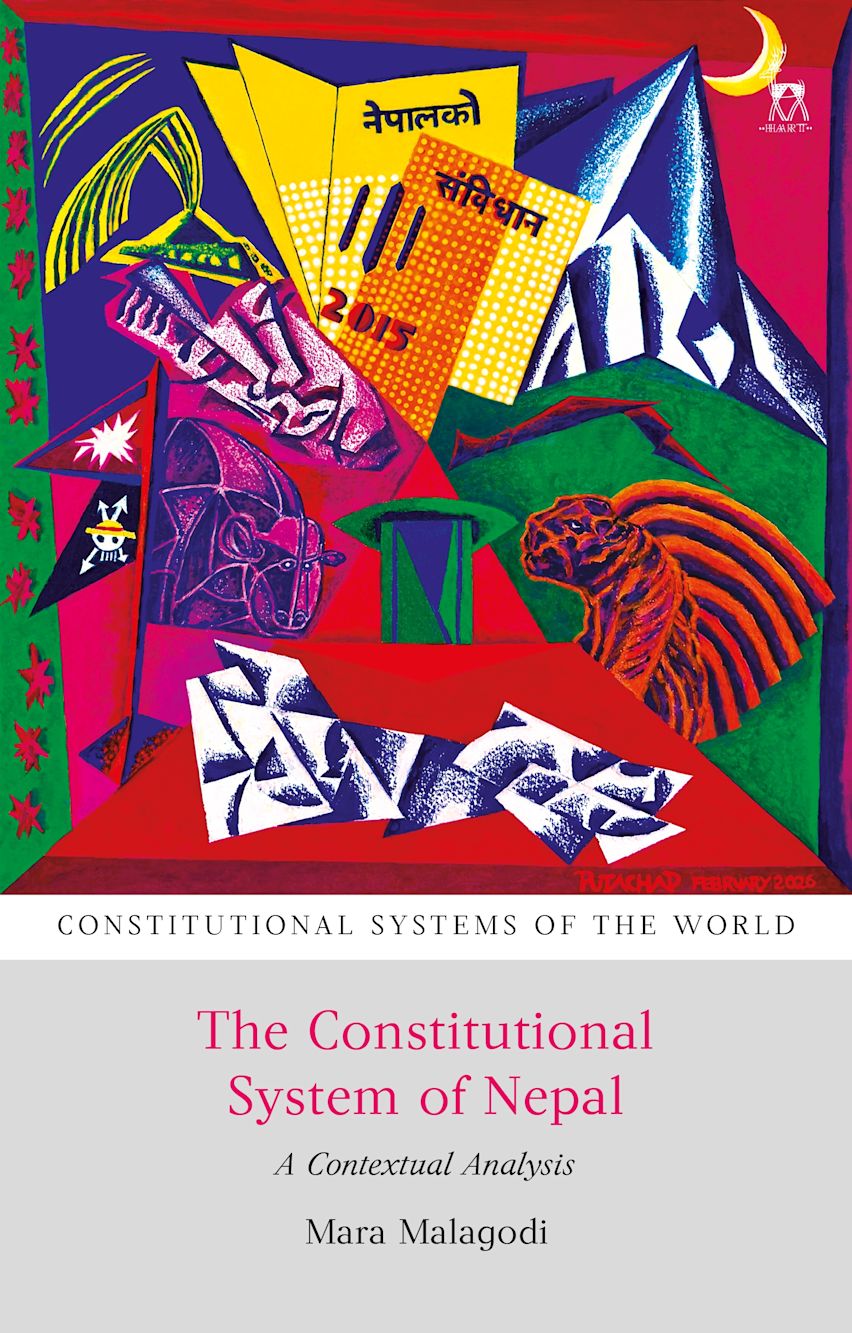
The Constitutional System of Nepal
A Contextual Analysis
Buying pre-order items
Ebooks and Audiobook
You will receive an email with a download link for the ebook or audiobook on the publication date.
Payment
You will not be charged for pre-ordered books until they are available to be shipped. Pre-ordered ebooks will not be charged for until they are available for download.
Amending or cancelling your order
For orders that have not been shipped you can usually make changes to pre-orders up to 72 hours before the publishing date.
Payment for this pre-order will be taken when the item becomes available
- Delivery and returns info
-
Free UK delivery on orders £30 or over
Description
The book presents an evolutionary view of Nepal's constitutional system, grounded in the country's historico-political context.
In particular, the analysis focuses on three aspects. First, the book investigates Nepal's processes of state formation and nation-building, centred on the institution of the Shah monarchy, Hinduism, and the Nepali language vis-à-vis Nepal's high degree of socio-cultural diversity. Second, it explores the difficulties in democratising Nepal's constitutional arrangements and entrenching the doctrine of popular sovereignty. This is reflected in the tensions between hereditary political power (the Shah monarchy and the Rana Prime Ministers) and representative political forces (political parties). Constitutionally, these tensions have resulted in the marginalisation of the legislature vis-à-vis the executive throughout the country's history, notwithstanding the fact that Nepal has always featured a parliamentary form of government.
Lastly, the frequent changes in Nepal's fundamental law also reflect the profound influences of various foreign institutional models (in particular that of a 'modified' Westminster model) and their specific re-negotiation in the Nepali context, regardless of the fact that Nepal was never colonised.
Table of Contents
2. Identity Politics and Nepal's State Structure
3. The Executive Branch of Government
4. The Legislature
5. Nepal's Embattled Judiciary
6. Fundamental Rights
7. Constitutional Change and Continuity in Nepal
Product details
| Published | 29 Oct 2026 |
|---|---|
| Format | Hardback |
| Edition | 1st |
| Pages | 304 |
| ISBN | 9781509947256 |
| Imprint | Hart Publishing |
| Dimensions | 216 x 138 mm |
| Series | Constitutional Systems of the World |
| Publisher | Bloomsbury Publishing |
Related Titles