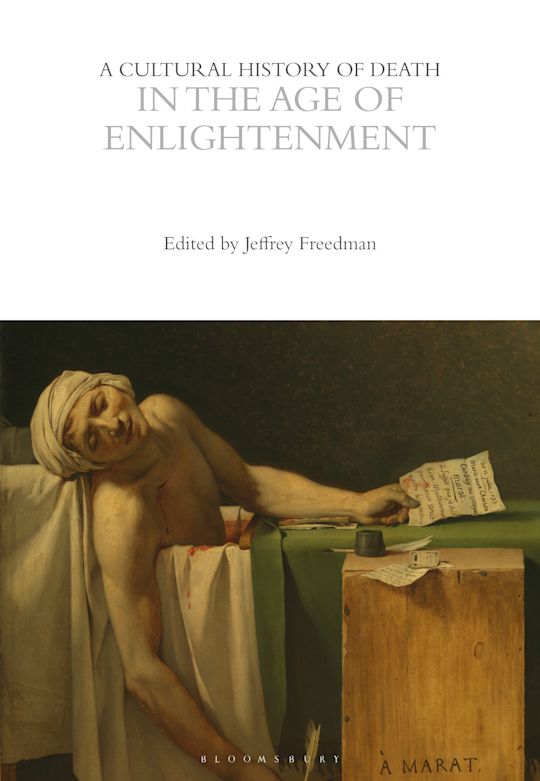

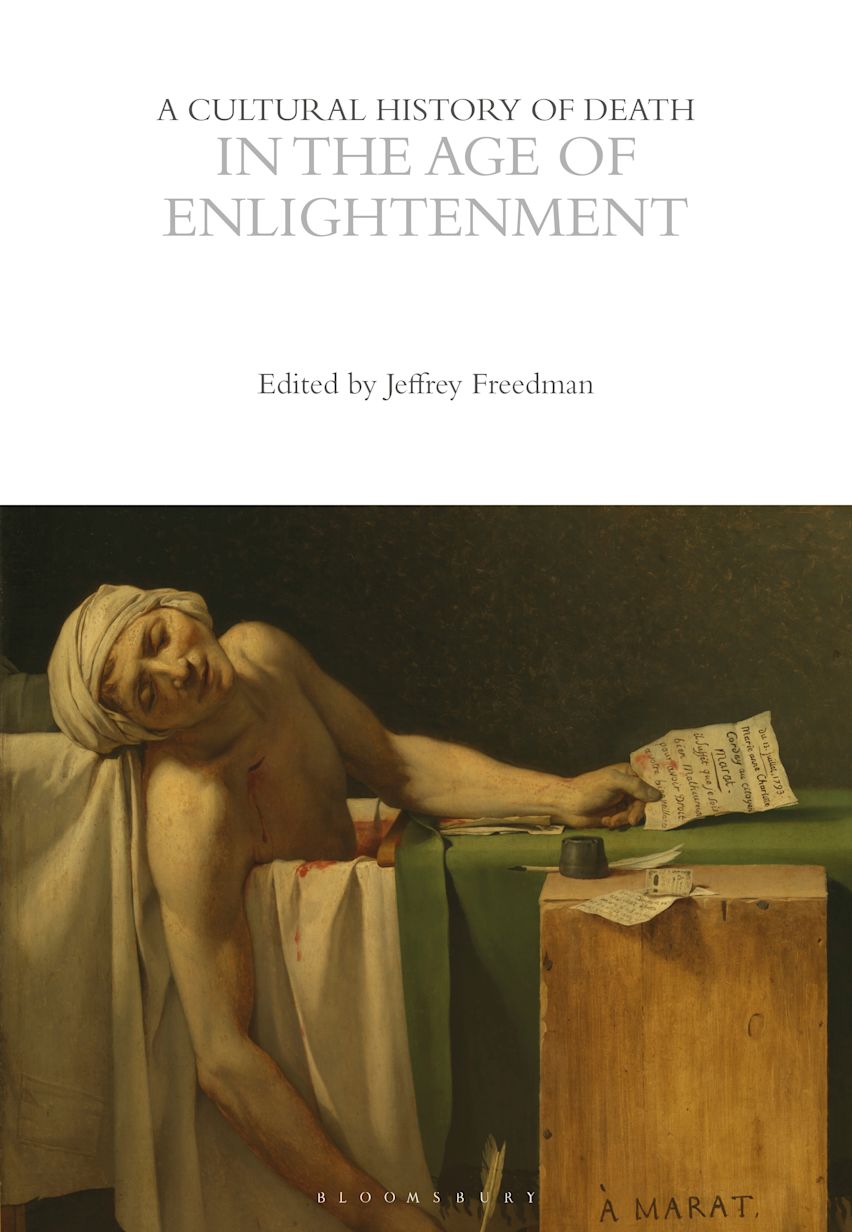
A Cultural History of Death in the Age of Enlightenment
Buying pre-order items
Ebooks and Audiobook
You will receive an email with a download link for the ebook or audiobook on the publication date.
Payment
You will not be charged for pre-ordered books until they are available to be shipped. Pre-ordered ebooks will not be charged for until they are available for download.
Amending or cancelling your order
For orders that have not been shipped you can usually make changes to pre-orders up to 72 hours before the publishing date.
Payment for this pre-order will be taken when the item becomes available
- Delivery and returns info
-
Free UK delivery on orders £30 or over
Description
When the field of death studies emerged in the mid 1970s, the Age of Enlightenment was identified as a major turning point. The pioneers in the field traced back to the late eighteenth century the principal themes characteristic of death in modernity-medicalization, de-Christianization, privatization, sentimentality, avoidance, the growing physical separation between the living and the dead, and the actual decline in mortality during peacetime. Fifty years on, those themes still shape the research agenda, but the direction of historical change seems less clearcut.
Reflecting the new perspectives of recent scholarship, this volume explores the ambiguities and contradictions in Enlightenment cultures of death while expanding the focus to include Jewish as well as Christian communities and emphasizing gender as a category of analysis. The topics range from attitudes toward death among Enlightenment intellectuals and the placement and design of cemeteries to the origins of demography as a field of study, the practice of autopsying in forensic medicine, the decriminalization of suicide, the role of print in Jewish death culture, the invention of the vampire, and the symbolism of the corpse in the French Revolution. The contributors are attentive to the reversibility and mutability of historical trends. Growing repugnance at the odor and sight of decomposing flesh was accompanied by macabre fascination with putridity and mortal remains. The Enlightenment project to liberate humanity from the irrational fear of postmortem punishment produced new fears of death that were all the more powerful for being grounded in scientific reason.
A Cultural History of Death is part of The Cultural Histories Series. Titles are available as hardcover sets for libraries as a tangible reference copy or as part of a digital library. The digital product is available to institutions by annual subscription or on perpetual access, individual volumes are available in print or digitally.
Table of Contents
1. Dead and Dying Bodies, Cathy McClive, (Florida State University, USA)
2. The Sensory Aesthetics of Death, Antoine de Baecque (Ecole normale supérieure (rue d'Ulm), France) -trans. J. Freedman
3. Emotions, Mortality and Vitality, Joanna Stalnaker (Columbia University, USA)
4. Death's Ritual-Symbolic Performance, Avriel Bar-Levav, (Open University of Israel, Israel)
5. Sites, Power and Politics of Death, Avner Ben-Amos, (Tel-Aviv University, Israel)
6. Gender, Age and Identity, David G. Troyansky, (Brooklyn College and the Graduate Center of the City University of New York, USA)
7. Explaining Death: Belief, Law and Ethics, Vera Lind (Illinois University, USA)
8. The Undead and Eternal, Nick Groom, (University of Macau, China)
Bibliography
Notes
Index
Product details

| Published | 11 Jun 2026 |
|---|---|
| Format | Hardback |
| Edition | 1st |
| Pages | 272 |
| ISBN | 9781472537539 |
| Imprint | Bloomsbury Academic |
| Illustrations | 50 b&w images |
| Dimensions | Not specified |
| Series | The Cultural Histories Series |
| Publisher | Bloomsbury Publishing |
Related Titles