- Home
- ACADEMIC
- Literary Studies
- British and Irish Literature
- Dance and Modernism in Irish and German Literature and Culture
Dance and Modernism in Irish and German Literature and Culture
Connections in Motion
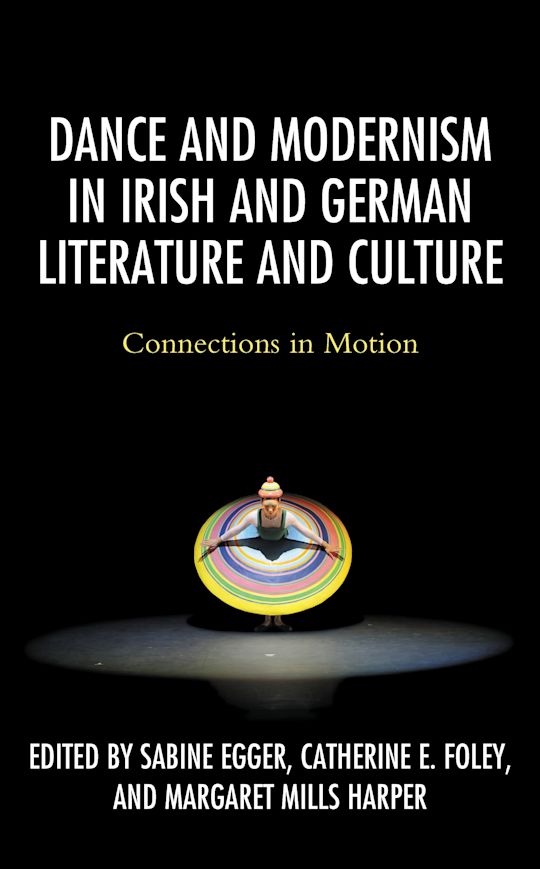
Dance and Modernism in Irish and German Literature and Culture
Connections in Motion

You must sign in to add this item to your wishlist. Please sign in or create an account
Description
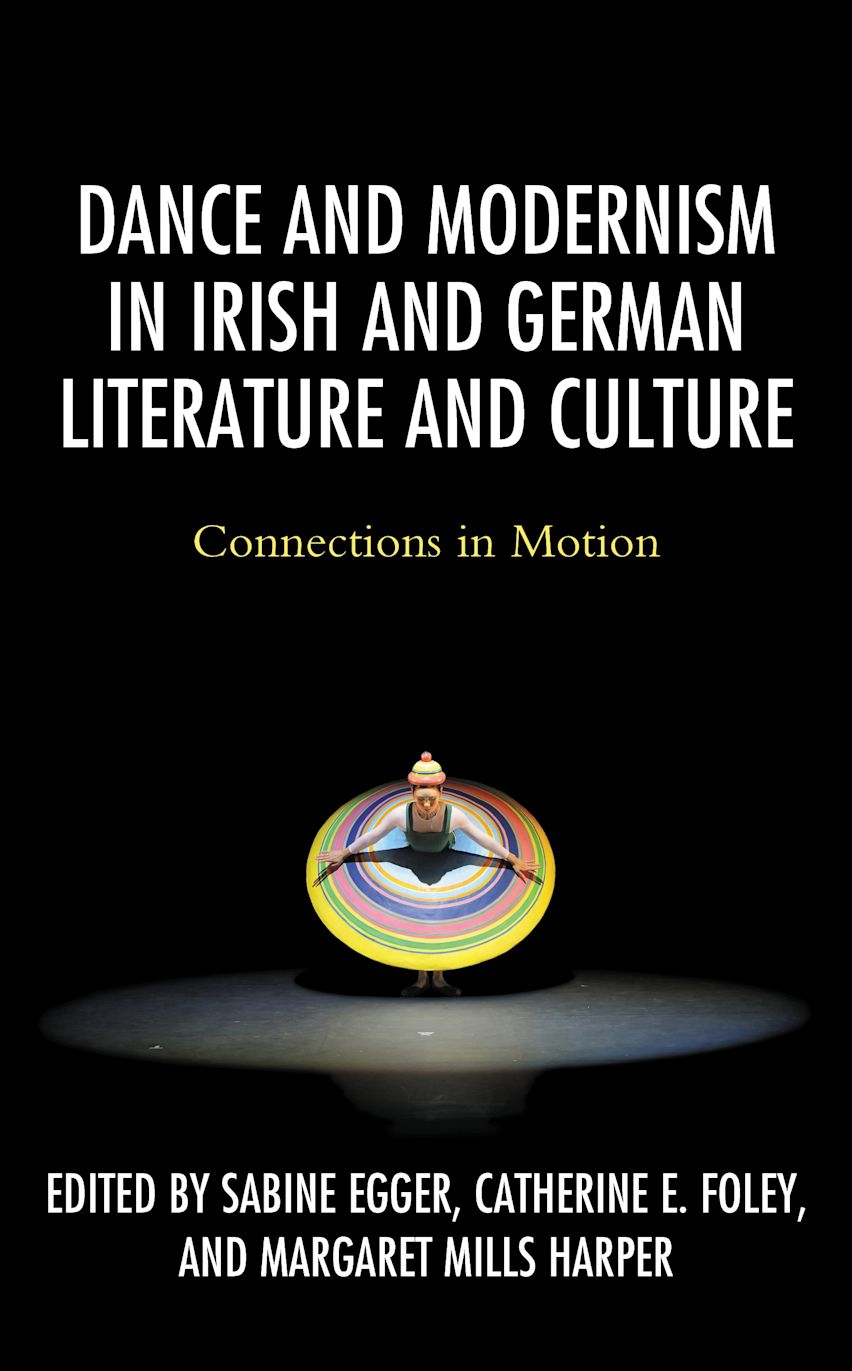
A collection of scholarly articles and essays by dancers and scholars of ethnochoreology, dance studies, drama studies, cultural studies, literature, and architecture, Dance and Modernism in Irish and German Literature and Culture: Connections in Motion explores Irish-German connections through dance in choreographic processes and on stage, in literary texts, dance documentation, film, and architecture from the 1920s to today. The contributors discuss modernism, with a specific focus on modern dance, and its impact on different art forms and discourses in Irish and German culture. Within this framework, dance is regarded both as a motif and a specific form of spatial movement, which allows for the transgression of medial and disciplinary boundaries as well as gender, social, or cultural differences. Part 1 of the collection focuses on Irish-German cultural connections made through dance, while part 2 studies the role of dance in Irish and German literature, visual art, and architecture.
Table of Contents
Gisela Holfter
Chapter Two: Erina Brady: Mary Wigman’s Irish Disciple?
Deirdre Mulrooney
Chapter Three: Duality of Cultural Influences as a Source of Insight and Inspiration: The Collaboration between Aloys Fleischmann and Joan Moriarty 1947-1992
Ruth Fleischmann
Chapter Four: Irish Dance Documentation for the Archive: A Personal Reflection on Irish-German Connections and Intellectual Inheritances
Catherine E. Foley
Chapter Five: “Somewhere Between Remembering and Forgetting”: An Examination of the Choreographic Process Inspired by the Poem “The Man Made of Rain” by Brendan Kennelly
Marguerite Donlon
Chapter Six: Creating Tanztheater: Finding Ireland with Pina?
Finola Cronin
Chapter Seven: Irish Modernism and the History and Aesthetics of Dance
Susan Jones
Chapter Eight: Rhythm and Colour: The Legacy of Dance in 1930s Joyce and Beckett
Siobhán Purcell
Chapter Nine: Yeats’s Transgressive Dancers
Margaret Mills Harper
Chapter Ten: “I as a Text,” I as a Dance: On the Relationship of Contemporary Dance and Contemporary Poetry with Reference to Anne Juren, Martina Hefter, Monika Rinck, and Philipp Gehmacher
Lucia Ruprecht
Chapter Eleven: Dancing between Transgression and Transformation in German Literature after 1945 and 1989: Johannes Bobrowski and Katja Petrowskaja
Sabine Egger
Chapter Twelve: Dance and the Postmodern Subject in “Libidoökonomie” and “Der Kranich auf dem Kiesel in der Pfütze” by Feridun Zaimoglu
Joseph Twist
Chapter Thirteen: “Alive. Changing. New”: Impulses of the Jaques-Dalcroze Dance Institute on the Architecture of Ludwig Mies van der Rohe
Tanja Poppelreuter and Jan Frohburg
Product details
| Published | 02 Dec 2019 |
|---|---|
| Format | Ebook (Epub & Mobi) |
| Edition | 1st |
| Pages | 270 |
| ISBN | 9781498594271 |
| Imprint | Lexington Books |
| Illustrations | 11 b/w illustrations; |
| Publisher | Bloomsbury Publishing |
About the contributors
Reviews
-
The subtitle of this book encapsulates what is shared within – how dance as an anchor to creative enquiry across literature and culture can expose social, political, and cultural connections that deepen our relationships with each other – past, present, and – indeed – in the future. We read of the creative and performative encounters of Irish and German artists and innovators, with modernist thought and influences – be that through exploring contemporaneous poetry and prose (Ruprecht, Harper, Egger, Twist), performance and embodied presence (Holfter, Jones, Purcell) or ideas (Frohburg and Poppelreuter); or the development of practices as transmitted through the protégés of those modernist thought leaders (Mulrooney), or in the meeting of art forms resulting in new manifestations (Fleischmann). Modernism, as an early 20th Century movement, can be described as an acknowledgement of change – social, cultural, and political; a rejection of historical practices and an opening up to innovation and exploration of form and structure. This quite often leads to “new” techniques and processes (Cronin, Donlon) and indeed new forms of art. That dance can tip the balance of power, of perception – if only for a moment – is a modernist intention that resonates through time and can be seen in the legacies of those texts and performances, as experienced in our reading of this book. And, indeed, in the artistic practices and performances we encounter today. With reference to Foley’s “Irish German Intellectual Inheritances”, I suggest these experiences are our embodied inheritances; and acknowledge the particular influence and exchange between Ireland and Germany as instrumental in forming an Irish contemporary identity in the art form of dance.
Sheila Creevey, CEO of Dance IrelandDance Ireland
-
This collection of essays provides fascinating insights into the importance of dance in Irish and German modernism and the artistic developments it inspired. It also sheds light on the significant yet often overlooked cultural connections between Ireland and the German-speaking world. The thirteen chapters provide intriguing accounts of the rich facets of discourse on dance and its interdisciplinary relationships with, and impacts on, literature, visual art, and architecture. The contributors explore issues that continue to reverberate in contemporary debates, spanning migration, memory and remembrance, identity, and cultural translation among many others.
Alexandra Kolb, University of Roehampton
-
A provocative exploration of collaborations and connections between Irish and German scholars, writers, dancers, musicians, and visual artists, these scholars examine dance in both its embodied and metaphorical forms through the lens of modernism. Section one describes dance and modern physics; Mary Wigman and Erina Brady; German composer Fleischmann and Joan Moriarty, founder of the Irish ballet; Pina Bausch and Irish dance theater; Irish dance documentation and such intellectual contributions from Germany as Labanotation; and poetically inspired choreography. Section two explores dance’s influence on the visual arts, architecture, and literature ranging from Beckett, Joyce, and Yeats to more contemporary writers like Germacher, Bobrowski and Zaimoglu to Jacques Dalcroze. The chapters offer a penetrating view of connections that shaped a century in which modernist attitudes towards the arts defined schools and performances not just for the moment but for future generations. The authors represent deep and longstanding commitment to their subjects, bringing experiential knowledge together with profound scholarly work. Their collaboration has produced a splendid book.
Anya Royce, Indiana University
ONLINE RESOURCES
Bloomsbury Collections
This book is available on Bloomsbury Collections where your library has access.