
- Home
- ACADEMIC
- Theology
- Political Theology
- Decolonial Pentecostalism
Payment for this pre-order will be taken when the item becomes available
- Delivery and returns info
-
Free UK delivery on orders £30 or over
You must sign in to add this item to your wishlist. Please sign in or create an account
Description
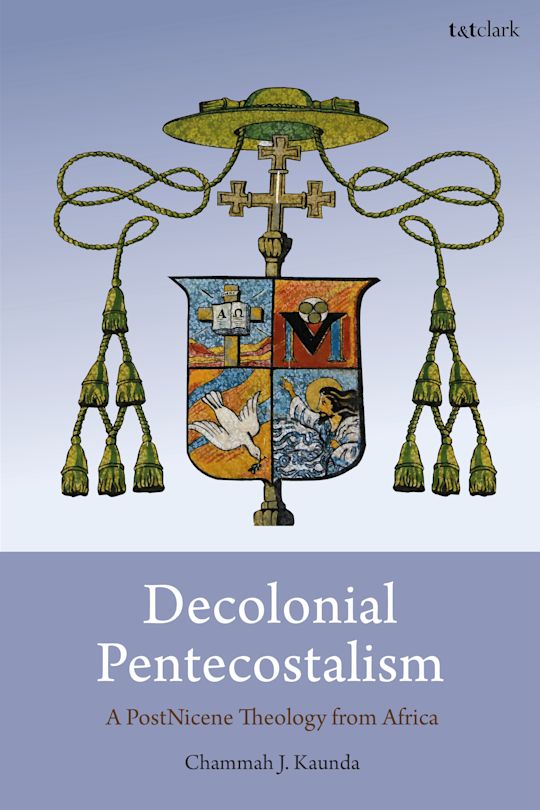
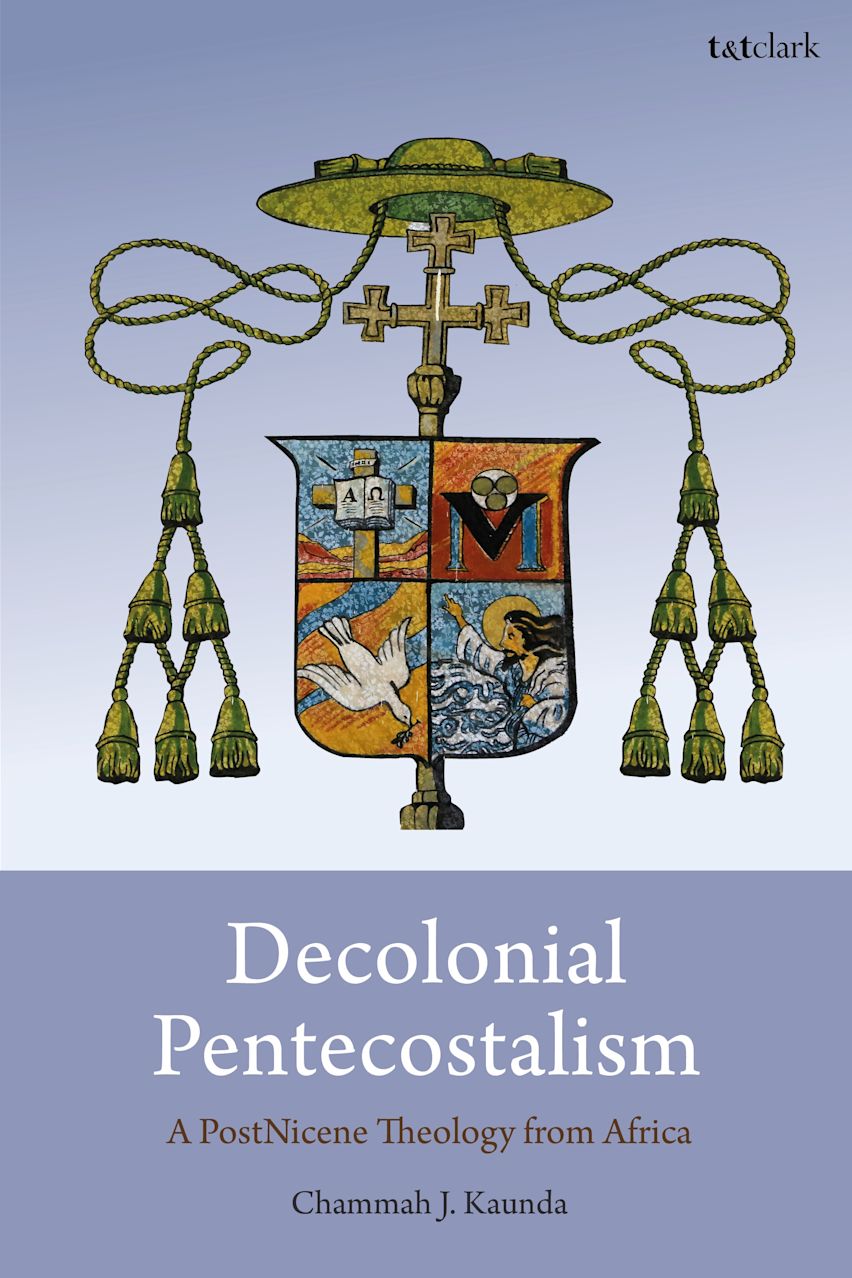
The book presents a bold and transformative exploration of how Pentecostal theology can be revitalized by critically engaging with the Nicene Creed through the lens of African spirituality and decolonial thought.
In an era marked by profound cultural exchanges and theological diversification, Kaunda challenges traditional Nicene faith and calls for a new approach that reflects the pluralistic realities of the 21st century. Rooted in the rich metaphysical and philosophical traditions of the Bemba people of Zambia, the book critiques the classical dualistic interpretations of Christian theology, which have long emphasized divisions between the sacred and secular, material and spiritual, human and nonhuman.
Through a decolonial framework, this powerful work seeks to dismantle these entrenched dualisms and reintroduce an integrated approach to faith, one that embraces the interconnectedness of all things. African indigenous concepts are central to this reimagining of Nicene Christianity. It demonstrates how Pentecostalism, with its emphasis on the Spirit's dynamic presence, can speak powerfully to issues such as gender relations, ecological crises, power dynamics, and the lived realities of African communities. Grounding theological reflection in the lived experiences and cultural contexts of African Pentecostal believers, Kaunda reveals a more holistic, contextually resonant, and responsive form of Christian theology.
Table of Contents
Introduction: Outlandish and Disturbing
1. Theologising from Africa
2. The Nicene Faith in the Shadow of the Empire
3. Wholistheism
Bibliography
Index
Product details
| Published | 11 Jun 2026 |
|---|---|
| Format | Hardback |
| Edition | 1st |
| Extent | 336 |
| ISBN | 9780567722744 |
| Imprint | T&T Clark |
| Dimensions | 234 x 156 mm |
| Publisher | Bloomsbury Publishing |
About the contributors
Reviews
-
Kaunda is a profound, creative thinker and unabashedly pentecostal, deeply African (with Zambian accents), broadly ecumenical, ethically planetary, and deconstructively constructive! Historic Christian orthodoxy is hereby translated for nurturing a 21st century global orthopathos and empowering local orthopraxis wherever Nicene faith is retrieved and reappropriated
Amos Yong, Fuller Seminary, USA
-
Kaunda has staged African Christianity as a generative space for reimagining Nicene theology. This is a light-bearing book to lighten classical theological formulations and shine the glory of African theology (or theology from Africa). The work is a perichoretic dance of ideas that negotiates, contests, rediscovers, and renews the core Christian Nicaean doctrinal identity. Kaunda is a marvelous thinker-boldly and precisely firing the theo-imaginations of the global theological academy.
Nimi Wariboko, Boston University, USA
-
This book challenges the dominance of Western theological paradigms, offering a vibrant and insightful re-imagination of Christian faith from an African Pentecostal perspective. Drawing on the wisdom of indigenous concepts like 'Na-nyi-na,' Kaunda articulates a 'PostNicene theology' that is both deeply rooted in African soil and universally resonant. This is an essential read for anyone interested in the future of global Christianity, decolonial studies, and the intersection of faith and culture. A truly transformative and courageous work.
Peter White, Stellenbosch University, South Africa
-
In this book. Kaunda challenges and critiques classical Nicene Christian theology with its filioque clause and entrenched dualisms (e.g., sacred/secular), and reinterprets it through an African lens. He asserts that such debates are alien to African Pentecostals' lived faith and concerns; they are distant, abstract and devoid of resonance with Pentecostalism's spiritual vibrancy.
He argues that a holistic, relational theology better reflects African Pentecostal experience and indigenous metaphysical concepts. In the process, he moves beyond Christian theology grounded in Western frameworks and values by blending it with African cosmologies, utilising anthropology, gender studies, ecology, and cultural studies. The result presents African contextual decolonial theology, the strength of his book.
His work is based on two significant Pentecostal theologians, Amos Yong and Nimi Wariboko, who saw theology as an act of worship rather than a creedal faith. Pentecostal theology operates within a distinctive way of being, seeing and engaging the world, implying that another way of thinking, decolonial thought, is required. Its theology is intentionally from Africa, with its vernacular metaphysics disruptive force. To serve God does not require an ethical or pragmatic philosophy of life because it is God's initiative to introduce a way of being relational in the world. In the process, it changes their personal lives and transforms thought systems, social structures, political visions, work ethics and educational models because faith is fundamentally grounded in experience. Following this route, Kaunda arrives in these contexts at new, contextually charged meanings, key theological concepts embedded in the Nicene Creed embodying a double continuity-in-discontinuity-in-difference. Pentecostalism is traditionally rooted in Scripture's enduring authority but also intentionally breaks from rigid, classical dogmatic frameworks by drawing on the maternal worldview of the Bemba.
Because Pentecostals' spirituality is experiential, open to direct Spirit's revelations, grassroots theological experimentation has decolonial implications, challenging traditional, dogmatic interpretations of Christianity. Its theology follows a more dynamic, participatory, and grassroots faith experience. Its view of God differs from many Western Christians, seeing God not as a punitive, exacting deity and responding with fear, exclusion and moral legalism, but the God revealed in Jesus Christ, a Being of love, mercy, justice and self-giving relationality, with the emphasis on the marginalised. It rejects empire, capital, racism, classism, sexism, nationalism and ethnocentrism as false gods; its God pours out divine love in suffering solidarity.Marius Nel, North-West University, South Africa