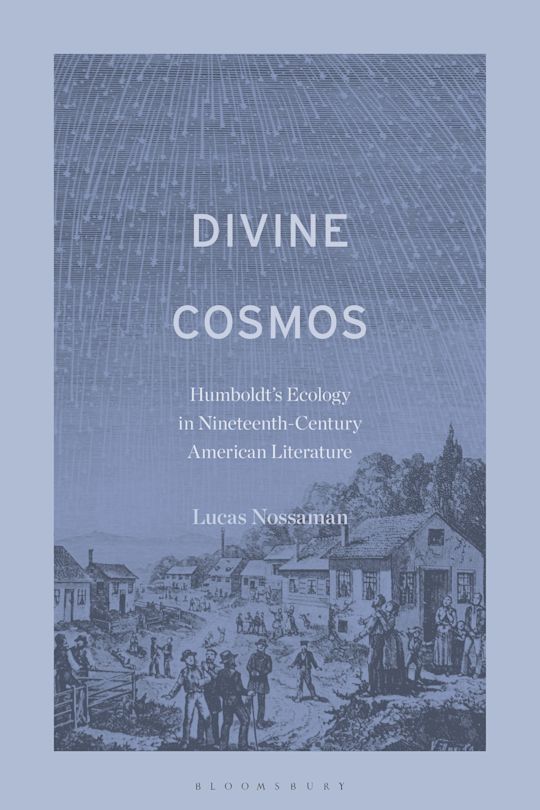
Divine Cosmos
Humboldt's Ecology in Nineteenth-Century American Literature

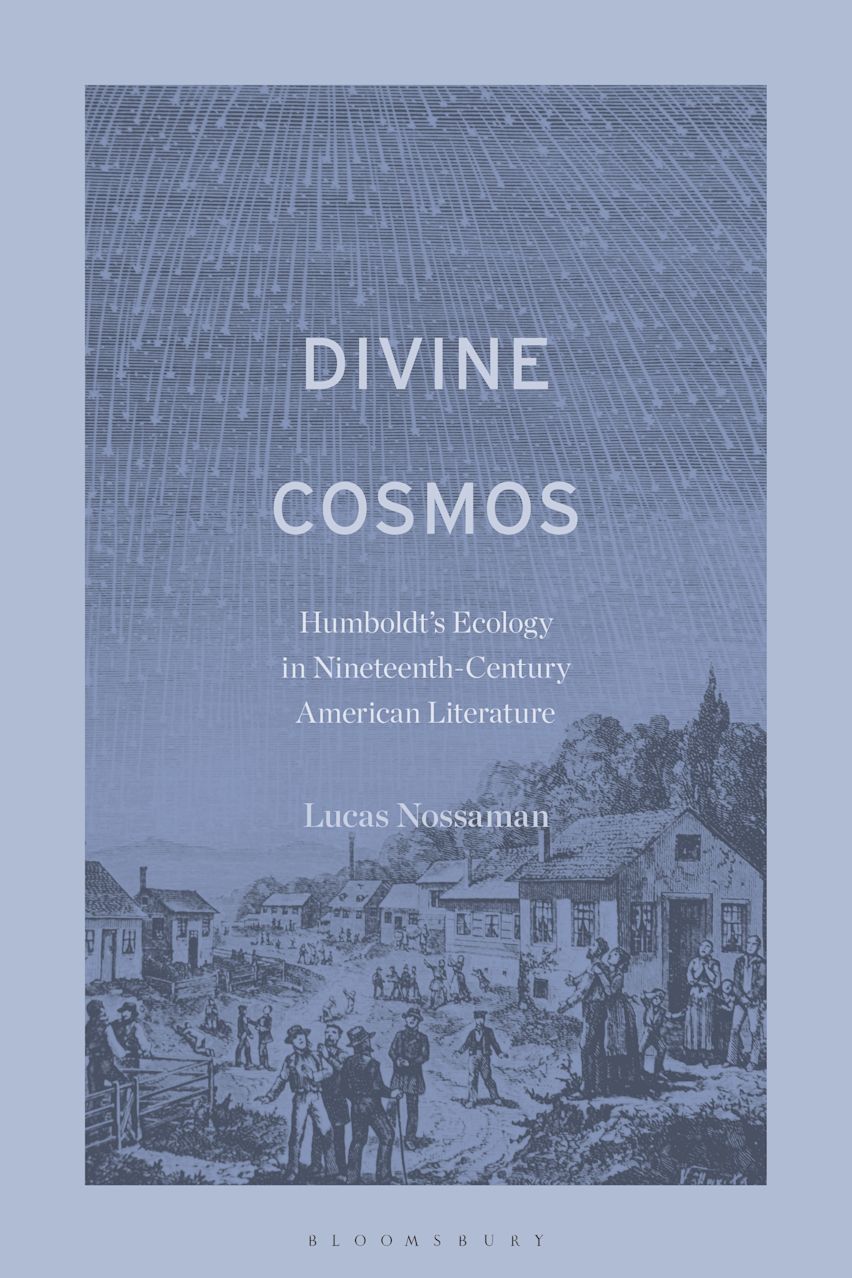
Divine Cosmos
Humboldt's Ecology in Nineteenth-Century American Literature
Buying pre-order items
Ebooks and Audiobook
You will receive an email with a download link for the ebook or audiobook on the publication date.
Payment
You will not be charged for pre-ordered books until they are available to be shipped. Pre-ordered ebooks will not be charged for until they are available for download.
Amending or cancelling your order
For orders that have not been shipped you can usually make changes to pre-orders up to 72 hours before the publishing date.
Payment for this pre-order will be taken when the item becomes available
- Delivery and returns info
-
Free UK delivery on orders £30 or over
Description
Tells the story of how 19th-century American writers re-envisioned science and religion in the age of German naturalist-explorer Alexander von Humboldt's “cosmic” ecology.
When Alexander von Humboldt began to publish the volumes of his Cosmos: A Sketch of a Physical Description of the Earth (1845–1859), Americans suddenly found themselves reimagining the natural world. Humboldt presented nature as a “cosmos,” an interconnected web that exceeded the scientific world of static taxonomy and individual species that 18th-century science had produced. As Lucas Nossaman shows, Humboldt's ecology did more than initiate a change in natural science. His writings caused Americans to reconsider how to portray the divine in nature.
Inspired by Humboldt, US scientists, theologians, and literary writers participated in what can be described as a final synthesis of science and religion before the arrival of Darwin's On the Origin of Species (1859). Writers such as Henry David Thoreau, Frederick Douglass, and Herman Melville utilized their particular religious contexts and employed Humboldtian modes of observation to envision nature holistically rather than in terms of singular evidences of “design.” They discovered that natural forms connected across regions, and indeed, across the entire divine creation.
Nossaman argues that this “Divine Cosmos” moment provides important background for later conflicts between science and religion – including the debate over evolution – and for the light it sheds on great US writings influenced by Humboldt. With implications for fields across American Studies, Divine Cosmos argues that early ecological thought transformed how Americans perceived the divine in the natural world.
Table of Contents
Introduction
1. American Science and Natural Theology in the Cosmos
2. Writing a Wondrous Earth: Susan Fenimore Cooper's Episcopalian Ecology
3. These Objects Make a World: Henry David Thoreau's Protestant Science
4. The Cosmic Natural Theology of Frederick Douglass's My Bondage and My Freedom
5. Possessive Providential Ecology: The Imperialist Histories of Herman Melville and William Gilmore Simms
Coda: A Secular Cosmos: George Perkins Marsh's Modern Ecological Rhetoric
Acknowledgments
Bibliography
Index
Product details

| Published | 21 Jan 2027 |
|---|---|
| Format | Paperback |
| Edition | 1st |
| Pages | 200 |
| ISBN | 9798765125656 |
| Imprint | Bloomsbury Academic |
| Dimensions | 229 x 152 mm |
| Publisher | Bloomsbury Publishing |
Reviews

ONLINE RESOURCES
Bloomsbury Collections
This book is available on Bloomsbury Collections where your library has access.
Related Titles