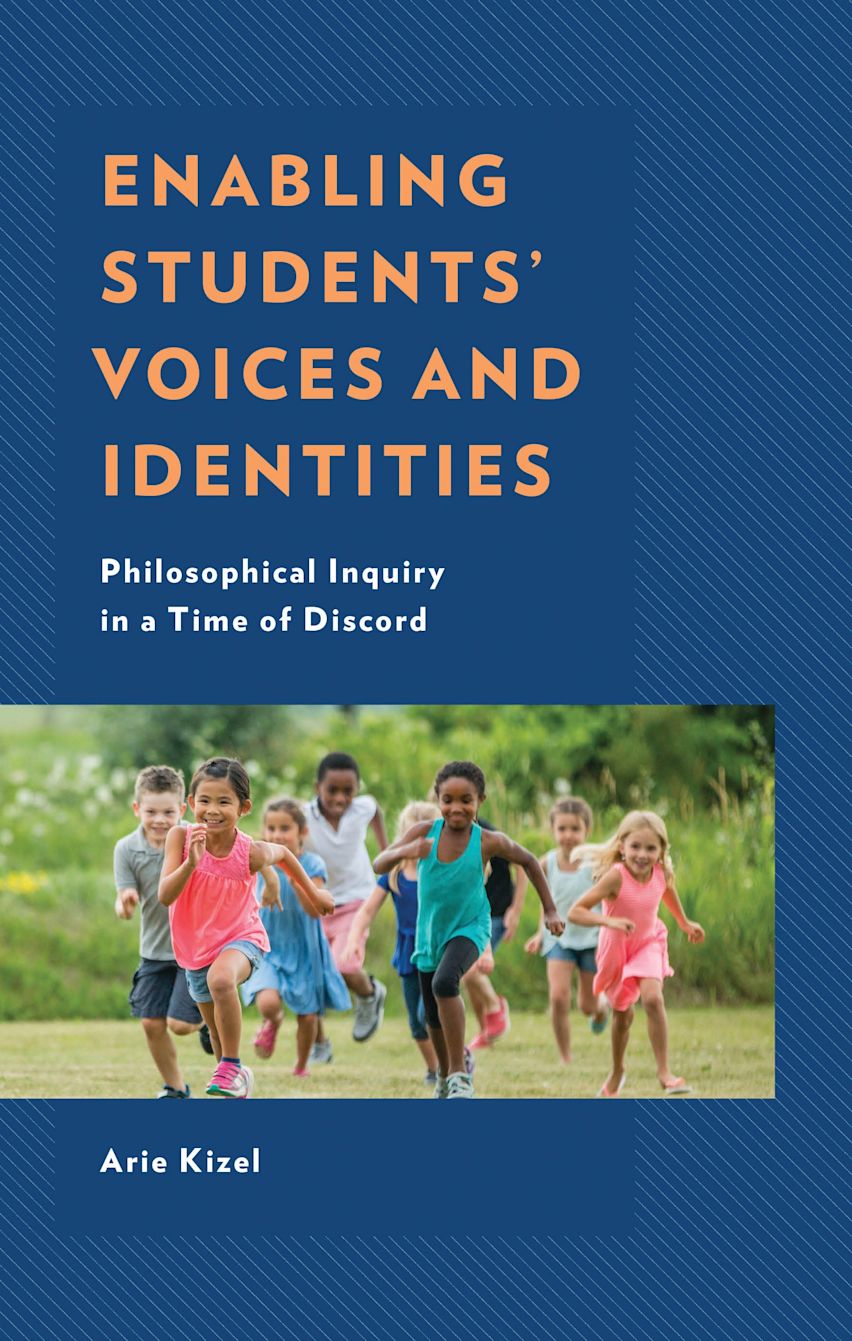
Enabling Students' Voices and Identities
Philosophical Inquiry in a Time of Discord


Enabling Students' Voices and Identities
Philosophical Inquiry in a Time of Discord
This product is usually dispatched within 10-14 days
- Delivery and returns info
-
Free UK delivery on orders £30 or over
Description
Choice 2025 Outstanding Academic Title
One of the challenges that educational systems are facing worldwide is enabling the voices of children from silenced, marginalized, and excluded groups to be heard in communities of philosophical inquiry. Children from unprivileged socioeconomic sectors or minorities, and whose narrative is not in accord with that of the dominant mainstream narrative, often feel uncomfortable expressing their feelings, experiences, and mostly their authentic philosophical questions during communities of philosophical inquiry. They prefer not to raise the questions from their identity perspective. Even if they are friendly, such communities of inquiry are governed-even if implicitly-by the hegemonic meta-narrative. This book addresses the challenges of authentic inclusion of these children and their identities/narratives. Arie Kizel analyzes both how discourse about multiple identities and narratives can enrich the theoretical foundations of philosophy for/with children, as opposed to the sterile banking and normalizing education, and the challenge of various identities and their uniqueness within childhood in order to offer theoretical and pedagogical-educational solutions within philosophy for and with children. This book furthers our understanding of dialogical inquiry, particularly within a pluralistic environment that explicitly promotes democratic culture.
Table of Contents
Chapter 1: The Educational Discourse and Excluded and Marginalized Groups
Chapter 2: The Politics of Identity and Identity-Enabling within Philosophical Communities of Inquiry: Tensions and Challenges
Chapter 3: P4wC as a Dialogical Space for Questions and Discussion in the Context of Multiple Identities-Narratives
Chapter 4: Facilitators, Philosophical Communities of Inquiry, Identity, and Sensitivity
Chapter 5: Children's Philosophical Voices regarding Identity
Product details
| Published | 17 Jul 2024 |
|---|---|
| Format | Hardback |
| Edition | 1st |
| Pages | 144 |
| ISBN | 9781666957648 |
| Imprint | Lexington Books |
| Dimensions | 236 x 158 mm |
| Publisher | Bloomsbury Publishing |
Reviews

ONLINE RESOURCES
Bloomsbury Collections
This book is available on Bloomsbury Collections where your library has access.
Related Titles