
- Home
- ACADEMIC
- History
- First World War
- The First World War
Please note that this product is not available for purchase from Bloomsbury websites.
Buy from Bloomsbury eTextBooks
You are now leaving the Bloomsbury Publishing website. Your eBook purchase will be with our partner https://www.vitalsource.com.
Your credit card statement will show this purchase originating from VitalSource Technologies. They will also provide any technical assistance you might require.
You must sign in to add this item to your wishlist. Please sign in or create an account
Description
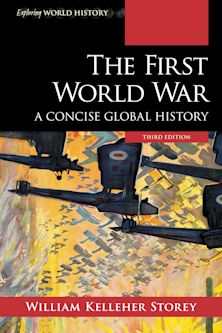
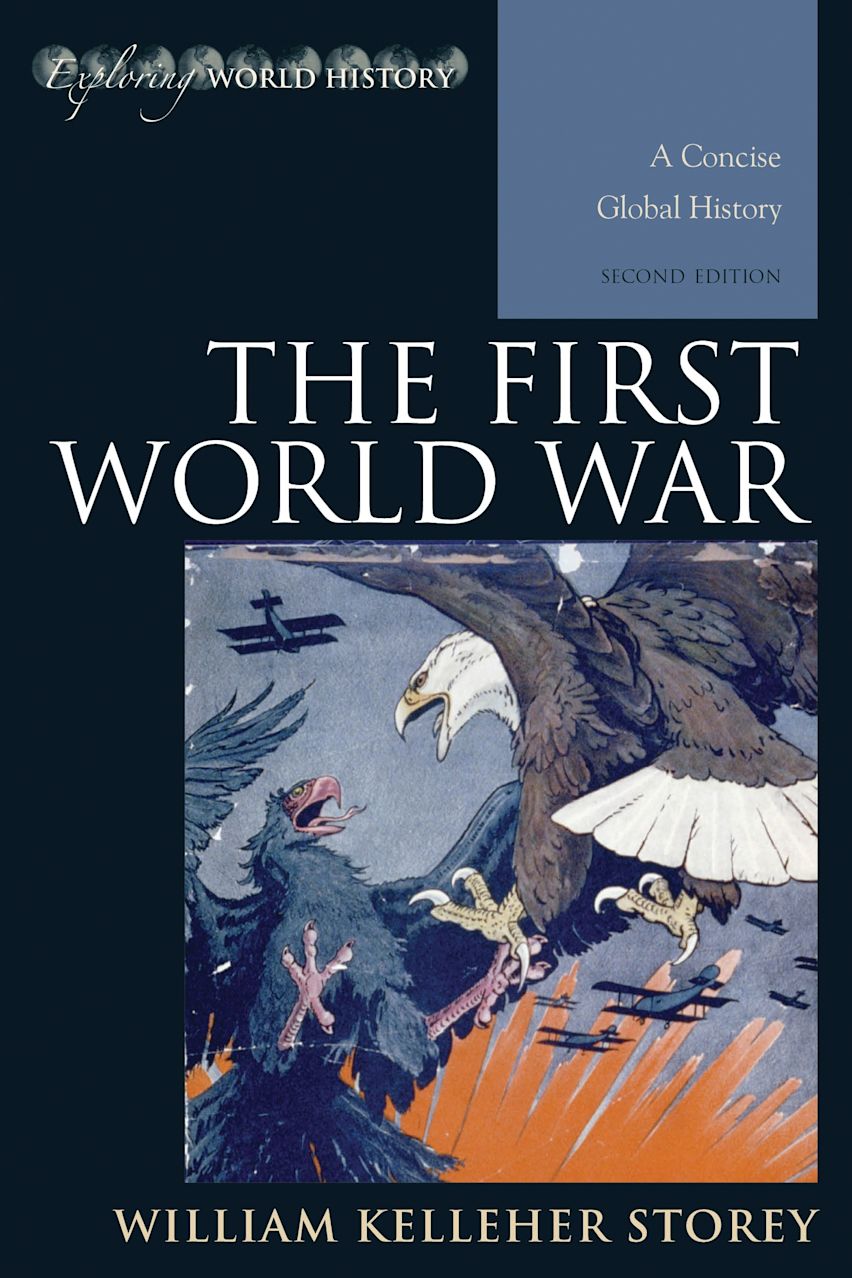
In a compact but comprehensive and clear narrative, this book explores the First World War from a genuinely global perspective. Putting a human face on the war, William Kelleher Storey takes into account individual decisions and experiences as well as environmental and technological factors, such as food, geography, manpower, and weapons. With reorganized chapters designed to enhance classroom use, this edition brings the text up to date with current scholarship and new maps for the Great War's centennial.
The author argues that the Great War profoundly changed the ways in which people imagined the landscape around them and thought about technology and the environment. Before the war, Europe and its colonies generally regarded industrial technology as an instrument of modernity; the landscape existed to be conquered, divided, and ruled. During and after the war, the costs of conquest became much higher, raising significant doubts about the value of progress. Soldiers experienced profound personal degradation, physical injuries, and mental collapse in the midst of nightmarish, technologically induced environmental conditions, which they vividly remembered when they formed new identities in the postwar world. Although people did not abandon thoughts of technological advance, after the war they had a keener sense of modernity’s costs. Without neglecting traditional themes, Storey’s deft interweaving of the role of environment and technology enriches our understanding of the social, political, and military history of the war, not only in Europe, but worldwide.
Table of Contents
Chapter 2: Empires, Technologies, and the Origins of War
Chapter 3: European Rivalries
Chapter 4: The Crisis of 1914
Chapter 5: The Western Front, 1914–1915
Chapter 6: The War in Eastern and Southern Europe, 1914–1915
Chapter 7: The World War in Africa, 1914–1916
Chapter 8: The War at Sea, 1914–1915
Chapter 9: The War in the Middle East, 1914–1916
Chapter 10: The Offensives of 1916
Chapter 11: Naval War and the U.S. Entry, 1916–1917
Chapter 12: The Strains of Total War
Chapter 13: The Offensives of 1917
Chapter 14: Allied Empire-Building, 1916–1918
Chapter 15: The War’s End, 1918
Chapter 16: The Peace Settlements
Chapter 17: Understanding and Remembering the War
Product details
| Published | 23 May 2014 |
|---|---|
| Format | Ebook (Epub & Mobi) |
| Edition | 2nd |
| Extent | 218 |
| ISBN | 9781442226821 |
| Imprint | Rowman & Littlefield Publishers |
| Illustrations | 13 BW Illustrations, 1 Tables |
| Series | Exploring World History |
| Publisher | Bloomsbury Publishing |
About the contributors
Reviews
-
The focus of this efficient study is distinct from the usual perspective. Storey looks at the environmental and technological factors that played a globally significant role in the unfolding of World War I. He contends that the war fundamentally changed the ways in which people took in their surroundings and the manner in which we relate to machines. Before the war, technology, from the viewpoint of industry, was part of the modern age—there to be harnessed. But once technology advanced the tools of war, the results of conquest become greater than anyone had experienced or imagined. A good choice for college students.
Library Journal
-
This narrative history of the Great War will better inform general readers concerning the causes and effects of the conflict, which continues to shape the destinies of millions of people across the world. . . . Storey offers some fresh perspectives that make this survey interesting and useful. . . . This is a well-written, easily digestible examination of a seminal conflict.
Booklist
-
In addition to providing a clear and insightful retelling of a familiar story, this 'concise global history' emphasizes the role of the environment and of new and old technologies. . . . The most important global dimension of the 1914–1918 war was its consequences. There are sections specifically about the environment and technologies, and Storey weaves references to them throughout his narrative. . . . Recommended.
Choice Reviews
-
The book is particularly valuable for Storey's analysis of the generally overlooked environmental factors that affected operations, his discussion of the role of non-Europeans in the struggle, and his look at the long-term global impact of the war, in terms of its social, cultural, and political effects, not only on the belligerents but also on colonial peoples worldwide. This is an useful work for anyone interested in the First World War, and a particularly valuable one for those lacking much prior knowledge of the conflict, and as a recommended reading in a modern history course.
The NYMAS Review
-
Intended to offer the non-specialist reader an overview of the main events of the First World War, this summary of the conflict is a useful guide for those unfamiliar with the subject—and a valuable initial introductory text for junior undergraduates. A particular strength of Storey’s work is its emphasis upon the war’s global impact; the latest research findings on the war in Africa, Asia, and the Middle East are incorporated here, as is the most recent work on colonial laborers and troops employed by the European powers. There is also throughout a thematic emphasis upon the role of environmental and technological factors during the conflict that underpins the general narrative; Storey conveys, with particular insight, the technological changes in weaponry that occurred both before and during the war and how the conflict changed societal views of scientific progress.
Journal of Modern History
-
Storey is at his best when he is simply laying out the political and military history of the war, which he covers in three chapters. From the European trenches, to the war at sea, to the conflict in Africa, and to events in the Pacific, he does a succinct job of summarizing the highlights of the struggle and explaining how what was happening on one front impacted another.
History Teacher