
- Home
- ACADEMIC
- Politics & International Relations
- Race and Ethnicity
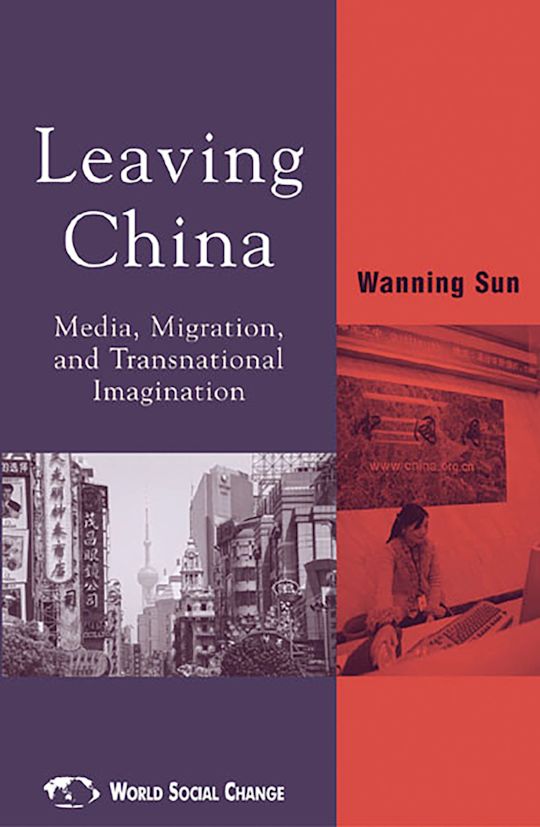
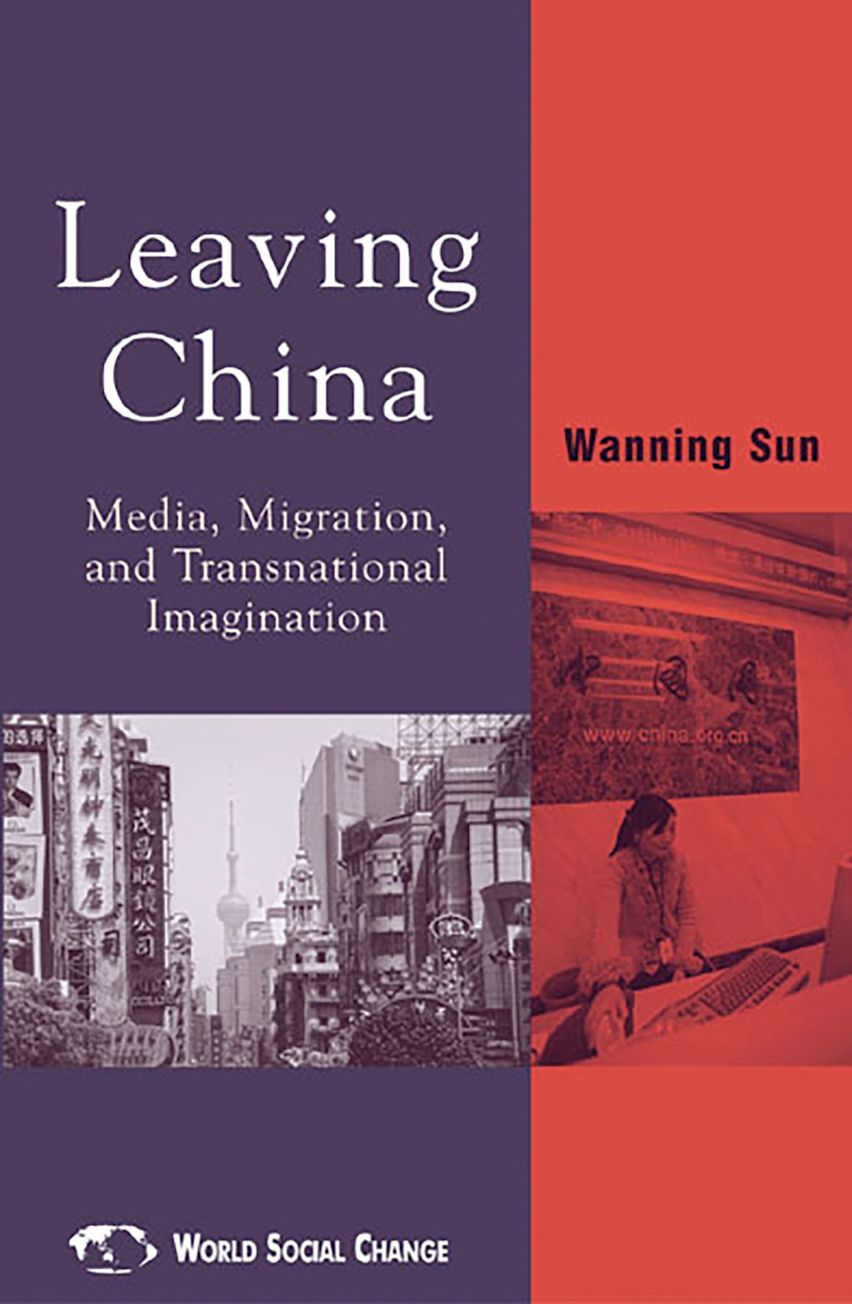
- Leaving China
You must sign in to add this item to your wishlist. Please sign in or create an account
Description
More than ever before, China is on the move. When the flow of people and images is fused, meanings of self, place, space, community, and nation become unstable and contestable. This fascinating book explores the ways in which movement within and across the national borders of the PRC has influenced the imagination of the Chinese people, both those who remain and those who have left. Travelers or no, all participate in the production and consumption of images and narratives of travel, thus contributing to the formation of transnational subjectivities.
Wanning Sun offers a fine-grained analysis of the significant narrative forms and discursive strategies used in representing transnational space in contemporary China. This includes looking at how stay-at-homes fantasize about faraway or unknown places, and how those in the diaspora remember experiences of familiar places. She considers the ways in which mobility-of people, capital, and images-affects localities through individuals' constructions of a sense of place. Relatedly, the author illustrates how economic, social, and political forces either facilitate or inhibit the formation of a particular kind of transnational subjectivity.
Table of Contents
Chapter 2 Going Home or Going Places: Television in the Village
Chapter 3 Going Abroad or Staying Home: Cinema, Fantasy, and the World City
Chapter 4 Arriving at the Global City: Television Dramas and Spatial Imagination
Chapter 5 Haggling in the Margin: Videotapes and Paradiasporic Audiences
Chapter 6 Fantasizing the Homeland: The Internet, Memory, and Exilic Longings
Chapter 7 Eating Food and Telling Stories: From Home(land) to Homepage
Chapter 8 Fragmenting the National Time-Space: Media Events in the Satellite Age
Chapter 9 Chinese in the Global Village: Olympics and an Electronic Nation
Chapter 10 Conclusion: Toward a Transnational China?
Product details
| Published | 15 Aug 2002 |
|---|---|
| Format | Ebook (Epub & Mobi) |
| Edition | 1st |
| Extent | 256 |
| ISBN | 9781461638780 |
| Imprint | Rowman & Littlefield Publishers |
| Series | World Social Change |
| Publisher | Bloomsbury Publishing |
About the contributors
Reviews
-
A bold and intelligent book that explores the territory of belongingness and not-belongingness. It is a welcome addition to the meager literature on Chinese media and contemporary society and will be of use to students and researchers in the fields of cultural studies, media studies, anthropology, and Chinese studies.
Continuum: Journal Of Media and Cultural Studies
-
I very much enjoyed this book for its fresh, personal style, its ability to speak eloquently to the expatriate descendants of the Cultural Revolution, and its critical look at a generation whose identity is inseparable from the consumption of both Chinese and overseas media.
Media International Australia
-
An exciting book whose multiple strands of inquiry are woven around the themes of media and diaspora. . . . Sun's synthesis of a range of media genres into a coherent analysis is ambitious and admirably executed. . . . With its wide array of strengths, the book will be of interest to scholars and students of China and East Asia, of media and cultural studies, of geography and anthropology, and across disciplines to those concerned with nationalism, transnationalism, globalization, and the issues of diaspora.
The China Journal
-
An innovative collection of essays that applies cultural studies theories to two parallel sets of movements, that of people and ideas between rural and urban China, and that of people and ideas between China and abroad. For those who follow developments in China, many of the people Sun introduces will seem familiar. The images that Sun discusses will probably be less familiar to readers. It is the juxtaposition of these people and images that makes Leaving China so insightful.
Asian and Pacific Migration Journal
-
A timely, thoughtful endeavor, bridging the knowledge gap by providing representative cases and in-depth analysis of media's roles in and outside China. . . . [The author's] thesis is bold [and] vitally original.
Journalism & Mass Communication Quarterly
-
Leaving China contributes significantly to our understanding of how global cultural and media flows are leading to the emergence of a new Chinese transnational imagination. Wanning Sun provides an authoritative and insightful perspective-both personal and analytical-on China's journey to global modernity.
Kevin Robins, University of London