A New Perspective for the Use of Dialect in African American Spirituals
History, Context, and Linguistics
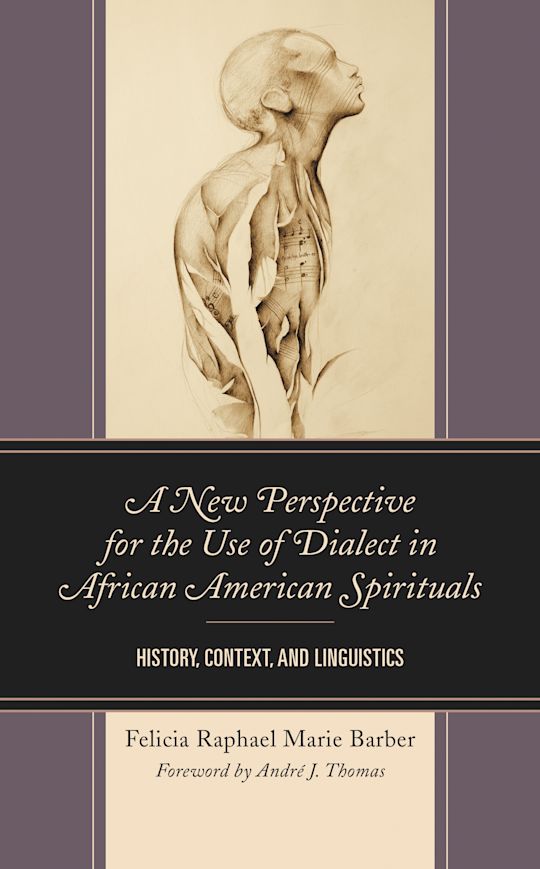


A New Perspective for the Use of Dialect in African American Spirituals
History, Context, and Linguistics
For information on how we process your data, read our Privacy Policy
Description
A New Perspective for the Use of Dialect in African American Spirituals: History, Context, and Linguistics investigates the use of the African American English (AAE) dialect in the musical genre of the spiritual. Perfect for conductors and performers alike, this book traces the history of the dialect, its use in early performance practice, and the sociolinguistic impact of the AAE dialect in the United States. Felicia Barber explores AAE’s development during the African Diaspora and its correlations with Southern States White English (SSWE) and examines the dialect’s perception and how its weaponization has impacted the performance of the genre itself. She provides a synopsis of research on the use of dialect in spirituals from the past century through the analysis of written scores, recordings, and research. She identifies common elements of early performance practice and provides the phonological and grammatical features identified in early practice. This book contains practical guide for application of her findings on ten popular spiritual texts using the International Phonetic Alphabet (IPA). It concludes with insights by leading arrangers on their use of AAE dialect as a part of the genre and practice.
Table of Contents
Preface: An Introduction in Purpose
Acknowledgments
Foreword by Dr. Andre Thomas
Definitions
List of Figures
List of Tables
Chapter 1 Sociolinguistics: It is a Matter of Perception
Chapter 2 Acquisition of Languages Established as a Result of the African Diaspora
Chapter 3 Establishing Performance Practice Part I: Researchers
Chapter 4 Establishing Performance Practice Part II: Dialect Employed in the Text
Chapter 5 Establishing Performance Practice Part III: Aural History – Transcriptions of Early Sound Recordings
Chapter 6 Trace History of Dialect in Four Specific Scores
Chapter 7 Research Findings Regarding Use of AAE Dialect in Spirituals: A Practical Application
Chapter 8 Moving Forward: Insight from Modern Arrangers and Next Steps
Bibliography
Appendices
About the Author
About the Contributors
Product details
| Published | 06 Oct 2021 |
|---|---|
| Format | Ebook (Epub & Mobi) |
| Edition | 1st |
| Extent | 200 |
| ISBN | 9781793635358 |
| Imprint | Lexington Books |
| Illustrations | 10 b/w illustrations; 39 tables; |
| Publisher | Bloomsbury Publishing |
Reviews

ONLINE RESOURCES
Bloomsbury Collections
This book is available on Bloomsbury Collections where your library has access.
Related Titles