A New Zulu Kingdom
Ethnicity, State-Building, and the Making of Grand Apartheid

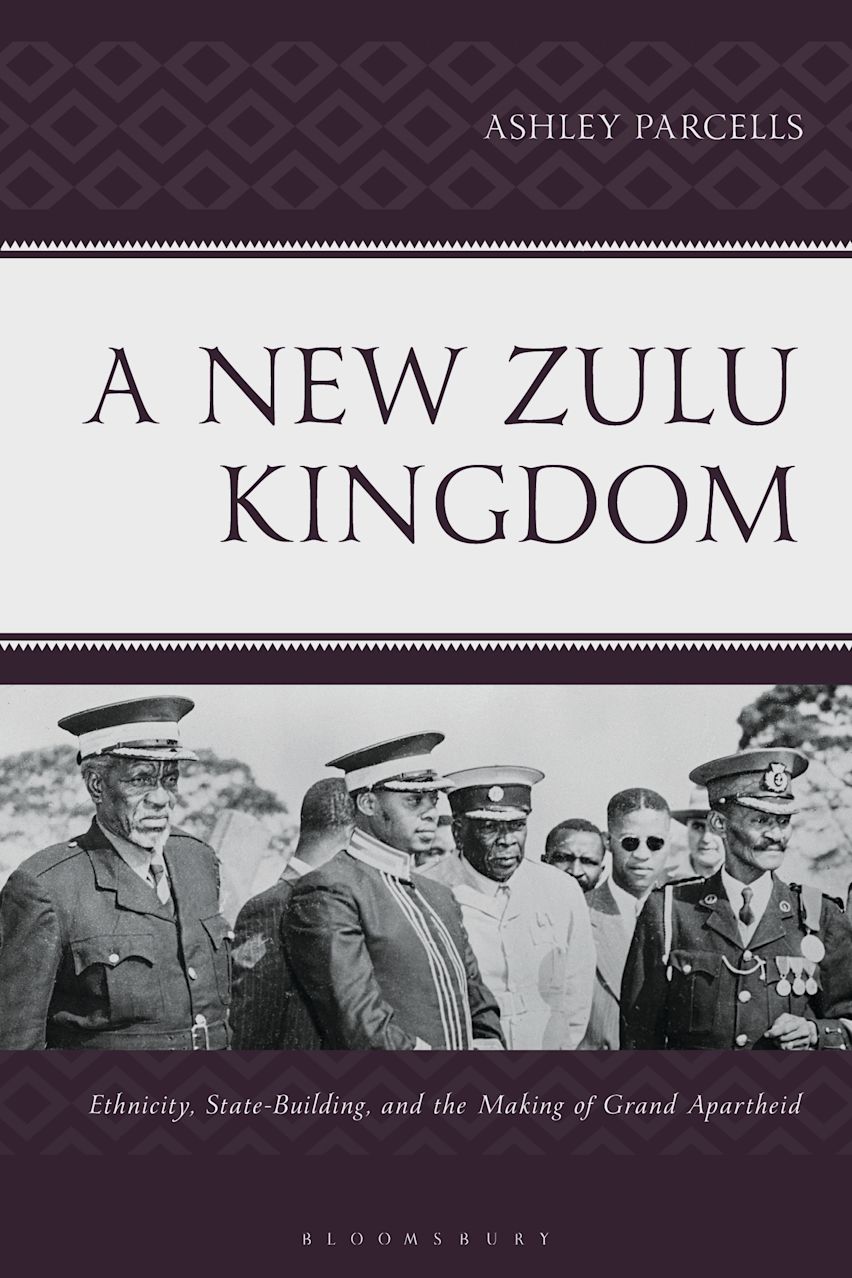
A New Zulu Kingdom
Ethnicity, State-Building, and the Making of Grand Apartheid
Buying pre-order items
Ebooks and Audiobook
You will receive an email with a download link for the ebook or audiobook on the publication date.
Payment
You will not be charged for pre-ordered books until they are available to be shipped. Pre-ordered ebooks will not be charged for until they are available for download.
Amending or cancelling your order
For orders that have not been shipped you can usually make changes to pre-orders up to 72 hours before the publishing date.
Payment for this pre-order will be taken when the item becomes available
- Delivery and returns info
-
Free UK delivery on orders £30 or over
Description
Presents a social and political history of KwaZulu-an ethnically defined self-governing bantustan for Zulu people under apartheid.
Ashley Parcells investigates bantustan state formation through a multi-tiered study of white bureaucrats, African elites, and everyday people caught up in this tumultuous process. She examines how KwaZulu came to include populations and land that had never been part of the pre-conquest Zulu kingdom; how people, especially those who previously did not identify as Zulu, experienced systems of ethnically defined bantustan citizenship that suddenly dictated their access to jobs, urban residential sites, and other forms of basic livelihood; and finally, explores how this ethnicized system of land and authority was reincorporated into South Africa's post-apartheid democracy.
Breaking from a tradition of studying ethnogenesis (or how people “became Zulu”), Parcells explores how the apartheid state and competing African elites sought to define ethnicity as a bureaucratic category that corresponded with territorial boundaries. This bureaucratic category, moreover, was the foundation for new forms of political subjecthood and “citizenship.” Rather than seeing state definitions of ethnicity as determinants of consciousness, she emphasizes how individuals and communities navigated and at times strategically challenged government regimes of ethnic classification.
This book offers a multi-faceted approach to the study of ethnicity that encompasses local political competition, factionalism within the central state, and the lived experiences of everyday people who became bantustan citizens.
Table of Contents
Acknowledgments
Introduction
1. “We want these old books to be referred to”: Rural Development, Royal History, and the Struggle for Authority in Early Apartheid Zululand
2. Zibuse (Rule Yourself) as a Nation?: The Politics of Paramount Chieftaincy and Bantu Authorities
3. Zulus or Zulu Speakers?: History, Ethnicity, and the Boundaries of a “Zulustan”
4. “Between Westministers and Royalists”: Authoritarianism, Nationalism, and Conspiracy in Buthelezi's KwaZulu
5. “We are regarded as Xhosas when we are Zulus”: Land, Ethnicity, and the politics of “Bantustan Citizenship”
6. “Our language and customs are Swazi, but we are Zulu”: Chieftaincy, Ethnicity, and Sovereignty in Ingwavuma
Epilogue: From Inkatha to the Ingonyama Trust: The Politics of Zuluness in South Africa's Transition
Bibliography
Index
Product details

| Published | 12 Nov 2026 |
|---|---|
| Format | Hardback |
| Edition | 1st |
| Pages | 224 |
| ISBN | 9798216371304 |
| Imprint | Bloomsbury Academic |
| Illustrations | 3 bw photos |
| Dimensions | 229 x 152 mm |
| Publisher | Bloomsbury Publishing |
Reviews
Related Titles