- Home
- ACADEMIC
- History
- Latin American History
- Nixon, Kissinger, and Allende
Nixon, Kissinger, and Allende
U.S. Involvement in the 1973 Coup in Chile
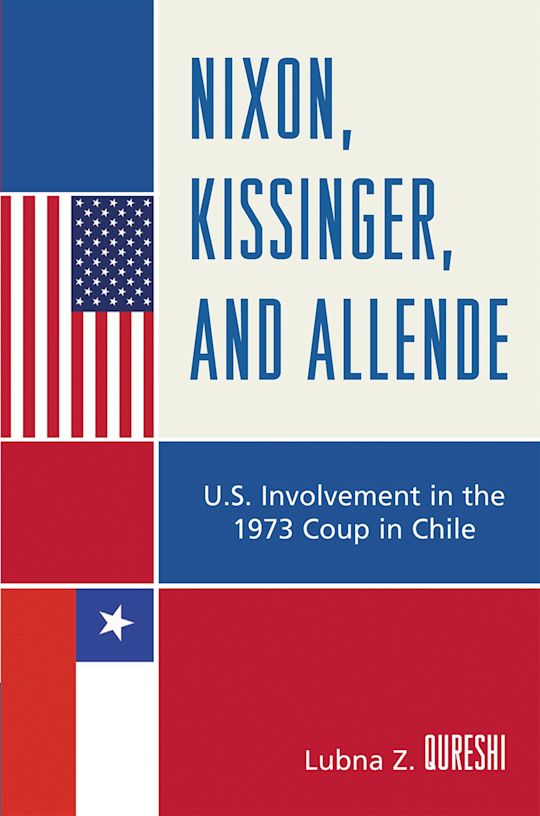
Nixon, Kissinger, and Allende
U.S. Involvement in the 1973 Coup in Chile

This product is usually dispatched within 10-14 days
- Delivery and returns info
-
Free UK delivery on orders £30 or over
You must sign in to add this item to your wishlist. Please sign in or create an account
Description
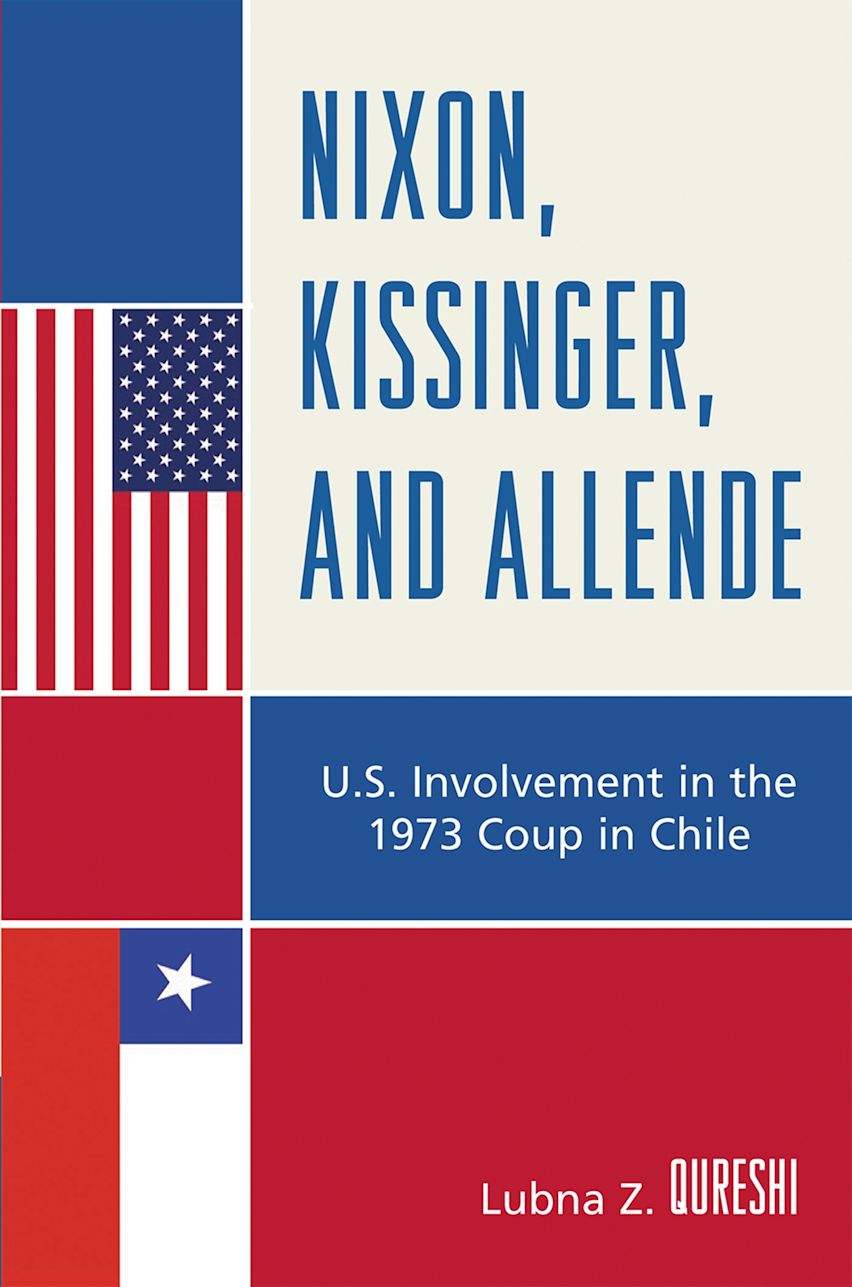
In the thirty-five years since the violent overthrow of Chilean President Salvador Allende, former Secretary of State Henry Kissinger has vehemently denied U.S. involvement. Almost with the same breath, Kissinger suggests that the democratically elected Allende represented Soviet aggression in Latin America, therefore posing a threat to the United States' physical security.
Newly released documents reveal the Nixon administration's efforts to undermine Allende, while indicating that Nixon and Kissinger did not believe the socialist regime in Santiago endangered the United States or even had close ties to Moscow. The White House feared that the Chilean experiment would encourage other Latin American countries to challenge U.S. hegemony. Nixon, Kissinger, and Allende explores the president's cultural and intellectual prejudices against Latin America and the economic pressures that induced action against Allende.
Table of Contents
Product details
| Published | 16 Dec 2008 |
|---|---|
| Format | Hardback |
| Edition | 1st |
| Extent | 192 |
| ISBN | 9780739126554 |
| Imprint | Lexington Books |
| Dimensions | 240 x 161 mm |
| Publisher | Bloomsbury Publishing |
About the contributors
Reviews
-
Qureshi's elegantly written study offers a fresh and well-researched interpretation of U.S. foreign policy toward Chile during the Allende presidency. This book explains U.S. opposition to the Allende government by highlighting Nixon and Kissinger's imperial disdain for Latin America in general and Chile in particular, their fundamental ignorance of the region, and the influence of the U.S. business community. Qureshi draws on an array of sources, including the Nixon tapes, U.S. and Chilean government documents, and secondary sources to shed new light on a pivotal moment in U.S. history. She also discusses the history and importance of Charles Horman and Frank Teruggi, two North Americans killed by the Chilean military (with possible U.S. government complicity) following the September 11, 1973, coup that overthrew Allende. For anyone who wants a clearer understanding of U.S. foreign policy toward Chile during the Nixon presidency, this book is essential reading.
Margaret Power, Illinois Institute of Technology
-
Using freshly released U.S. tapes and documents and Chilean sources Lubna Qureshi has written a fresh analysis of the United States' 1973 intervention to overthrow the freely elected government of Salvador Allende. Qureshi demonstrates that the Nixon administration did not truly perceive Allende as a threat to U.S. national security in the overall context of the Cold War. Rather, Nixon and Kissinger feared Allende's socializing and nationalizing actions would encourage other Latin American nations to challenge American hegemony. The major impelling force behind the US intervention in Chile that lead to a dictatorship came from the corporate concerns of President Nixon and pressures from powerful business clients to control the civilian economy.. Woven into this convincing interpretation are episodes of concise narrative including the CIA assisted assassination of General Schneider, the last constitutionalist military leader protecting civilian government against the coup d'etat by General Pinochet, and adiscussion of U.S. victims of the vicious aftermath, among them Charles Horman and Frank Teruggi. Qureshi's volume is a significant revisioning and recontextualization of a grim episode from which the thriving, redemocratized, and pace setting Chile has o
Diane S. Clemens, University of California, Berkeley
-
Using freshly released U.S. tapes and documents and Chilean sources Lubna Qureshi has written a fresh analysis of the United States' 1973 intervention to overthrow the freely elected government of Salvador Allende. Qureshi demonstrates that the Nixon administration did not truly perceive Allende as a threat to U.S. national security in the overall context of the Cold War. Rather, Nixon and Kissinger feared Allende's socializing and nationalizing actions would encourage other Latin American nations to challenge American hegemony. The major impelling force behind the US intervention in Chile that lead to a dictatorship came from the corporate concerns of President Nixon and pressures from powerful business clients to control the civilian economy.. Woven into this convincing interpretation are episodes of concise narrative including the CIA assisted assassination of General Schneider, the last constitutionalist military leader protecting civilian government against the coup d'etat by General Pinochet, and a discussion of U.S. victims of the vicious aftermath, among them Charles Horman and Frank Teruggi. Qureshi's volume is a significant revisioning and recontextualization of a grim episode from which the thriving, redemocratized, and pace setting Chile has only recently emerged.
Diane S. Clemens, University of California, Berkeley
-
For anyone interested in the economic motivations that led the Nixon administration to intervene in Chile, or how Nixon spoke about Latin America and the issue of democracy in private, this is nevertheless a useful book. It is a good book for those wanting to examine the role that dependency and capitalism played in Chile and it will be helpful alongside books on the same subject by scholars like Haslam and Kristian Gustafson for encouraging students to explore different arguments related to U.S. involvement in Chile.
H-Net: Humanities and Social Science Reviews Online
ONLINE RESOURCES
Bloomsbury Collections
This book is available on Bloomsbury Collections where your library has access.